 52 photographs ›
At a glance
- Jan
- Feb
- Mar
- Apr
- May
- Jun
- Jul
- Aug
- Sep
- Oct
- Nov
- Dec
Summary
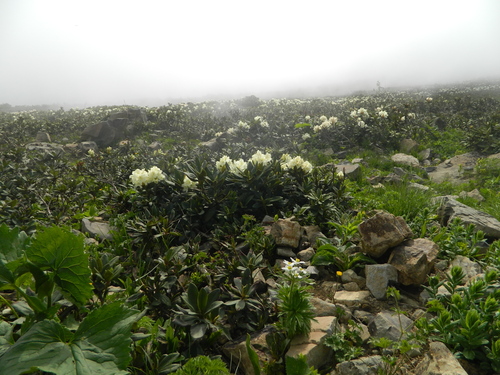
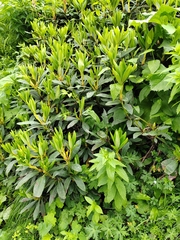
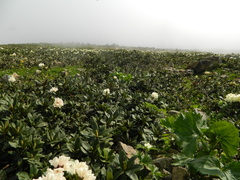
Rhododendron caucasicum, the Caucasian rhododendron or the Georgian snow rose, is a species of flowering plant in the genus Rhododendron native to the Transcaucasus and Anatolia. Its hybrid cultivar 'Christmas Cheer' has gained the Royal Horticultural Society's Award of Garden Merit.
Quoted from Wikipedia, "Rhododendron caucasicum", CC BY-SA 4.0.
About the genus · Rhododendron
Rhododendron, from Ancient Greek ῥόδον (rhódon), meaning "rose", and δένδρον (déndron), meaning "tree", is a very large genus of about 1,024 species of woody plants in the heath family (Ericaceae). They can be either evergreen or deciduous. Most species are native to eastern Asia and the Himalayan region, but smaller numbers occur elsewhere in Asia, and in North America, Europe and Australia.
Quoted from Wikipedia, "Rhododendron", CC BY-SA 4.0.
Cultivation
Grouped as a temperate garden plant, listed under the genus Rhododendron in the archetype table, and Kew describes it as “shrub”, “temperate”.
Seasons
The rain rule reads no short rainy season: 70% of the median year's rain (1,487 mm of 1,995 mm) takes 8 months, April to November. Mean temperature moves 21.6 °C between the warmest and coldest month. Months are the habitat's, northern hemisphere; shifted six months for a southern-hemisphere collection: October to May.
Rain
1,995 mm in the median year at the habitat, 1,487 mm of it April to November. Wettest month June at 223 mm, driest month February at 108 mm. Across the grid cells of the range the year's total runs 1,197 mm to 2,935 mm, the 10th to 90th percentile of each cell's own year. The median of the cells' own yearly totals, 2,069 mm, is the year's rain at the top of the page; the 1,995 mm here is the median year's, the twelve monthly medians added, which the rain rule reads. Habitat calendar, northern hemisphere; median year across the grid cells of the range, CHELSA.
Light
Open sky over the habitat: 11 to 38 mol/m²/day across the year (daily light integral, median year across the grid cells of the range, CHELSA; the lowest 10th-percentile month across the cells is 8, the highest 90th-percentile month 41).
Warmth and air
Monthly means: the coldest month's mean nightly low -14.1 °C in January (across the grid cells of the range -18.9 °C to -9.4 °C), the warmest month's mean daily high 15.2 °C in August (median year across the grid cells of the range, CHELSA). Cold floor: none read. The nearest figure is -14.1 °C, the coldest month's mean nightly low, January, in the median year (CHELSA); a month's mean of its nightly lows is warmer than the nights a floor is read from. The daily extremes were read at a weather cell whose ground is too far above or below the typical spot to correct for, and are not used.
Relative humidity at the habitat: 58 to 63% across the year (monthly means, median year across the grid cells of the range, CHELSA). A figure about the air, saying nothing about how the plant takes water.
How this section is made
Each card states this species' habitat figures with their sources, and what two fixed rules read from them; nothing here says what the plant does, wants or tolerates. The rules · the terms.
Seasons. Read from the median year of CHELSA monthly rainfall and mean temperature across the grid cells of the range: the rain rule takes the smallest set of months carrying 70% of the rain and calls it winter when its mean is more than half a degree below the year's, summer when more than that above, and neither in between; the temperature rule, used only under 120 mm, names the cooler six months when they are at least a degree cooler than the other six. Months are shifted for the other hemisphere only where the temperature curve moves 4 °C or more and the habitat lies 10° or more from the equator. A reading of the curves, not an observation of the plant.
Rain. CHELSA monthly precipitation, median year across the grid cells of the range. The rain that falls where the species is recorded; nothing about how the plant takes water.
Light. CHELSA shortwave radiation at each envelope cell, a daily-mean flux taken to a daily total and converted at 2.07 mol of PAR per MJ. The sky over the habitat, measured; what reaches a plant under a rock, a shrub or a shade cloth is not.
Temperature. CHELSA monthly means, median year across the grid cells of the range. No cold floor is read without a daily extremes series; the coldest month's mean nightly low named in its sentence is not one. Not a measured survival limit for any plant in a pot.
Humidity. CHELSA relative humidity, median year across the grid cells of the range.
Group. Listed under the genus Rhododendron in the archetype table, and Kew describes it as “shrub”, “temperate”. A group is taken only where Kew's description of the species agrees with the table's listing. The table gives no figure and no prose; the cold floor is the habitat's alone.
Climate across the habitat
Habitat months, northern hemisphere
Mean daily high from -7 °C in Jan to 15 °C in Jul and Aug; mean nightly low from -14 °C in Jan and Feb to 7 °C in Jul and Aug. The cold quarter, Dec to Feb, is the three months around the coldest month's mean nightly low, centred on the 2 months in a row that tie for it. 1,995 mm of rain in the median year (the twelve monthly medians added), the wettest month Jun. The bands show the 10th to 90th percentile across 282 habitat cells. Beneath: daily light integral and relative humidity through the year, each on its own scale.
Figures by month
| Figure | Jan | Feb | Mar | Apr | May | Jun | Jul | Aug | Sep | Oct | Nov | Dec |
|---|---|---|---|---|---|---|---|---|---|---|---|---|
| Day °C | -7 / -11–-2 | -6 / -10–-1 | -2 / -6–2 | 3 / -1–8 | 8 / 4–13 | 12 / 9–17 | 15 / 12–20 | 15 / 12–20 | 11 / 8–16 | 6 / 2–11 | 0 / -5–5 | -5 / -10–0 |
| Night °C | -14 / -19–-9 | -14 / -18–-9 | -10 / -15–-6 | -5 / -9–-1 | -1 / -6–3 | 3 / -1–7 | 7 / 3–11 | 7 / 3–11 | 3 / -2–7 | -2 / -7–2 | -9 / -13–-4 | -12 / -17–-8 |
| Rain mm | 124 / 53–265 | 108 / 55–221 | 136 / 76–231 | 174 / 106–231 | 196 / 139–249 | 223 / 158–290 | 197 / 126–254 | 185 / 116–243 | 170 / 92–238 | 176 / 88–281 | 166 / 76–325 | 140 / 56–292 |
| DLI | 13 / 10–16 | 19 / 16–23 | 27 / 24–31 | 33 / 30–37 | 37 / 34–41 | 38 / 36–40 | 38 / 35–40 | 35 / 32–37 | 27 / 25–30 | 20 / 17–23 | 14 / 11–17 | 11 / 8–14 |
| RH % | 60 / 57–63 | 60 / 58–63 | 60 / 58–63 | 61 / 59–63 | 62 / 60–64 | 63 / 60–65 | 62 / 60–65 | 62 / 59–64 | 60 / 57–63 | 59 / 57–62 | 58 / 56–62 | 59 / 57–62 |
The daily extremes were not used: the correction for elevation, +1124 m, is beyond the 1,000 m either way that a lapse rate is applied over, so the weather cell's ground is other terrain than the typical spot's. So no cold floor is read for this species, and the coldest month's mean nightly low is not taken as one. What that cell gave, so corrected, over 44 years: absolute minimum -27.0 °C, 1st-percentile night -20.7 °C.
How this section is made
Natural habitat
How this section is made
Photographs
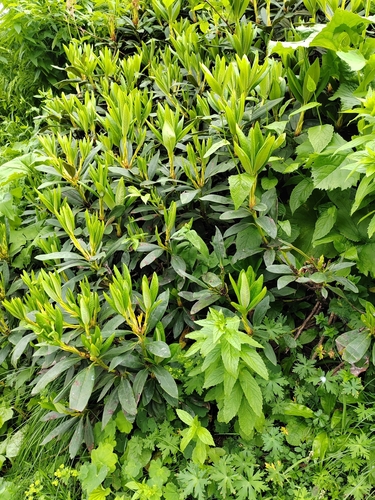
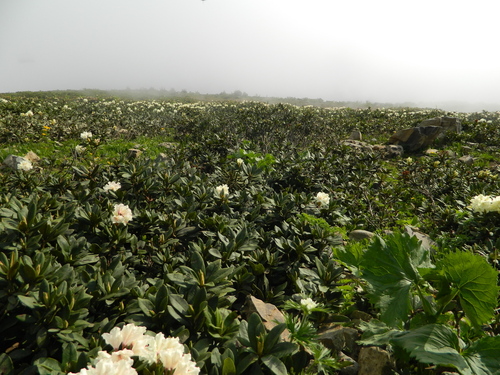
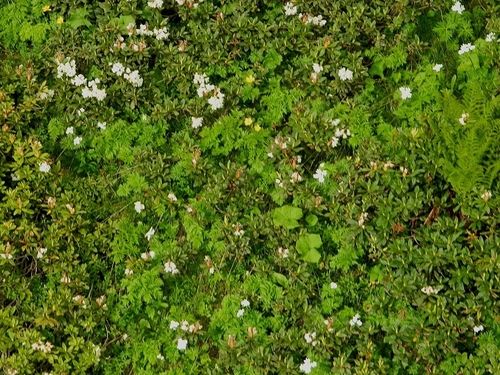
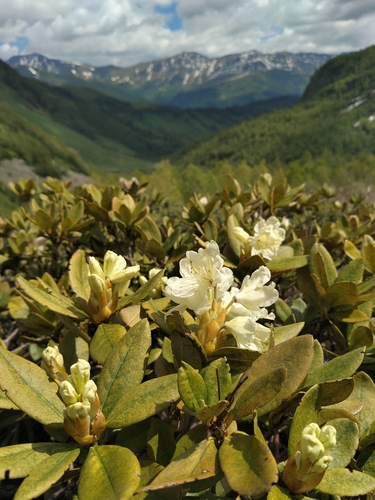
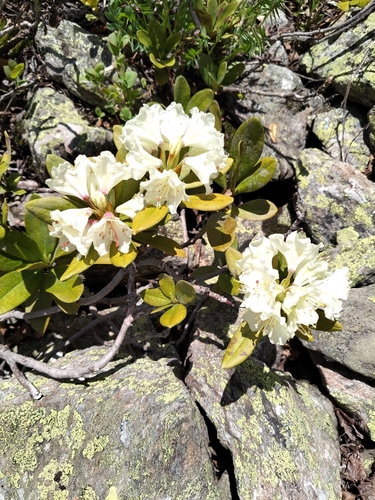
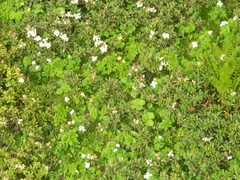
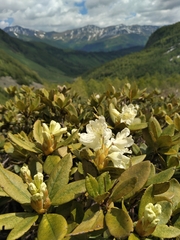
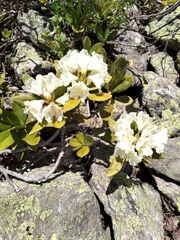
Photographs: (c) Виктория Билоус, some rights reserved (CC BY) (4); (c) andreikayak, some rights reserved (CC BY) (2).
Related
Similar habitat climate The 6 nearest by mean daily high, mean nightly low and rain, month by month. How.
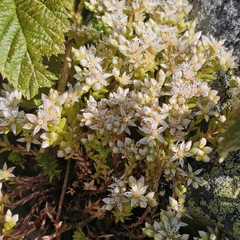 Sedum gracile Crassulaceae Photo: CC BY, Юлия Захаренко
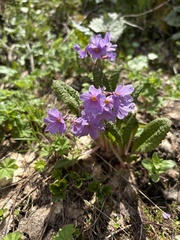 Primula amoena Caucasian primrose Photo: CC BY, Екатерина Кравцова
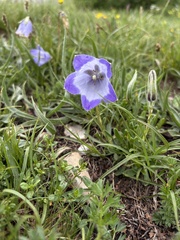 Campanula tridentata Campanulaceae Photo: CC BY, Екатерина Кравцова
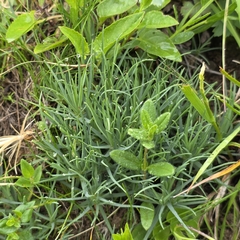 Cherleria circassica Caryophyllaceae Photo: CC BY, Юлия Захаренко
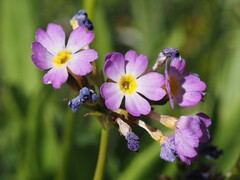 Primula auriculata Primulaceae Photo: CC BY, Louis Aureglia
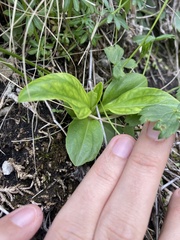 Swertia iberica Gentianaceae Photo: CC BY, Илья Руденко
Other Rhododendron 574 in the reference
 Rhododendron aberconwayi Ericaceae Photo: Public domain, Daderot Rhododendron abietifolium Ericaceae Rhododendron acrophilum Ericaceae
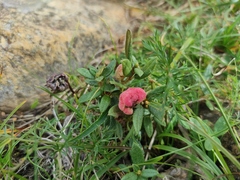 Rhododendron adamsii Sagan Dalya Photo: CC BY, Valentin Kosterin
 Rhododendron adenogynum Ericaceae Photo: CC BY-SA, Kurt Stüber
 Rhododendron adenopodum Ericaceae Photo: CC BY-SA, Ulf Eliasson
 Rhododendron adenosum Ericaceae Photo: CC0, Daderot
 Rhododendron aeruginosum Ericaceae Photo: CC BY, Siddarth Machado
 Rhododendron aganniphum Ericaceae Photo: CC0, Daderot Rhododendron agathodaemonis Ericaceae
 Rhododendron alabamense Alabama azalea Photo: CC BY, Rob John
 Rhododendron albiflorum White rhododendron Photo: CC0, author not stated all 575 ›
Names & registers
Also known as Azalea caucasica; Rhododendron caucaseum; Rhododendron caucasicum f. flavidum; Rhododendron caucasicum f. stramineum; Rhododendron caucasicum var. albicans and 20 more. (GBIF Backbone)
The record
Every figure here is derived from public data by a stated rule and names its source; nothing about this species is written for its page by a person or by AI, apart from the marked, credited quotations. How →
Where this page came from built 2026-10-22
gbif.species answeredasked 2026-10-22gbif.synonyms answeredasked 2026-10-22gbif.vernacular answeredasked 2026-10-22names fetched 2026-10-22wcvp.distribution answeredas of 2026-06-04gbif.occurrences answeredas of 2026-10-21GBIF occurrence download https://doi.org/10.15468/dl.hbdw64, of 2026-10-21; 3 records within 1 km of a botanic garden, herbarium or zoo left out (2 at a botanic garden or arboretum, 1 at a zoo; Wikidata's list)climate answeredasked 2026-10-22climate.extremes answeredasked 2026-10-22NASA POWER (MERRA-2) daily 1981–2024, cell 42.00_43.125, lapse-corrected +1124 m at 6.5 °C/km; read, and set aside: the correction for elevation, +1124 m, is beyond the 1,000 m either way that a lapse rate is applied over, so the weather cell's ground is other terrain than the typical spot's, so no cold floor is shownwikidata answeredasked 2026-10-22wikipedia answeredasked 2026-10-22inat.photos.wild answeredasked 2026-10-22from iNaturalist's open data of 2026-09-27: research-grade observations with an open-licence photograph, the 24 whose photographs iNaturalist received last (the open data holds no votes); filled 2026-10-22inat.photos.cultivated not askedgbif.media answeredasked 2026-10-22openalex not askednot yet asked for this reference; a later fill takes the papers from OpenAlex's snapshotEvery source is recorded as having answered, reported nothing, refused, failed, not been asked, or answered twice where one answer is taken (“not taken: two items answered”), and, for a source asked when this page was built, when: the figures are as the source held them that day; a source read from a file (Kew's World Checklist, a GBIF download) says "as of" the file's day instead; a row carried from an earlier build of the page names that build instead. Only “nothing to report” is ever shown as an absence. Records came from 31 datasets via GBIF.org; each carries its own licence.