
Summary
Rhus potaninii, the Chinese varnish tree, Chinese sumac (names it shares with other species), Potanin's sumac, or Potanin's lacquer tree, is a species of flowering plant in the family Anacardiaceae. It is native to central and southern China. A deciduous tree reaching 12 m (39 ft), it is typically found growing on hill and mountain slopes, in forests and thickets at elevations from 900 to 2,500 m (3,000 to 8,200 ft) above sea level. It is named for its collector, Grigory Potanin. More on Wikipedia ›
Quoted from Wikipedia, "Rhus potaninii", CC BY-SA 4.0.
About the genus · Rhus
Sumac or sumach —not to be confused with poison sumac—is any of the roughly 35 species of flowering plants in the genus Rhus of the cashew and mango tree family, Anacardiaceae. However, it is Rhus coriaria that is most commonly used for culinary purposes. Sumac is prized as a spice—especially in Middle Eastern cuisine—and used as a dye and holistic remedy. More on Wikipedia ›
Quoted from Wikipedia, "Sumac", CC BY-SA 4.0.
Cultivation
Climate across the habitat
Natural habitat
How this section is made
Related
Other Rhus 19 in the reference
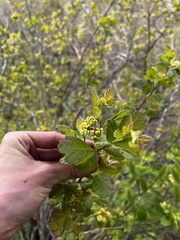 Rhus aromatica Fragrant sumac Photo: CC BY, Nathan Aaron
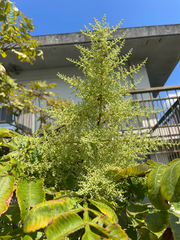 Rhus chinensis Chinese sumac Photo: CC BY, 大澤風季 ohsawa_Fuki
 Rhus copallinum Anacardiaceae Photo: CC BY-SA, Magnus Manske
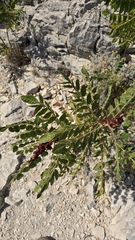 Rhus coriaria Tanner's sumach Photo: CC BY, Filipi Miranda Soares
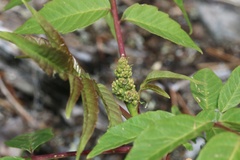 Rhus glabra Smooth sumac Photo: CC BY, Dustin Snider
 Rhus hartmanii Anacardiaceae Photo: CC BY-SA, Krzysztof Ziarnek, Kenraiz
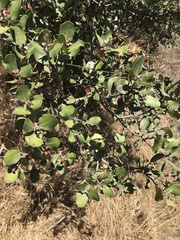 Rhus integrifolia Lemonade sumac Photo: CC BY, Ryan Donnelly
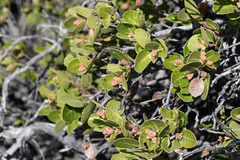 Rhus kearneyi Kearney's sumac Photo: CC BY, Trevor Van Loon
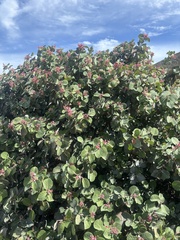 Rhus lentii Pink-flowering Sumac Photo: CC BY, Sula Vanderplank
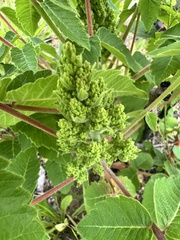 Rhus michauxii Michaux's sumac Photo: CC BY, Ashwin Srinivasan
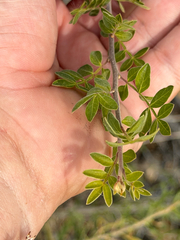 Rhus microphylla Desert sumac Photo: CC BY, Ian McFaul
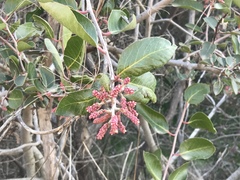 Rhus ovata Sugar sumac Photo: CC BY, Ryan Donnelly all 20 ›
Names & registers
Also known as Rhus henryi; Rhus sinica. (GBIF Backbone)
The record
Every figure here is derived from public data by a stated rule and names its source; nothing about this species is written for its page by a person or by AI, apart from the marked, credited quotations. How →
Where this page came from built 2026-10-22
gbif.species answeredasked 2026-10-22gbif.synonyms answeredasked 2026-10-22gbif.vernacular answeredasked 2026-10-22names fetched 2026-10-22wcvp.distribution answeredas of 2026-06-04gbif.occurrences answeredas of 2026-10-21GBIF occurrence download https://doi.org/10.15468/dl.hbdw64, of 2026-10-21; 1 record within 1 km of a botanic garden, herbarium or zoo left out (1 at a herbarium; Wikidata's list)climate nothing to reportasked 2026-10-22195 in-range records, none placed to within 10 kmwikidata answeredasked 2026-10-22wikipedia answeredasked 2026-10-22inat.photos.wild nothing to reportasked 2026-10-22from iNaturalist's open data of 2026-09-27: research-grade observations with an open-licence photograph, the 24 whose photographs iNaturalist received last (the open data holds no votes); filled 2026-10-22inat.photos.cultivated not askedgbif.media nothing to reportasked 2026-10-22commons answeredasked 2026-10-22openalex not askednot yet asked for this reference; a later fill takes the papers from OpenAlex's snapshotEvery source is recorded as having answered, reported nothing, refused, failed, not been asked, or answered twice where one answer is taken (“not taken: two items answered”), and, for a source asked when this page was built, when: the figures are as the source held them that day; a source read from a file (Kew's World Checklist, a GBIF download) says "as of" the file's day instead; a row carried from an earlier build of the page names that build instead. Only “nothing to report” is ever shown as an absence. Records came from 18 datasets via GBIF.org; each carries its own licence.