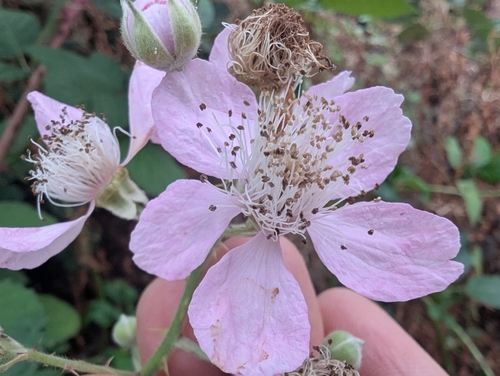
Rubus armeniacus Focke
Himalayan blackberry; Giant blackberry; Himalaya blackberry; Himalaya giant blackberry
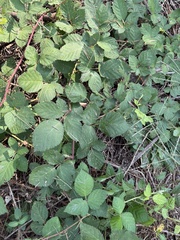
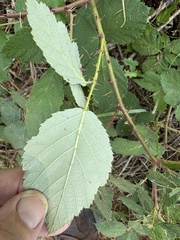
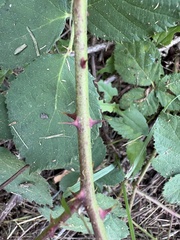
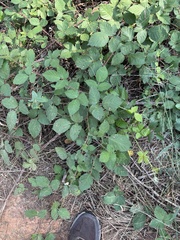
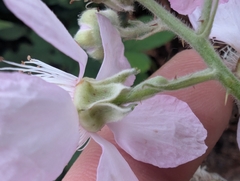
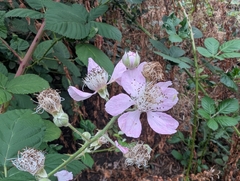 79 photographs ›
Summary
Rubus armeniacus, the giant blackberry, Armenian blackberry, or sometimes, misleadingly, "Himalayan blackberry", is a species of Rubus in the blackberry group Rubus subgenus Rubus series Discolores (P.J. Müll.) Focke. It is native to Armenia and northwestern Iran, and widely invasive elsewhere. Both its scientific name and origin have been the subject of much confusion.
Quoted from Wikipedia, "Rubus armeniacus", CC BY-SA 4.0.
About the genus · Rubus
Rubus is a large and diverse genus of flowering plants in the rose family, Rosaceae, subfamily Rosoideae, most commonly known as brambles. Fruits of various species are known as raspberries, blackberries, dewberries, cloudberries, and bristleberries. It is a diverse genus, and estimates of the number of Rubus species vary from 250 to over 1,000, found across all continents except Antarctica.
Quoted from Wikipedia, "Rubus", CC BY-SA 4.0.
Cultivation
Climate across the habitat
Natural habitat
Photographs
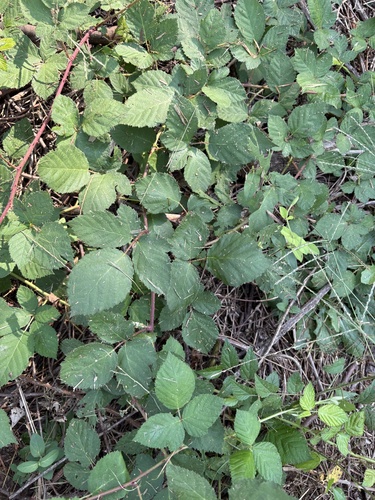
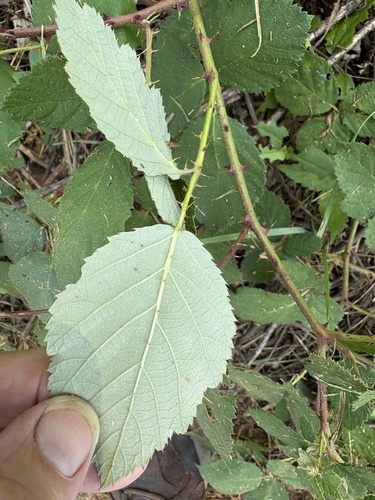
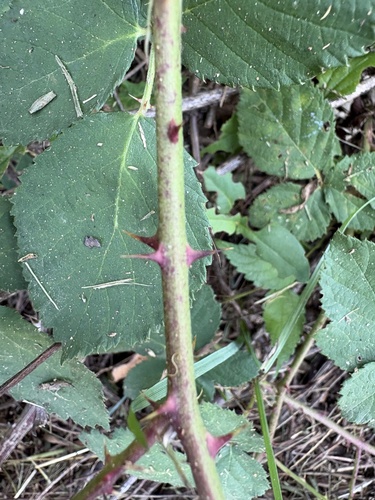
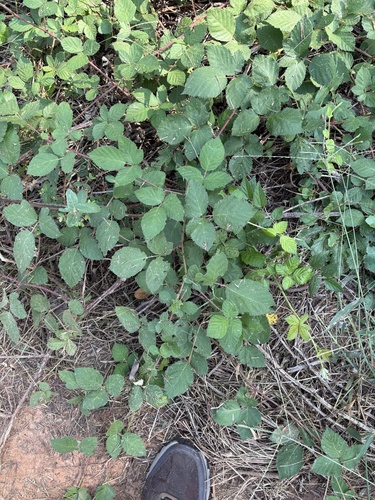
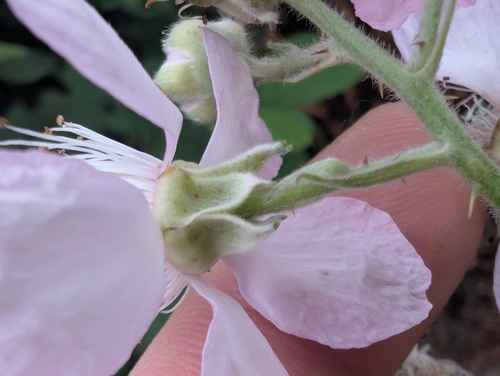
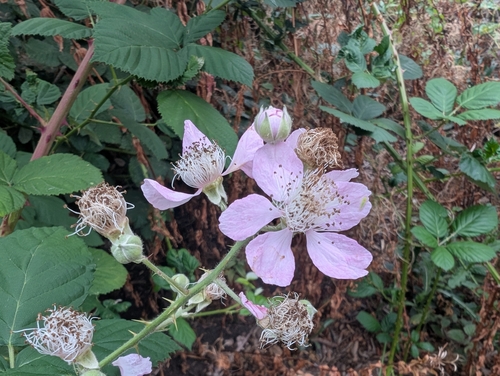
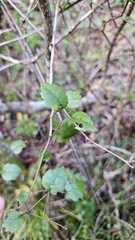
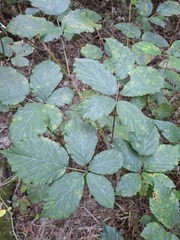
Photographs: author not stated, no rights reserved · CC0 (4); (c) Zachary M.C., some rights reserved (CC BY) (2).
Related
Other Rubus 103 in the reference
 Rubus acuminatus Rosaceae Photo: CC BY, Anastasia Titovets
 Rubus adenotrichos Tropical Highland Blackberry Photo: CC BY, Neptalí Ramírez Marcial
 Rubus affinis Rosaceae Photo: CC BY, Dave Richardson
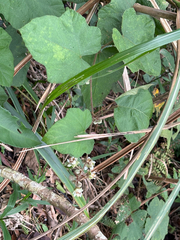 Rubus alceifolius Giant bramble Photo: CC BY, 黃美滿
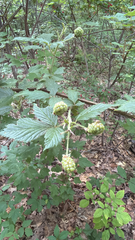 Rubus allegheniensis Allegheny blackberry Photo: CC BY, The Wrong Industry
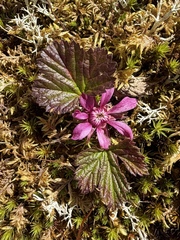 Rubus arcticus Arctic bramble Photo: CC BY, Matt Berger
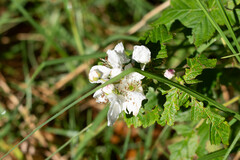 Rubus argutus Sawtooth blackberry Photo: CC BY, cello caruso-turiello
 Rubus australis Rosaceae Photo: CC0, author not stated Rubus bambusarum Rosaceae Rubus × barkeri Rosaceae
 Rubus biflorus Rosaceae Photo: CC BY, Siddarth Machado
 Rubus bifrons Himalayan Berry Photo: CC0, author not stated all 104 ›
Names & registers
Also known as Rubus hedycarpus subsp. armeniacus; Rubus hedycarpus var. armeniacus; Rubus macrostemon f. armeniacus; Rubus procerus. (GBIF Backbone)
The record
Every figure here is derived from public data by a stated rule and names its source; nothing about this species is written for its page by a person or by AI, apart from the marked, credited quotations. How →
Where this page came from built 2026-10-22
gbif.species answeredasked 2026-10-22gbif.synonyms answeredasked 2026-10-22gbif.vernacular answeredasked 2026-10-22names fetched 2026-10-22wcvp.distribution answeredas of 2026-06-04gbif.occurrences answeredas of 2026-10-21GBIF occurrence download https://doi.org/10.15468/dl.hbdw64, of 2026-10-21; 36 records within 1 km of a botanic garden, herbarium or zoo left out (17 at a botanic garden or arboretum, 4 at a herbarium, 15 at a zoo; Wikidata's list)climate nothing to reportasked 2026-10-22no georeferenced record inside the rangewikidata answeredasked 2026-10-22wikipedia answeredasked 2026-10-22inat.photos.wild answeredasked 2026-10-22from iNaturalist's open data of 2026-09-27: research-grade observations with an open-licence photograph, the 24 whose photographs iNaturalist received last (the open data holds no votes); filled 2026-10-22inat.photos.cultivated not askedgbif.media answeredasked 2026-10-22openalex not askednot yet asked for this reference; a later fill takes the papers from OpenAlex's snapshotEvery source is recorded as having answered, reported nothing, refused, failed, not been asked, or answered twice where one answer is taken (“not taken: two items answered”), and, for a source asked when this page was built, when: the figures are as the source held them that day; a source read from a file (Kew's World Checklist, a GBIF download) says "as of" the file's day instead; a row carried from an earlier build of the page names that build instead. Only “nothing to report” is ever shown as an absence. Records came from 61 datasets via GBIF.org; each carries its own licence.