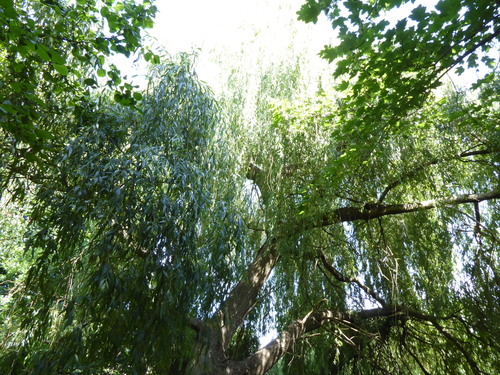
Salix × pendulina Wender.
Wisconsin weeping willow; Weeping crack willow; Pendulous willow; Niobe willow
A hybrid: S. alba × S. babylonica × S. euxina, the parents Kew's World Checklist states for it (WCVP, RBG Kew).
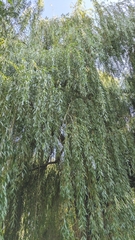
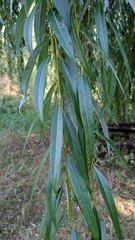
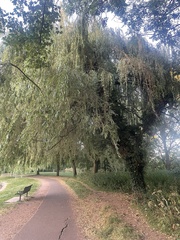
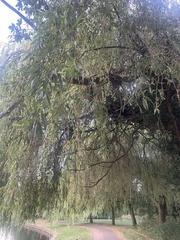
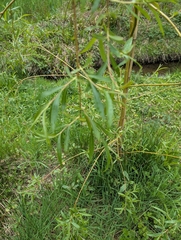
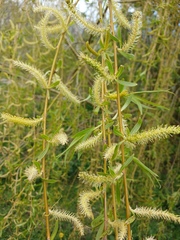 61 photographs ›
Summary
Salix babylonica is a species of willow native to dry areas of northern China, Korea, Mongolia, Japan, and Siberia but cultivated for millennia elsewhere in Asia, being traded along the Silk Road to southwest Asia and Europe.
Quoted from Wikipedia, "Salix babylonica", CC BY-SA 4.0; its title is one of this species' older names (GBIF Backbone), which is the proof that the article is this species'.
Cultivation
Climate across the habitat
Natural habitat
Photographs
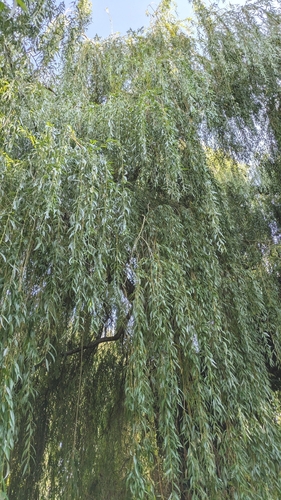
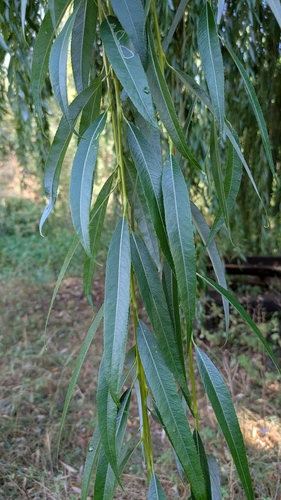
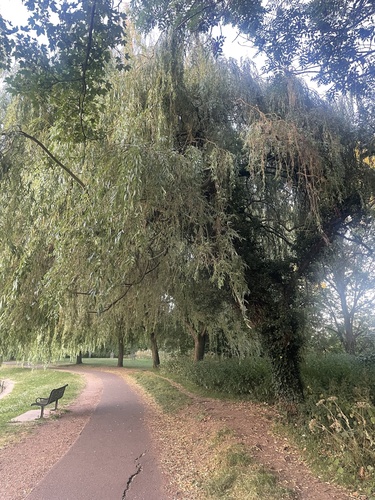
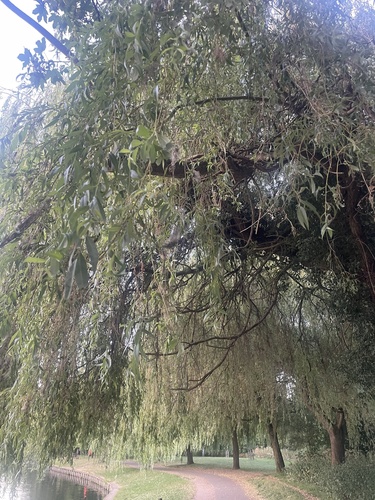
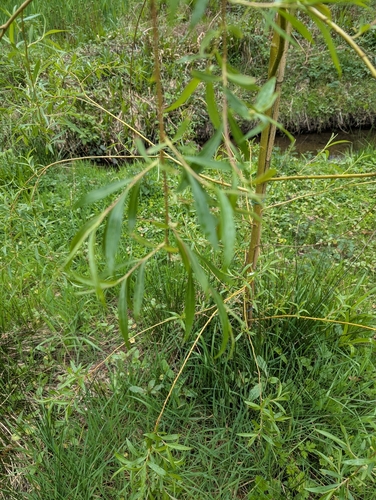
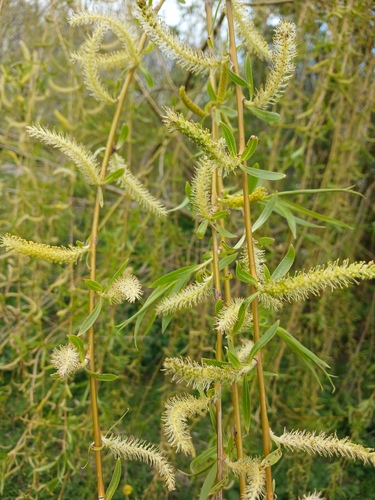
Photographs: author not stated, no rights reserved · CC0 (2); (c) Sharon Smith, some rights reserved (CC BY) (2); (c) Owen and Carol Fawcett., some rights reserved (CC BY); (c) Gerry van Tonder, some rights reserved (CC BY).
Related
Other Salix 159 in the reference
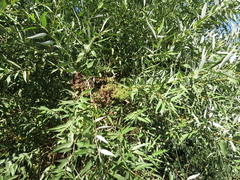 Salix acmophylla Common Middle East willow Photo: CC BY, Nachman bones
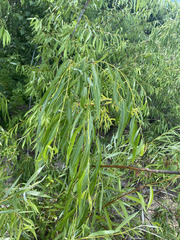 Salix acutifolia Siberian violet-willow Photo: CC0, author not stated
 Salix aegyptiaca Salicaceae Photo: Public domain, Daderot Salix aeruginosa Salicaceae Salix alatavica Salicaceae
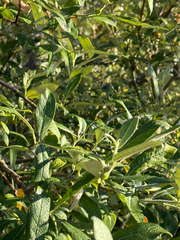 Salix alaxensis Felt-leaf willow Photo: CC BY, Ingvild Riska
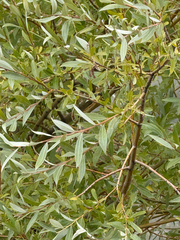 Salix alba White willow Photo: CC BY, Codrin Bucur
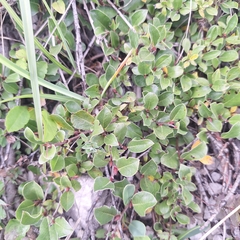 Salix alpina Salicaceae Photo: CC0, author not stated
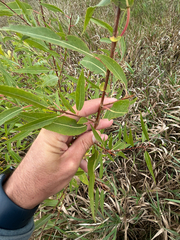 Salix amygdaloides Peach-leaf willow Photo: CC0, author not stated
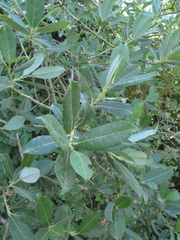 Salix apennina Large-leaved willow Photo: CC BY, Milan Chytrý
 Salix apoda Salicaceae Photo: CC BY, Dmitriy Bochkov
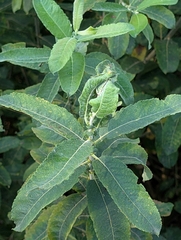 Salix appendiculata Salicaceae Photo: CC BY, Tom and T Herman all 160 ›
Names & registers
Also known as Salix alba f. pendula; Salix alba f. tristis; Salix alba var. tristis; Salix alba var. vitellina-tristis; Salix babylonica subsp. salamonii and 9 more. (GBIF Backbone)
Under another author Salix alba x babylonica and Salix alba × babylonica is an older name of this species, not Salix alba, a species of the reference; Salix babylonica x euxina and Salix babylonica × euxina and Salix babylonica × fragilis is an older name of this species, not Salix babylonica, a species of the reference. (GBIF Backbone)
The record
Every figure here is derived from public data by a stated rule and names its source; nothing about this species is written for its page by a person or by AI, apart from the marked, credited quotations. How →
Where this page came from built 2026-10-22
gbif.species answeredasked 2026-10-22gbif.synonyms answeredasked 2026-10-22gbif.vernacular answeredasked 2026-10-22names fetched 2026-10-22wcvp.distribution answeredas of 2026-06-04Kew's entry lists no native region, only 56 where it is introducedgbif.occurrences answeredas of 2026-10-21GBIF occurrence download https://doi.org/10.15468/dl.hbdw64, of 2026-10-21; 103 records within 1 km of a botanic garden, herbarium or zoo left out (53 at a botanic garden or arboretum, 15 at a herbarium, 35 at a zoo; Wikidata's list)climate nothing to reportasked 2026-10-22native range not verified: no WCVP distribution with native status for this name, so records cannot be told from cultivation and no habitat climate is derivedwikidata answeredasked 2026-10-22wikipedia answeredasked 2026-10-22Wikipedia redirects Salix pendulina to Salix babylonica, an older name of this species (Salix babylonica)inat.photos.wild answeredasked 2026-10-22from iNaturalist's open data of 2026-09-27: research-grade observations with an open-licence photograph, the 24 whose photographs iNaturalist received last (the open data holds no votes); filled 2026-10-22inat.photos.cultivated not askedgbif.media answeredasked 2026-10-22openalex not askednot yet asked for this reference; a later fill takes the papers from OpenAlex's snapshotEvery source is recorded as having answered, reported nothing, refused, failed, not been asked, or answered twice where one answer is taken (“not taken: two items answered”), and, for a source asked when this page was built, when: the figures are as the source held them that day; a source read from a file (Kew's World Checklist, a GBIF download) says "as of" the file's day instead; a row carried from an earlier build of the page names that build instead. Only “nothing to report” is ever shown as an absence. Records came from 80 datasets via GBIF.org; each carries its own licence.