Salvia darcyi J.Compton
Darcy's Sage; Galeana Red Sage; Mexican Sage; Red Mountain Sage
Photographs not checked
iNaturalist was skipped (not asked) when this page was built. Not asked, or not answered, is not "none": nothing here claims there is none. Why the site says it this way.Summary
Salvia darcyi is a herbaceous perennial shrub native to a very small area at 9000 ft elevation in the eastern range of the Mexican Sierra Madre Oriental. Discovered in the wild in 1991, it has since been sold in horticulture under several names. Botanist James Compton named the plant after fellow British botanist John d'Arcy after a trip they made to the region in 1991.
Quoted from Wikipedia, "Salvia darcyi", CC BY-SA 4.0.
About the genus · Salvia
Salvia is the largest genus of plants in the sage family Lamiaceae, with just under 1,000 species of shrubs, herbaceous perennials, and annuals. Within the Lamiaceae, Salvia is part of the tribe Mentheae within the subfamily Nepetoideae. One of several genera commonly referred to as sage, it includes two widely used herbs, Salvia officinalis and Salvia rosmarinus.
Quoted from Wikipedia, "Salvia", CC BY-SA 4.0.
Cultivation
Climate across the habitat
Natural habitat
Photographs
Related
Other Salvia 225 in the reference
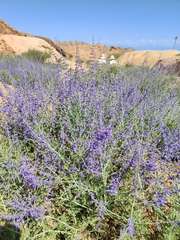 Salvia abrotanoides Caspian Sage Photo: CC BY, Станислав Чуванов
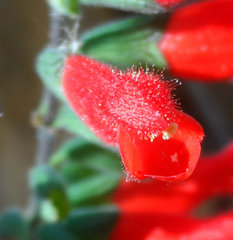 Salvia adenophora Oaxaca Red Sage Photo: CC BY-SA, Eugenio Padilla
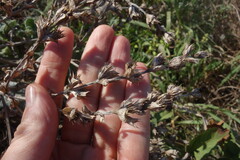 Salvia aethiopis African sage Photo: CC BY, Aleksei Baushev
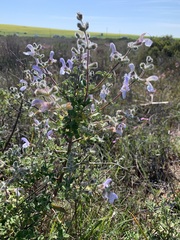 Salvia africana African Blue Sage Photo: CC BY, Ryan Rattray
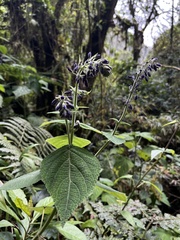 Salvia amethystina Lamiaceae Photo: CC BY, Nicolás Baresch Uribe
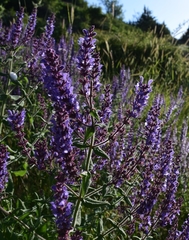 Salvia amplexicaulis Lamiaceae Photo: CC BY, Zac Peterson
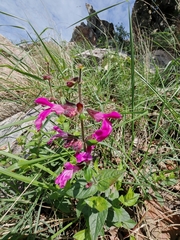 Salvia angustiarum Lamiaceae Photo: CC0, author not stated
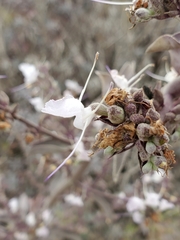 Salvia apiana White sage Photo: CC BY, Trevor Harding
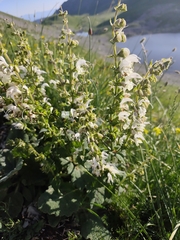 Salvia argentea Silver sage Photo: CC BY-SA, Jeanette Clarke
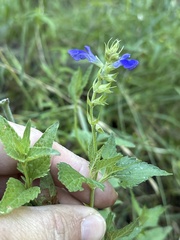 Salvia arizonica Desert indigo sage Photo: CC BY, Sam Kieschnick Salvia aucheri Waving Sage
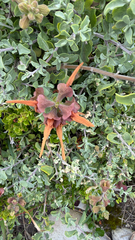 Salvia aurea Brown Sage Photo: CC BY, jk6000 all 226 ›
Names & registers
The record
Every figure here is derived from public data by a stated rule and names its source; nothing about this species is written for its page by a person or by AI, apart from the marked, credited quotations. How →
Where this page came from built 2026-10-22
gbif.species answeredasked 2026-10-22gbif.synonyms answeredasked 2026-10-22gbif.vernacular answeredasked 2026-10-22names fetched 2026-10-22wcvp.distribution answeredas of 2026-06-04gbif.occurrences answeredas of 2026-10-21GBIF occurrence download https://doi.org/10.15468/dl.hbdw64, of 2026-10-21; 3 records within 1 km of a botanic garden, herbarium or zoo left out (3 at a botanic garden or arboretum; Wikidata's list)climate nothing to reportasked 2026-10-221 in-range record, none placed to within 10 kmwikidata answeredasked 2026-10-22wikipedia answeredasked 2026-10-22inat.photos.wild nothing to reportasked 2026-10-22from iNaturalist's open data of 2026-09-27: research-grade observations with an open-licence photograph, the 24 whose photographs iNaturalist received last (the open data holds no votes); filled 2026-10-22inat.photos.cultivated not askedgbif.media nothing to reportasked 2026-10-22commons nothing to reportasked 2026-10-22openalex not askednot yet asked for this reference; a later fill takes the papers from OpenAlex's snapshotEvery source is recorded as having answered, reported nothing, refused, failed, not been asked, or answered twice where one answer is taken (“not taken: two items answered”), and, for a source asked when this page was built, when: the figures are as the source held them that day; a source read from a file (Kew's World Checklist, a GBIF download) says "as of" the file's day instead; a row carried from an earlier build of the page names that build instead. Only “nothing to report” is ever shown as an absence. Records came from 2 datasets via GBIF.org; each carries its own licence.