
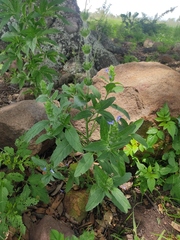
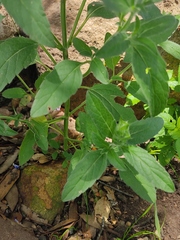
 35 photographs ›
At a glance
- Jan
- Feb
- Mar
- Apr
- May
- Jun, shaded
- Jul, shaded
- Aug, shaded
- Sep, shaded
- Oct
- Nov
- Dec
About the genus · Salvia
Salvia is the largest genus of plants in the sage family Lamiaceae, with just under 1,000 species of shrubs, herbaceous perennials, and annuals. Within the Lamiaceae, Salvia is part of the tribe Mentheae within the subfamily Nepetoideae. One of several genera commonly referred to as sage, it includes two widely used herbs, Salvia officinalis and Salvia rosmarinus.
Quoted from Wikipedia, "Salvia", CC BY-SA 4.0.
Cultivation
Seasons
The rain rule reads a summer growing season: 70% of the median year's rain (425 mm of 586 mm) falls in June to September, warmer than the year (wet-season mean 17.7 °C against a yearly mean of 16.3 °C). Months are the habitat's, northern hemisphere; shifted six months for a southern-hemisphere collection: December to March.
Rain
586 mm in the median year at the habitat, 425 mm of it June to September. Wettest month July at 126 mm, driest month December at 6 mm. Across the grid cells of the range the year's total runs 479 mm to 813 mm, the 10th to 90th percentile of each cell's own year. The median of the cells' own yearly totals, 571 mm, is the year's rain at the top of the page; the 586 mm here is the median year's, the twelve monthly medians added, which the rain rule reads. Habitat calendar, northern hemisphere; median year across the grid cells of the range, CHELSA.
Light
Open sky over the habitat: 31 to 46 mol/m²/day across the year (daily light integral, median year across the grid cells of the range, CHELSA; the lowest 10th-percentile month across the cells is 29, the highest 90th-percentile month 49).
Warmth and air
Coldest: the 1st-percentile night over 44 years at a typical spot in the range is 0.6 °C, the absolute minimum -4.9 °C, 113 frost nights in 44 years, 2.6 a year (NASA POWER daily minima). Warmest: the 99th-percentile day is 32.0 °C. Monthly means: the coldest month's mean nightly low 5.8 °C in January (across the grid cells of the range 3.5 °C to 7.7 °C), the warmest month's mean daily high 25.7 °C in May (median year across the grid cells of the range, CHELSA). Cold floor: 0.6 °C, which is the 1st-percentile night over 44 years at a typical spot in the range (NASA POWER).
Relative humidity at the habitat: 48 to 63% across the year (monthly means, median year across the grid cells of the range, CHELSA). A figure about the air, saying nothing about how the plant takes water.
How this section is made
Each card states this species' habitat figures with their sources, and what two fixed rules read from them; nothing here says what the plant does, wants or tolerates. The rules · the terms.
Seasons. Read from the median year of CHELSA monthly rainfall and mean temperature across the grid cells of the range: the rain rule takes the smallest set of months carrying 70% of the rain and calls it winter when its mean is more than half a degree below the year's, summer when more than that above, and neither in between; the temperature rule, used only under 120 mm, names the cooler six months when they are at least a degree cooler than the other six. Months are shifted for the other hemisphere only where the temperature curve moves 4 °C or more and the habitat lies 10° or more from the equator. A reading of the curves, not an observation of the plant.
Rain. CHELSA monthly precipitation, median year across the grid cells of the range. The rain that falls where the species is recorded; nothing about how the plant takes water.
Light. CHELSA shortwave radiation at each envelope cell, a daily-mean flux taken to a daily total and converted at 2.07 mol of PAR per MJ. The sky over the habitat, measured; what reaches a plant under a rock, a shrub or a shade cloth is not.
Temperature. NASA POWER daily minima and maxima over 44 years at a typical spot in the range, lapse-corrected -72 m to its elevation; CHELSA monthly means, median year across the grid cells of the range. The cold floor is the 1st-percentile night named in its sentence. Not a measured survival limit for any plant in a pot.
Humidity. CHELSA relative humidity, median year across the grid cells of the range.
Climate across the habitat
Habitat months, northern hemisphere
Mean daily high from 20 °C in Jan and Dec to 26 °C in Apr and May; mean nightly low from 6 °C in Jan to 13 °C in Jun. The cold quarter, Dec to Feb, is the three months around the coldest month's mean nightly low. 586 mm of rain in the median year (the twelve monthly medians added), the wettest month Jul. The bands show the 10th to 90th percentile across 118 habitat cells. Over 44 years at a typical spot in the range (NASA POWER) the absolute minimum was -4.9 °C and the 99th-percentile day 32.0 °C; neither is dated to a month. Beneath: daily light integral and relative humidity through the year, each on its own scale.
Figures by month
| Figure | Jan | Feb | Mar | Apr | May | Jun | Jul | Aug | Sep | Oct | Nov | Dec |
|---|---|---|---|---|---|---|---|---|---|---|---|---|
| Day °C | 20 / 18–22 | 22 / 19–24 | 24 / 22–27 | 26 / 23–28 | 26 / 23–29 | 24 / 21–27 | 22 / 20–25 | 22 / 20–25 | 21 / 19–24 | 21 / 19–24 | 21 / 19–23 | 20 / 18–22 |
| Night °C | 6 / 4–8 | 7 / 4–9 | 8 / 6–10 | 10 / 8–13 | 12 / 9–14 | 13 / 11–15 | 12 / 10–14 | 12 / 10–14 | 12 / 10–14 | 10 / 8–12 | 8 / 6–10 | 7 / 4–8 |
| Rain mm | 13 / 9–22 | 12 / 9–15 | 9 / 5–15 | 23 / 8–31 | 42 / 25–59 | 96 / 75–146 | 126 / 92–182 | 109 / 79–161 | 94 / 74–135 | 45 / 35–61 | 11 / 9–15 | 6 / 5–11 |
| DLI | 32 / 31–33 | 38 / 37–39 | 44 / 43–45 | 46 / 45–49 | 45 / 43–49 | 41 / 39–44 | 39 / 37–41 | 39 / 37–41 | 34 / 32–36 | 34 / 32–35 | 33 / 31–34 | 31 / 29–32 |
| RH % | 53 / 48–54 | 51 / 46–53 | 48 / 43–50 | 49 / 43–52 | 53 / 46–56 | 58 / 54–62 | 62 / 59–66 | 61 / 58–66 | 63 / 59–67 | 60 / 54–63 | 56 / 49–58 | 54 / 49–55 |
How this section is made
Natural habitat
How this section is made
Photographs
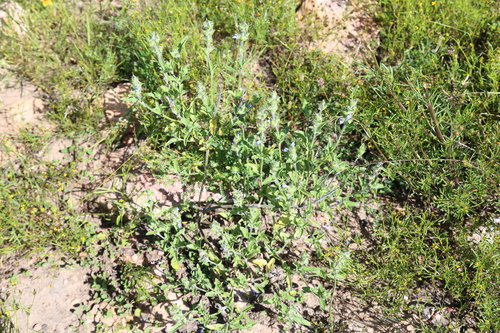
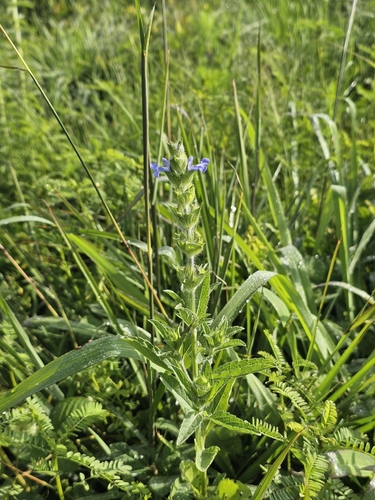
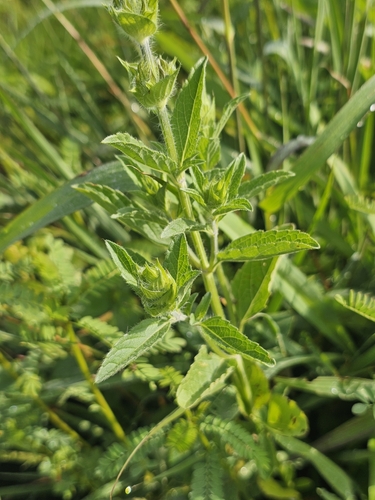
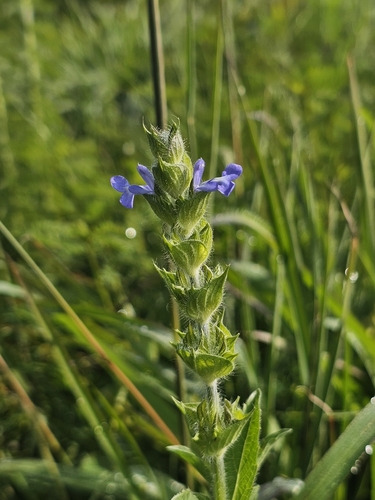
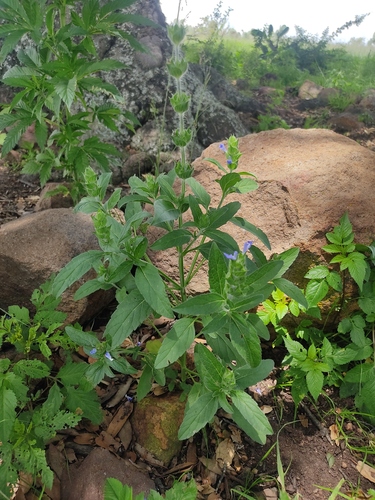
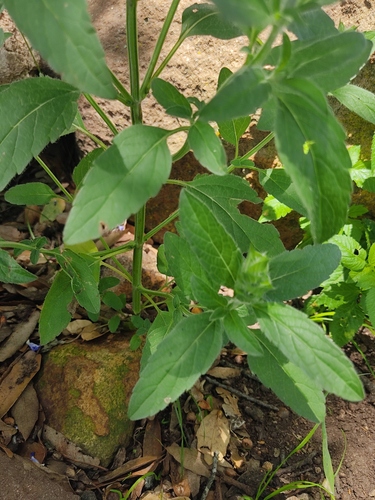
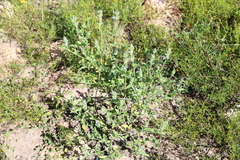
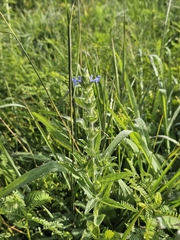
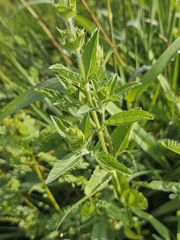
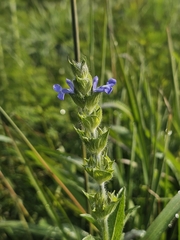
Photographs: (c) quirino, some rights reserved (CC BY); (c) Erick Vélez Sánchez, some rights reserved (CC BY) (5).
Related
Similar habitat climate The 6 nearest by mean daily high, mean nightly low and rain, month by month. How.
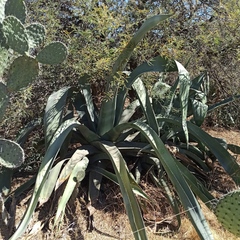 Agave mapisaga Asparagaceae Photo: CC BY, Juan Carlos Fonseca Mata Opuntia matudae Cactaceae
 Mammillaria pringlei Cactaceae Photo: CC BY, P Gonzalez Zamora
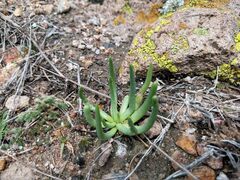 Phemeranthus napiformis Montiaceae Photo: CC BY, Alexis López Hernández
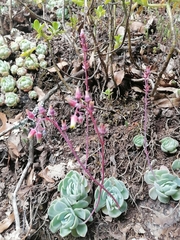 Echeveria elegans Mexican snowball Photo: CC BY, Elisa
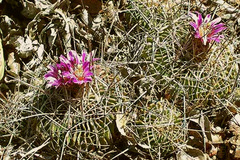 Stenocactus crispatus Cactaceae Photo: CC0, Jim
Other Salvia 225 in the reference
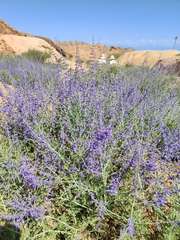 Salvia abrotanoides Caspian Sage Photo: CC BY, Станислав Чуванов
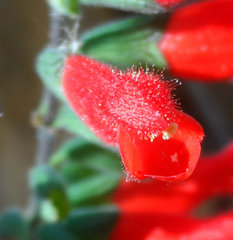 Salvia adenophora Oaxaca Red Sage Photo: CC BY-SA, Eugenio Padilla
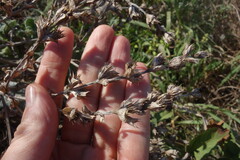 Salvia aethiopis African sage Photo: CC BY, Aleksei Baushev
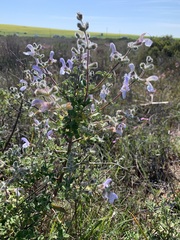 Salvia africana African Blue Sage Photo: CC BY, Ryan Rattray
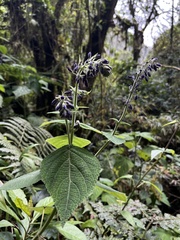 Salvia amethystina Lamiaceae Photo: CC BY, Nicolás Baresch Uribe
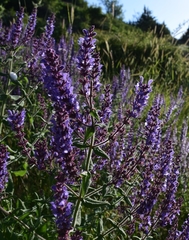 Salvia amplexicaulis Lamiaceae Photo: CC BY, Zac Peterson
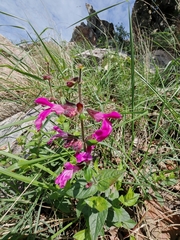 Salvia angustiarum Lamiaceae Photo: CC0, author not stated
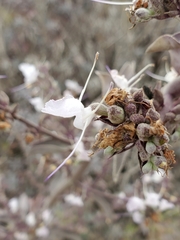 Salvia apiana White sage Photo: CC BY, Trevor Harding
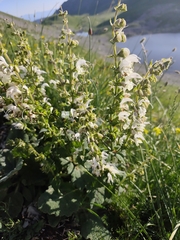 Salvia argentea Silver sage Photo: CC BY-SA, Jeanette Clarke
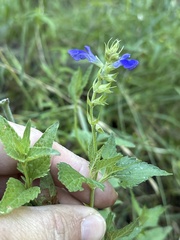 Salvia arizonica Desert indigo sage Photo: CC BY, Sam Kieschnick Salvia aucheri Waving Sage
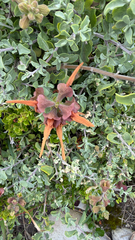 Salvia aurea Brown Sage Photo: CC BY, jk6000 all 226 ›
Names & registers
Also known as Salvia bracteata; Salvia ciliaris; Salvia ciliata; Salvia cryptanthos; Salvia nepetifolia and 1 more. (GBIF Backbone)
Under another author Salvia phlomoides Cav. is an older name of this species, not Salvia phlomoides, a species of the reference. (GBIF Backbone)
The record
Every figure here is derived from public data by a stated rule and names its source; nothing about this species is written for its page by a person or by AI, apart from the marked, credited quotations. How →
Where this page came from built 2026-10-22
gbif.species answeredasked 2026-10-22gbif.synonyms answeredasked 2026-10-22gbif.vernacular answeredasked 2026-10-22names fetched 2026-10-22wcvp.distribution answeredas of 2026-06-04gbif.occurrences answeredas of 2026-10-21GBIF occurrence download https://doi.org/10.15468/dl.hbdw64, of 2026-10-21; 5 records within 1 km of a botanic garden, herbarium or zoo left out (2 at a botanic garden or arboretum, 3 at a herbarium; Wikidata's list)climate answeredasked 2026-10-22climate.extremes answeredasked 2026-10-22NASA POWER (MERRA-2) daily 1981–2024, cell 20.00_-99.375, lapse-corrected -72 m at 6.5 °C/kmwikidata answeredasked 2026-10-22found by its label; its IPNI identifier 456379-1 is Kew's for Salvia hirsuta Jacq.wikipedia nothing to reportasked 2026-10-22inat.photos.wild answeredasked 2026-10-22from iNaturalist's open data of 2026-09-27: research-grade observations with an open-licence photograph, the 24 whose photographs iNaturalist received last (the open data holds no votes); filled 2026-10-22inat.photos.cultivated not askedgbif.media answeredasked 2026-10-22openalex not askednot yet asked for this reference; a later fill takes the papers from OpenAlex's snapshotEvery source is recorded as having answered, reported nothing, refused, failed, not been asked, or answered twice where one answer is taken (“not taken: two items answered”), and, for a source asked when this page was built, when: the figures are as the source held them that day; a source read from a file (Kew's World Checklist, a GBIF download) says "as of" the file's day instead; a row carried from an earlier build of the page names that build instead. Only “nothing to report” is ever shown as an absence. Records came from 27 datasets via GBIF.org; each carries its own licence.