
Scutellaria montana Chapm.
Large-flower skullcap; Large-flowered skullcap
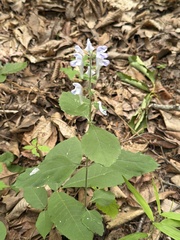
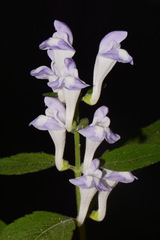
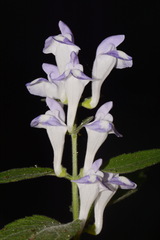
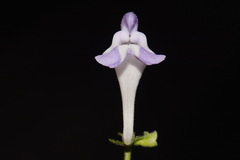
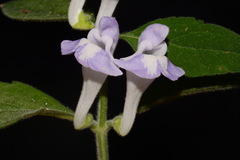
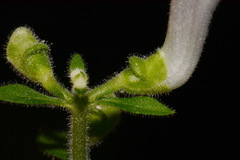 36 photographs ›
Summary
Scutellaria montana, with the common names largeflower skullcap, large-flowered skullcap and mountain skullcap, is a perennial forb first described by Alvan Chapman in 1878. This narrowly endemic species is found in the southeastern United States in parts of the Ridge and Valley and Cumberland Plateau Physiographic Provinces. Populations have been documented from four Tennessee counties and nine Georgia counties and is protected under the US Endangered Species act as it is a threatened species. The Latin specific epithet montana refers to mountains or coming from mountains.
Quoted from Wikipedia, "Scutellaria montana", CC BY-SA 4.0.
About the genus · Scutellaria
Scutellaria is a genus of flowering plants in the mint family, Lamiaceae. They are known commonly as skullcaps. The generic name is derived from the Latin scutella, meaning "a small dish, tray or platter", or "little dish", referring to the shape of the calyx. More on Wikipedia ›
Quoted from Wikipedia, "Scutellaria", CC BY-SA 4.0.
Cultivation
Climate across the habitat
Natural habitat
How this section is made
Photographs
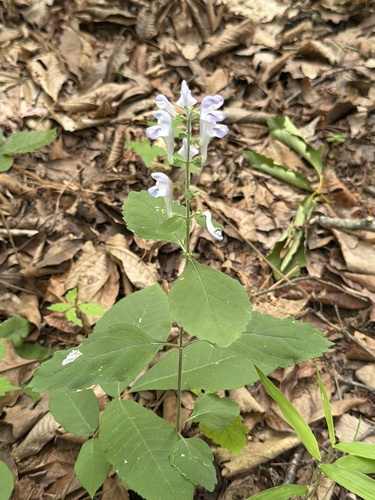

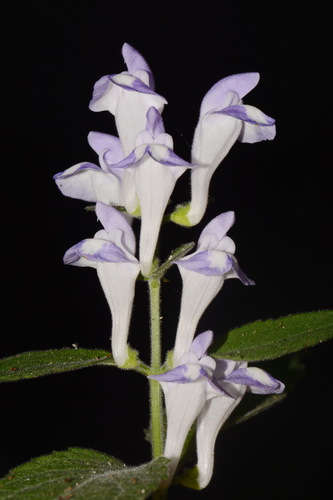


Photographs: (c) novvictan, some rights reserved (CC BY); (c) Brian Finzel, some rights reserved (CC BY-SA) (5).
Related
Other Scutellaria 56 in the reference
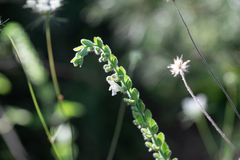 Scutellaria albida Lamiaceae Photo: CC BY, Eleftherios Katsillis
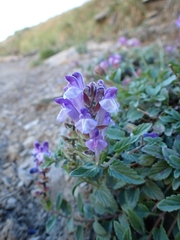 Scutellaria alpina Alpine scullcap Photo: CC BY, Ben Costamagna
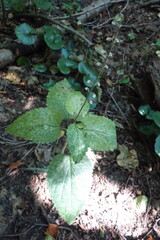 Scutellaria altissima Somerset skullcap Photo: CC BY, Aleksei Baushev
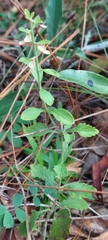 Scutellaria arenicola Florida scrub skullcap Photo: CC BY, Athena Philips
 Scutellaria aurata Lamiaceae Photo: CC BY-SA, Cymothoa exigua
 Scutellaria austrotaiwanensis Lamiaceae Photo: CC BY, 槲蕨Miu
 Scutellaria baicalensis Baikal skullcap Photo: CC BY, Святослав Власенко
 Scutellaria barbata Barbed skullcap Photo: CC BY, 葉淑蓮
 Scutellaria brevibracteata Lamiaceae Photo: CC BY, yelena_antipova
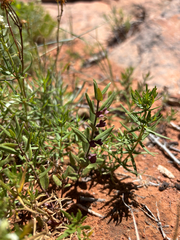 Scutellaria brittonii Britton's skullcap Photo: CC BY, Stephen Hornbeck
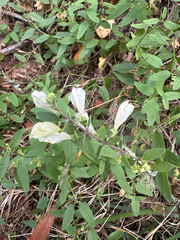 Scutellaria californica California scullcap Photo: CC BY, gretchenparadis
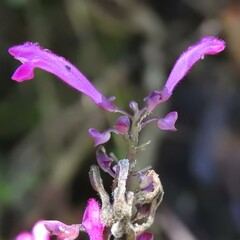 Scutellaria coccinea Lamiaceae Photo: CC BY, Esteban Poveda all 57 ›
Names & registers
The record
Every figure here is derived from public data by a stated rule and names its source; nothing about this species is written for its page by a person or by AI, apart from the marked, credited quotations. How →
Where this page came from built 2026-10-22
gbif.species answeredasked 2026-10-22gbif.synonyms answeredasked 2026-10-22gbif.vernacular answeredasked 2026-10-22names fetched 2026-10-22wcvp.distribution answeredas of 2026-06-04gbif.occurrences answeredas of 2026-10-21GBIF occurrence download https://doi.org/10.15468/dl.hbdw64, of 2026-10-21climate nothing to reportasked 2026-10-2253 in-range records, none placed to within 10 kmwikidata answeredasked 2026-10-22wikipedia answeredasked 2026-10-22inat.photos.wild answeredasked 2026-10-22from iNaturalist's open data of 2026-09-27: research-grade observations with an open-licence photograph, the 24 whose photographs iNaturalist received last (the open data holds no votes); filled 2026-10-22inat.photos.cultivated not askedgbif.media answeredasked 2026-10-22none of the photographs on this page is credited to GBIF: those shown are other sources', and GBIF's were the same photographs or were set aside by the photograph rulesopenalex not askednot yet asked for this reference; a later fill takes the papers from OpenAlex's snapshotEvery source is recorded as having answered, reported nothing, refused, failed, not been asked, or answered twice where one answer is taken (“not taken: two items answered”), and, for a source asked when this page was built, when: the figures are as the source held them that day; a source read from a file (Kew's World Checklist, a GBIF download) says "as of" the file's day instead; a row carried from an earlier build of the page names that build instead. Only “nothing to report” is ever shown as an absence. Records came from 2 datasets via GBIF.org; each carries its own licence.