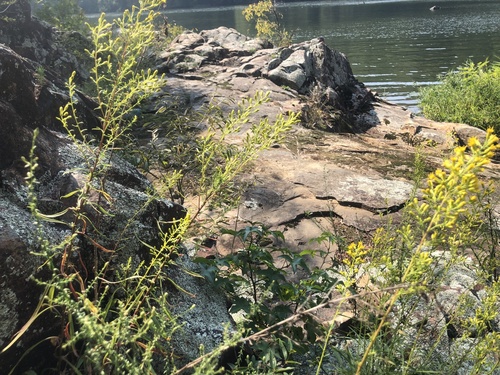
Solidago plumosa Small
Plumed goldenrod; Yadkin River Goldenrod
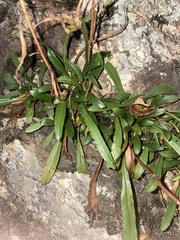
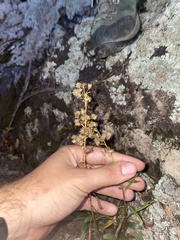
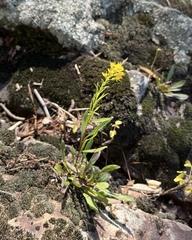
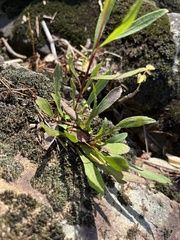
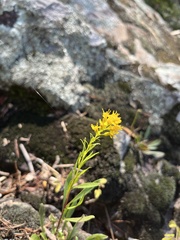
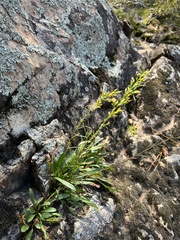 30 photographs ›
Summary
Solidago plumosa is a rare species of goldenrod known by the common names Yadkin River goldenrod, plumed goldenrod, and plumose goldenrod. It is endemic to North Carolina in the United States, where it grows only on the banks of the Yadkin River. There is only one known population. It is a candidate for federal protection.
Quoted from Wikipedia, "Solidago plumosa", CC BY-SA 4.0.
About the genus · Solidago
Solidago, commonly called goldenrod, is a genus of about 100 to 120 species of flowering plants in the family Asteraceae. Most are herbaceous perennial species found in open areas such as meadows, prairies, and savannas. They are mostly native to North America, including Mexico; a few species are native to South America and Eurasia. More on Wikipedia ›
Quoted from Wikipedia, "Solidago", CC BY-SA 4.0.
Cultivation
Climate across the habitat
Natural habitat
How this section is made
Photographs

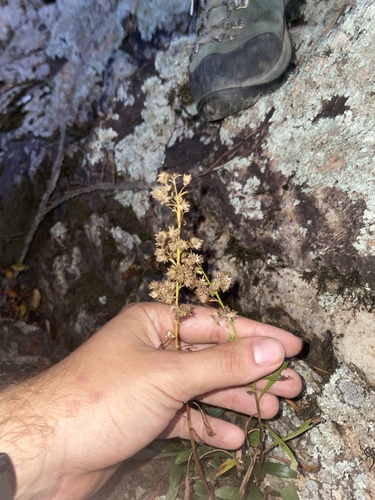
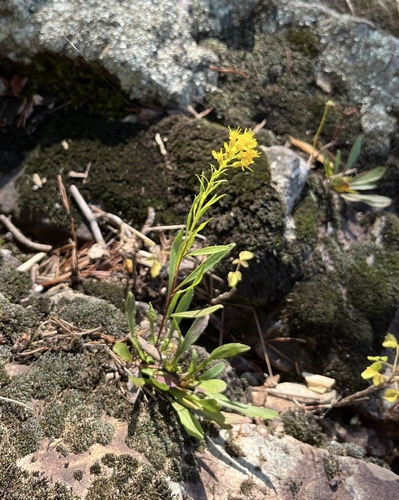


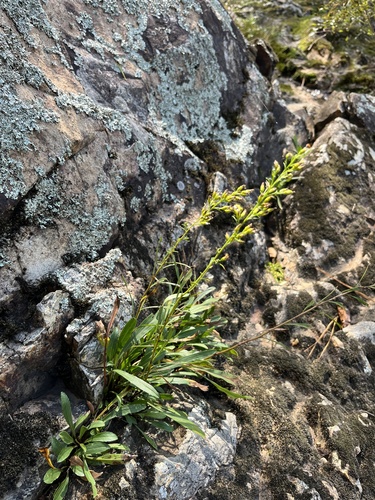
Photographs: author not stated, no rights reserved · CC0 (2); (c) harrier, some rights reserved (CC BY) (4).
Related
Other Solidago 65 in the reference
 Solidago altissima Tall goldenrod Photo: CC0, author not stated
 Solidago arguta Atlantic goldenrod Photo: CC BY, Rajan Rao
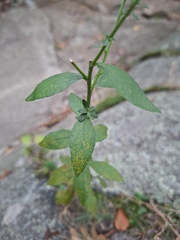 Solidago bicolor White goldenrod Photo: CC BY, Chris Reardon
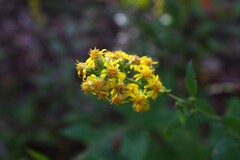 Solidago buckleyi Buckley's goldenrod Photo: CC BY, Dominic
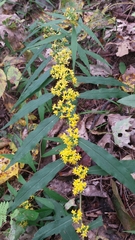 Solidago caesia Wreath goldenrod Photo: CC BY, Tom Norton
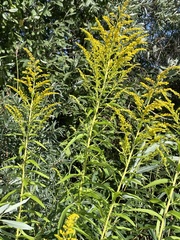 Solidago canadensis Canada goldenrod Photo: CC0, author not stated
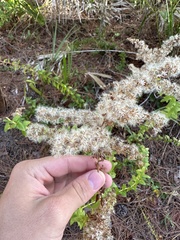 Solidago chapmanii Chapman's Goldenrod Photo: CC BY, Joseph Hubbard
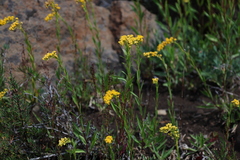 Solidago chilensis Anise Goldenrod Photo: CC BY-SA, Grzegorz Grzejszczak
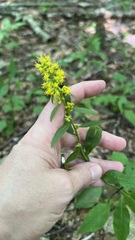 Solidago curtisii Mountain decumbent goldenrod Photo: CC0, author not stated
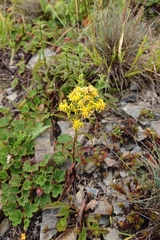 Solidago decurrens Asteraceae Photo: CC BY, 如此甚好
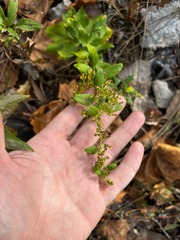 Solidago drummondii Drummond's goldenrod Photo: CC BY, Chris Stahl
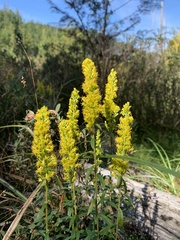 Solidago elongata West coast goldenrod Photo: CC0, author not stated all 66 ›
Names & registers
The record
Every figure here is derived from public data by a stated rule and names its source; nothing about this species is written for its page by a person or by AI, apart from the marked, credited quotations. How →
Where this page came from built 2026-10-22
gbif.species answeredasked 2026-10-22gbif.synonyms answeredasked 2026-10-22gbif.vernacular answeredasked 2026-10-22names fetched 2026-10-22wcvp.distribution answeredas of 2026-06-04gbif.occurrences answeredas of 2026-10-21GBIF occurrence download https://doi.org/10.15468/dl.hbdw64, of 2026-10-21; 3 records within 1 km of a botanic garden, herbarium or zoo left out (3 at a botanic garden or arboretum; Wikidata's list)climate nothing to reportasked 2026-10-22only 1 distinct land cell of the climate grid holds an in-range record placed to within 10 km; three are needed for an envelopewikidata answeredasked 2026-10-22wikipedia answeredasked 2026-10-22inat.photos.wild answeredasked 2026-10-22from iNaturalist's open data of 2026-09-27: research-grade observations with an open-licence photograph, the 24 whose photographs iNaturalist received last (the open data holds no votes); filled 2026-10-22inat.photos.cultivated not askedgbif.media answeredasked 2026-10-22none of the photographs on this page is credited to GBIF: those shown are other sources', and GBIF's were the same photographs or were set aside by the photograph rulesopenalex not askednot yet asked for this reference; a later fill takes the papers from OpenAlex's snapshotEvery source is recorded as having answered, reported nothing, refused, failed, not been asked, or answered twice where one answer is taken (“not taken: two items answered”), and, for a source asked when this page was built, when: the figures are as the source held them that day; a source read from a file (Kew's World Checklist, a GBIF download) says "as of" the file's day instead; a row carried from an earlier build of the page names that build instead. Only “nothing to report” is ever shown as an absence. Records came from 3 datasets via GBIF.org; each carries its own licence.