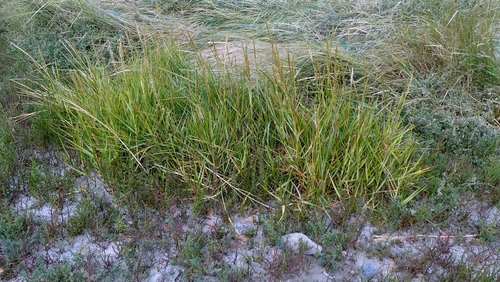
Sporobolus anglicus (C.E.Hubb.) P.M.Peterson & Saarela
English cordgrass; Common cord grass; Rice grass; Townsends grass
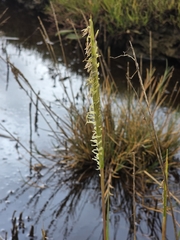
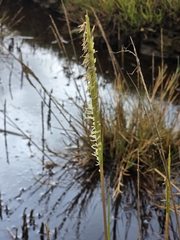
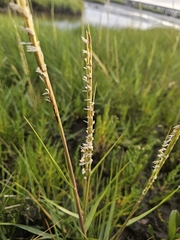
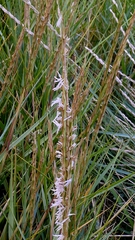
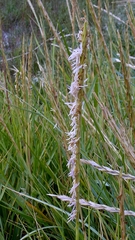
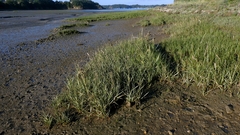 72 photographs ›
Summary
Sporobolus anglicus (common cordgrass) is a hybrid-derived species of cordgrass that originated in southern England in about 1870 and is a neonative species in Britain. It was reclassified as Sporobolus anglicus after a taxonomic revision in 2014, but its previous name, Spartina anglica is still in common usage. It is an allotetraploid species derived from the hybrid Sporobolus × townsendii, which arose when the European native cordgrass Sporobolus maritimus (small cordgrass) hybridized with the introduced American Sporobolus alterniflorus (smooth cordgrass).
Quoted from Wikipedia, "Sporobolus anglicus", CC BY-SA 4.0.
Cultivation
Climate across the habitat
Natural habitat
Photographs
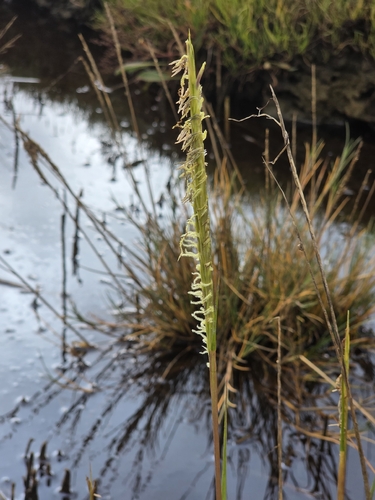
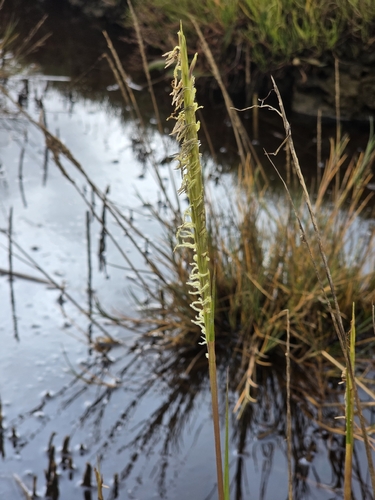
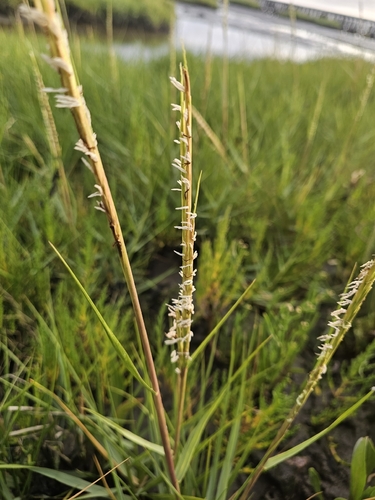
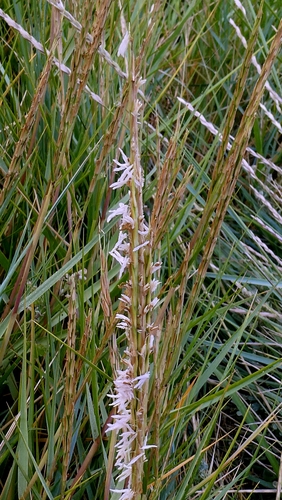
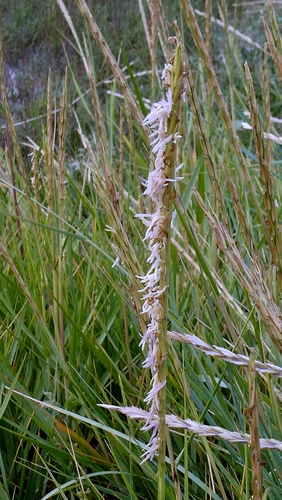
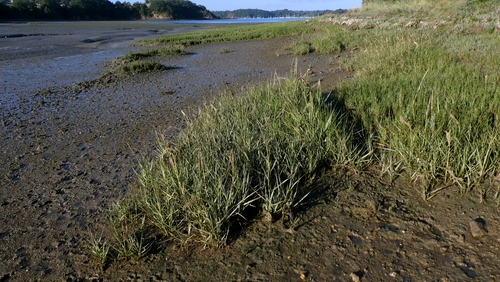
Photographs: (c) Matthew Flood, some rights reserved (CC BY) (2); (c) Emil Jantke, some rights reserved (CC BY); author not stated, no rights reserved · CC0 (3).
Related
Other Sporobolus 21 in the reference
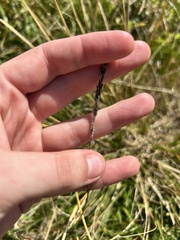 Sporobolus africanus African Dropseed Photo: CC BY, Tia McNicholl
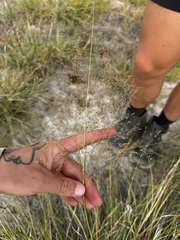 Sporobolus airoides Alkali sacaton Photo: CC BY, Parker James Lloyd
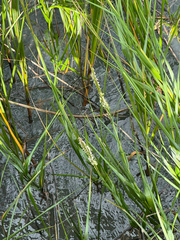 Sporobolus alterniflorus Smooth Cord-grass Photo: CC BY, Shelby Lyn Sanders
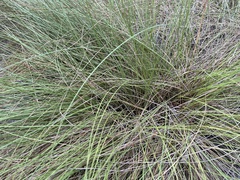 Sporobolus bakeri Sand Cordgrass Photo: CC BY, Pam Kleinsasser
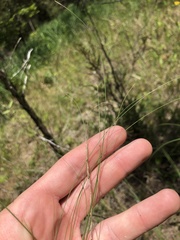 Sporobolus compositus Rough dropseed Photo: CC0, John Kees
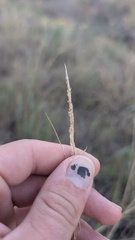 Sporobolus cryptandrus Sand dropseed Photo: CC0, author not stated
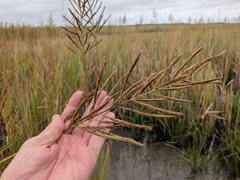 Sporobolus cynosuroides Big Cordgrass Photo: CC BY, Tom Field
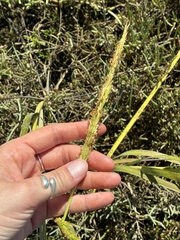 Sporobolus foliosus California Cord Grass Photo: CC BY, dorian
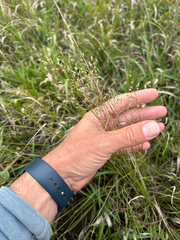 Sporobolus heterolepis Prairie dropseed Photo: CC0, author not stated
 Sporobolus indicus Smut grass Photo: CC0, author not stated
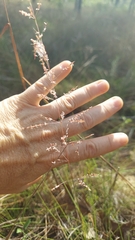 Sporobolus junceus Lizard Grass Photo: CC BY, Athena Philips
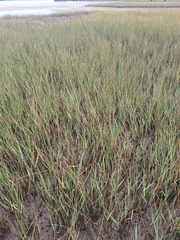 Sporobolus maritimus Small Cord-grass Photo: CC BY, Andreas De Beer all 22 ›
Names & registers
Also known as Spartina anglica; Spartina townsendii subsp. anglica. (GBIF Backbone)
The record
Every figure here is derived from public data by a stated rule and names its source; nothing about this species is written for its page by a person or by AI, apart from the marked, credited quotations. How →
Where this page came from built 2026-10-22
gbif.species answeredasked 2026-10-22gbif.synonyms answeredasked 2026-10-22gbif.vernacular answeredasked 2026-10-22names fetched 2026-10-22wcvp.distribution answeredas of 2026-06-04Kew's entry lists no native region, only 16 where it is introducedgbif.occurrences answeredas of 2026-10-21GBIF occurrence download https://doi.org/10.15468/dl.hbdw64, of 2026-10-21; 9 records within 1 km of a botanic garden, herbarium or zoo left out (4 at a botanic garden or arboretum, 5 at a zoo; Wikidata's list)climate nothing to reportasked 2026-10-22native range not verified: no WCVP distribution with native status for this name, so records cannot be told from cultivation and no habitat climate is derivedwikidata answeredasked 2026-10-22wikipedia answeredasked 2026-10-22inat.photos.wild answeredasked 2026-10-22from iNaturalist's open data of 2026-09-27: research-grade observations with an open-licence photograph, the 24 whose photographs iNaturalist received last (the open data holds no votes); filled 2026-10-22inat.photos.cultivated not askedgbif.media answeredasked 2026-10-22openalex not askednot yet asked for this reference; a later fill takes the papers from OpenAlex's snapshotEvery source is recorded as having answered, reported nothing, refused, failed, not been asked, or answered twice where one answer is taken (“not taken: two items answered”), and, for a source asked when this page was built, when: the figures are as the source held them that day; a source read from a file (Kew's World Checklist, a GBIF download) says "as of" the file's day instead; a row carried from an earlier build of the page names that build instead. Only “nothing to report” is ever shown as an absence. Records came from 78 datasets via GBIF.org; each carries its own licence.