Streptocarpus cyanandrus B.L.Burtt
Photographs not checked
iNaturalist was skipped (not asked) when this page was built. Not asked, or not answered, is not "none": nothing here claims there is none. Why the site says it this way.About the genus · Streptocarpus
Streptocarpus is an Afrotropical genus of flowering plants in the family Gesneriaceae. The genus is native to Afromontane biotopes from central, eastern and southern Africa, including Madagascar and the Comoro Islands. The flowers are five-petalled, salverform tubes, almost orchid-like in appearance, and hover or arch over the plant, while the pointed, elongate fruit is of a helical form similar to that of the "tusk" of a narwhal. More on Wikipedia ›
Quoted from Wikipedia, "Streptocarpus", CC BY-SA 4.0.
Cultivation
Climate across the habitat
Natural habitat
Photographs
Related
Other Streptocarpus 80 in the reference
 Streptocarpus brevipilosus Gesneriaceae Photo: CC0, Daderot
 Streptocarpus brevistamineus Gesneriaceae Photo: CC0, author not stated Streptocarpus buchananii Gesneriaceae Streptocarpus bullatus Gesneriaceae Streptocarpus capuronii Gesneriaceae
 Streptocarpus caulescens Nodding Violet Photo: CC BY, TANAKA Juuyoh (????)
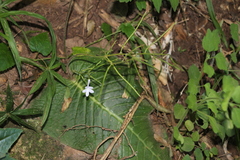 Streptocarpus confusus Gesneriaceae Photo: CC0, author not stated all 81 ›
Names & registers
The record
Every figure here is derived from public data by a stated rule and names its source; nothing about this species is written for its page by a person or by AI, apart from the marked, credited quotations. How →
Where this page came from built 2026-10-22
gbif.species answeredasked 2026-10-22gbif.synonyms answeredasked 2026-10-22gbif.vernacular answeredasked 2026-10-22names fetched 2026-10-22wcvp.distribution answeredas of 2026-06-04gbif.occurrences nothing to reportasked 2026-10-22climate nothing to reportasked 2026-10-22no georeferenced record inside the rangewikidata answeredasked 2026-10-22wikipedia nothing to reportasked 2026-10-22inat.photos.wild nothing to reportasked 2026-10-22from iNaturalist's open data of 2026-09-27: research-grade observations with an open-licence photograph, the 24 whose photographs iNaturalist received last (the open data holds no votes); filled 2026-10-22inat.photos.cultivated not askedgbif.media nothing to reportasked 2026-10-22commons nothing to reportasked 2026-10-22openalex not askednot yet asked for this reference; a later fill takes the papers from OpenAlex's snapshotEvery source is recorded as having answered, reported nothing, refused, failed, not been asked, or answered twice where one answer is taken (“not taken: two items answered”), and, for a source asked when this page was built, when: the figures are as the source held them that day; a source read from a file (Kew's World Checklist, a GBIF download) says "as of" the file's day instead; a row carried from an earlier build of the page names that build instead. Only “nothing to report” is ever shown as an absence.