Strobilanthes tonkinensis Lindau
Photographs not checked
iNaturalist was skipped (not asked) when this page was built. Not asked, or not answered, is not "none": nothing here claims there is none. Why the site says it this way.Summary
Strobilanthes tonkinensis is a species of herbaceous plant native to Southeast Asia. It is used as a flavoring for tea and other food.
Quoted from Wikipedia, "Strobilanthes tonkinensis", CC BY-SA 4.0.
About the genus · Strobilanthes
Strobilanthes is a genus of about 350 species of flowering plants in the family Acanthaceae, mostly native to tropical Asia and Madagascar, but with a few species extending north into temperate regions of Asia. Many species are cultivated for their two-lipped, hooded flowers in shades of blue, pink, white and purple. Most are frost-tender and require protection in frost-prone areas. More on Wikipedia ›
Quoted from Wikipedia, "Strobilanthes", CC BY-SA 4.0.
Cultivation
Climate across the habitat
Natural habitat
How this section is made
Photographs
Related
Other Strobilanthes 32 in the reference
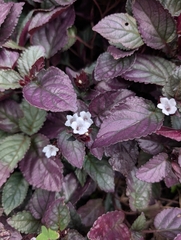 Strobilanthes alternata Red ivy Photo: CC BY, kumarkv
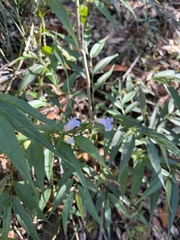 Strobilanthes anisophylla Goldfussia Photo: CC BY, Todd Huang
 Strobilanthes atropurpurea Acanthaceae Photo: CC BY, Ramnarayan K
 Strobilanthes attenuata Acanthaceae Photo: CC BY-SA, Dinesh Valke
 Strobilanthes auriculata Acanthaceae Photo: CC BY, Ricci Masero
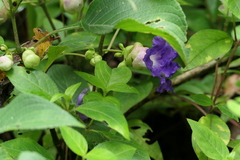 Strobilanthes callosa Acanthaceae Photo: CC BY-SA, Dinesh Valke
 Strobilanthes crispa Acanthaceae Photo: CC BY, Franz Anthony
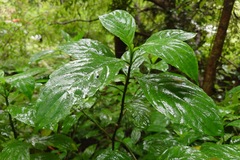 Strobilanthes cusia Acanthaceae Photo: CC BY, 如此甚好
 Strobilanthes cystolithigera Acanthaceae Photo: CC BY-SA, Krzysztof Ziarnek, Kenraiz Strobilanthes dimorphotricha Acanthaceae
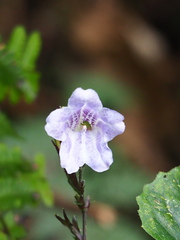 Strobilanthes flexicaulis Acanthaceae Photo: CC0, author not stated
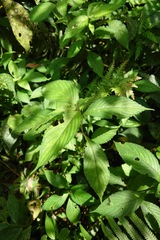 Strobilanthes formosana Acanthaceae Photo: CC BY, 如此甚好 all 33 ›
Names & registers
Also known as Semnostachya menglaensis; Strobilanthes menglaensis; Strobilanthes nivea; Strobilanthes tonkinensis var. sarmentosus; Sympagis nivea. (GBIF Backbone)
The record
Every figure here is derived from public data by a stated rule and names its source; nothing about this species is written for its page by a person or by AI, apart from the marked, credited quotations. How →
Where this page came from built 2026-10-22
gbif.species answeredasked 2026-10-22gbif.synonyms answeredasked 2026-10-22gbif.vernacular answeredasked 2026-10-22names fetched 2026-10-22wcvp.distribution answeredas of 2026-06-04gbif.occurrences answeredas of 2026-10-21GBIF occurrence download https://doi.org/10.15468/dl.hbdw64, of 2026-10-21climate nothing to reportasked 2026-10-2222 in-range records, none placed to within 10 kmwikidata answeredasked 2026-10-22wikipedia answeredasked 2026-10-22inat.photos.wild nothing to reportasked 2026-10-22from iNaturalist's open data of 2026-09-27: research-grade observations with an open-licence photograph, the 24 whose photographs iNaturalist received last (the open data holds no votes); filled 2026-10-22inat.photos.cultivated not askedgbif.media nothing to reportasked 2026-10-22commons nothing to reportasked 2026-10-22openalex not askednot yet asked for this reference; a later fill takes the papers from OpenAlex's snapshotEvery source is recorded as having answered, reported nothing, refused, failed, not been asked, or answered twice where one answer is taken (“not taken: two items answered”), and, for a source asked when this page was built, when: the figures are as the source held them that day; a source read from a file (Kew's World Checklist, a GBIF download) says "as of" the file's day instead; a row carried from an earlier build of the page names that build instead. Only “nothing to report” is ever shown as an absence. Records came from 7 datasets via GBIF.org; each carries its own licence.