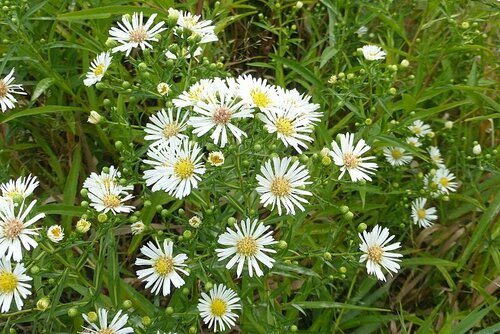
Symphyotrichum × salignum (Willd.) G.L.Nesom
Common Michaelmas daisy
A hybrid: S. lanceolatum × S. novi-belgii, the parents Kew's World Checklist states for it (WCVP, RBG Kew).


 24 photographs ›
About the genus · Symphyotrichum
Symphyotrichum is a genus of over 100 species and naturally occurring hybrids of herbaceous annual and perennial plants in the composite family, Asteraceae, most which were formerly treated within the genus Aster. The majority are endemic to North America, but several also occur in the West Indies, Central and South America, as well as one species in eastern Eurasia. Several species have been introduced to Europe as garden specimens, most notably New England aster and New York aster.
Quoted from Wikipedia, "Symphyotrichum", CC BY-SA 4.0.
Cultivation
Climate across the habitat
Natural habitat
Photographs
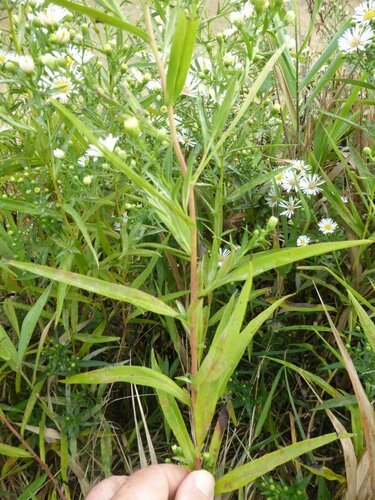
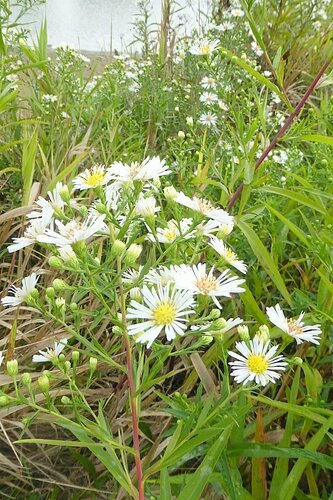
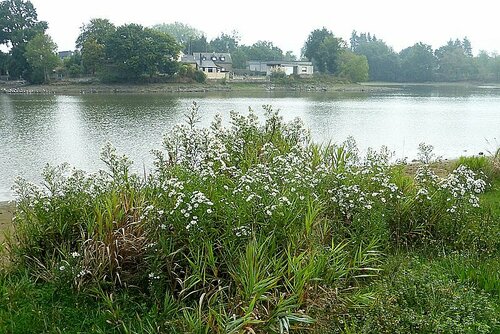


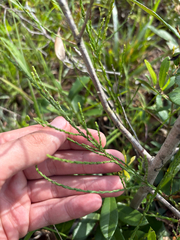
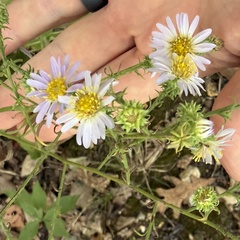
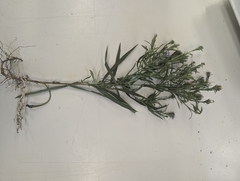
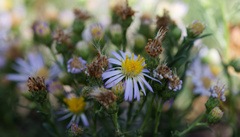
Photographs: Patrick Le Mao, CC0, iNaturalist via GBIF (3); Jan Heyerdahl, CC BY, via GBIF (3).
Related
Other Symphyotrichum 56 in the reference
 Symphyotrichum adnatum Scale-leaf aster Photo: CC0, author not stated
 Symphyotrichum anomalum Many-ray aster Photo: CC0, author not stated
 Symphyotrichum anticostense Anticosti Island aster Photo: CC0, author not stated
 Symphyotrichum ascendens Western aster Photo: CC BY, Daughter Dad
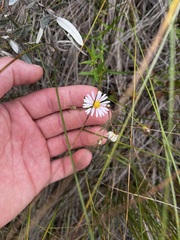 Symphyotrichum boreale Northern bog aster Photo: CC BY, Alex Baxter
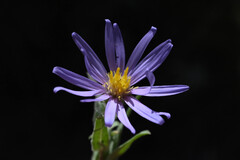 Symphyotrichum campestre Western meadow aster Photo: CC BY, Anders Hastings
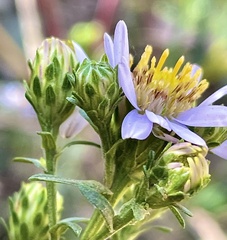 Symphyotrichum chilense Pacific aster Photo: CC0, author not stated
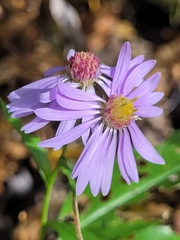 Symphyotrichum ciliolatum Lindley's aster Photo: CC BY, Robyn Perkins
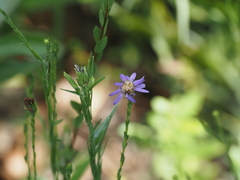 Symphyotrichum concolor Eastern silver aster Photo: CC BY, carter
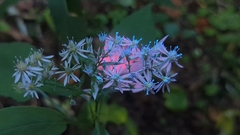 Symphyotrichum cordifolium Beeweed Photo: CC BY, Alan Rockefeller
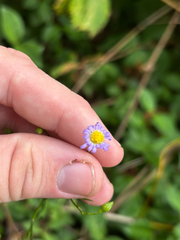 Symphyotrichum divaricatum Slimaster Photo: CC BY, Chris Stahl
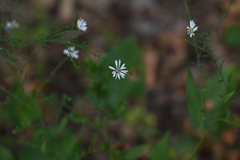 Symphyotrichum drummondii Drummond's aster Photo: CC0, author not stated all 57 ›
Names & registers
Also known as Amellus salignus; Aster angustus; Aster auriculatus; Aster bellidiflorus var. angustus; Aster frutetorum and 15 more. (GBIF Backbone)
The record
Every figure here is derived from public data by a stated rule and names its source; nothing about this species is written for its page by a person or by AI, apart from the marked, credited quotations. How →
Where this page came from built 2026-10-22
gbif.species answeredasked 2026-10-22gbif.synonyms answeredasked 2026-10-22gbif.vernacular answeredasked 2026-10-22names fetched 2026-10-22wcvp.distribution answeredas of 2026-06-04gbif.occurrences answeredas of 2026-10-21GBIF occurrence download https://doi.org/10.15468/dl.hbdw64, of 2026-10-21; 25 records within 1 km of a botanic garden, herbarium or zoo left out (20 at a botanic garden or arboretum, 1 at a herbarium, 4 at a zoo; Wikidata's list)climate nothing to reportasked 2026-10-22no georeferenced record inside the rangewikidata answeredasked 2026-10-22wikipedia nothing to reportasked 2026-10-22inat.photos.wild nothing to reportasked 2026-10-22from iNaturalist's open data of 2026-09-27: research-grade observations with an open-licence photograph, the 24 whose photographs iNaturalist received last (the open data holds no votes); filled 2026-10-22inat.photos.cultivated not askedgbif.media answeredasked 2026-10-22openalex not askednot yet asked for this reference; a later fill takes the papers from OpenAlex's snapshotEvery source is recorded as having answered, reported nothing, refused, failed, not been asked, or answered twice where one answer is taken (“not taken: two items answered”), and, for a source asked when this page was built, when: the figures are as the source held them that day; a source read from a file (Kew's World Checklist, a GBIF download) says "as of" the file's day instead; a row carried from an earlier build of the page names that build instead. Only “nothing to report” is ever shown as an absence. Records came from 181 datasets via GBIF.org; each carries its own licence.