Summary
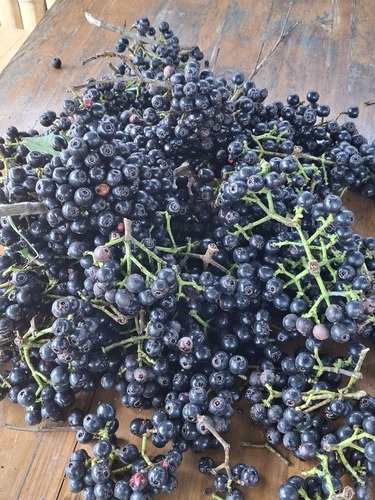
Syzygium polycephaloides, commonly known as lipote, is a species of tree native to the Philippines, southeastern Sulawesi, and the Lesser Sunda Islands. It bears edible red to purple berries that can be eaten fresh but are usually turned into jams or wine in the Philippines. The tree grows to a height of around 15 m (49 ft). The leaves are oblong in shape and are around 50 cm (20 in) long and 15 cm (5.9 in) wide. More on Wikipedia ›
Quoted from Wikipedia, "Syzygium polycephaloides", CC BY-SA 4.0.
About the genus · Syzygium
Syzygium is a genus of flowering plants that belongs to the myrtle family, Myrtaceae. The genus comprises about 1200 species, and has a native range that extends from Africa and Madagascar through southern Asia east through the Pacific. Its highest levels of diversity occur from Malaysia to northeastern Australia, where many species are very poorly known and many more have not been described taxonomically. More on Wikipedia ›
Quoted from Wikipedia, "Syzygium", CC BY-SA 4.0.
Cultivation
Climate across the habitat
Natural habitat
How this section is made
Related
Other Syzygium 85 in the reference
 Syzygium acre Myrtaceae Photo: CC BY-SA, didier
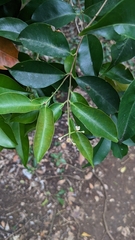 Syzygium acuminatissimum Myrtaceae Photo: CC BY, Cheng-Te Hsu
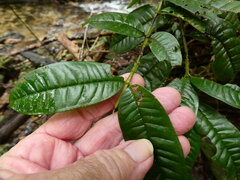 Syzygium alatoramulum Tinkling stainash Photo: CC BY-SA, Steve Fitzgerald
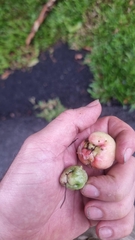 Syzygium alliiligneum Mission Beach satinash Photo: CC BY-SA, Evert Materman
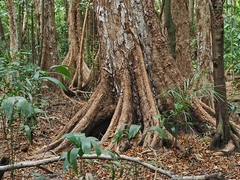 Syzygium angophoroides Swamp Satinash Photo: CC BY, Roland Muench
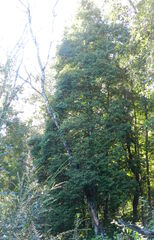 Syzygium anisatum Anise myrtle Photo: CC BY-SA, Lachlan Copeland
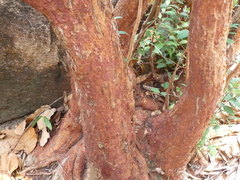 Syzygium antisepticum Myrtaceae Photo: CC BY, luluchouette
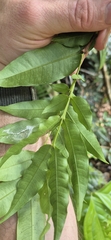 Syzygium apodophyllum Rex Satinash Photo: CC BY-SA, Evert Materman
 Syzygium aqueum Watery rose apple Photo: CC BY, T R Shankar Raman Syzygium armstrongii Small White Bush Apple
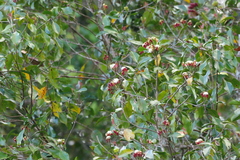 Syzygium aromaticum Clove Photo: CC BY, Eric Knight
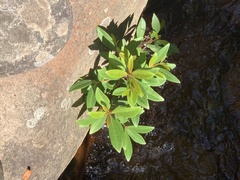 Syzygium australe Australian brush-cherry Photo: CC BY, Dave Richardson all 86 ›
Names & registers
Also known as Eugenia polycephaloides. (GBIF Backbone)
The record
Every figure here is derived from public data by a stated rule and names its source; nothing about this species is written for its page by a person or by AI, apart from the marked, credited quotations. How →
Where this page came from built 2026-10-22
gbif.species answeredasked 2026-10-22gbif.synonyms answeredasked 2026-10-22gbif.vernacular answeredasked 2026-10-22names fetched 2026-10-22wcvp.distribution answeredas of 2026-06-04gbif.occurrences answeredas of 2026-10-21GBIF occurrence download https://doi.org/10.15468/dl.hbdw64, of 2026-10-21climate nothing to reportasked 2026-10-2214 in-range records, none placed to within 10 kmwikidata answeredasked 2026-10-22wikipedia answeredasked 2026-10-22inat.photos.wild answeredasked 2026-10-22from iNaturalist's open data of 2026-09-27: research-grade observations with an open-licence photograph, the 24 whose photographs iNaturalist received last (the open data holds no votes); filled 2026-10-22inat.photos.cultivated not askedgbif.media answeredasked 2026-10-22none of the photographs on this page is credited to GBIF: those shown are other sources', and GBIF's were the same photographs or were set aside by the photograph rulescommons nothing to reportasked 2026-10-22openalex not askednot yet asked for this reference; a later fill takes the papers from OpenAlex's snapshotEvery source is recorded as having answered, reported nothing, refused, failed, not been asked, or answered twice where one answer is taken (“not taken: two items answered”), and, for a source asked when this page was built, when: the figures are as the source held them that day; a source read from a file (Kew's World Checklist, a GBIF download) says "as of" the file's day instead; a row carried from an earlier build of the page names that build instead. Only “nothing to report” is ever shown as an absence. Records came from 5 datasets via GBIF.org; each carries its own licence.