Thymus brachychilus Jalas
Photographs not checked
iNaturalist was skipped (not asked) when this page was built. Not asked, or not answered, is not "none": nothing here claims there is none. Why the site says it this way.About the genus · Thymus
The thymus is a specialized primary lymphoid organ of the immune system. Within the thymus, T cells mature. T cells are critical to the adaptive immune system, where the body adapts to specific foreign invaders. More on Wikipedia ›
Quoted from Wikipedia, "Thymus", CC BY-SA 4.0.
Cultivation
Grouped as a temperate garden plant, listed under the genus Thymus in the archetype table, and Kew describes it as “subshrub”, “temperate”.
How this section is made
Each card states this species' habitat figures with their sources, and what two fixed rules read from them; nothing here says what the plant does, wants or tolerates. The rules · the terms.
Group. Listed under the genus Thymus in the archetype table, and Kew describes it as “subshrub”, “temperate”. A group is taken only where Kew's description of the species agrees with the table's listing. The table gives no figure and no prose; the cold floor is the habitat's alone.
Climate across the habitat
Natural habitat
How this section is made
Photographs
Related
Other Thymus 43 in the reference
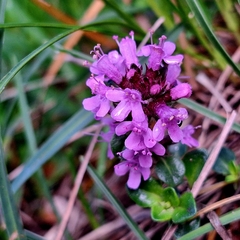 Thymus alpestris Wild Thyme Photo: CC BY, Marek Hrušovský Thymus altaicus Lamiaceae Thymus argaeus Lamiaceae
 Thymus baeticus Spanish Lemon Thyme Photo: CC BY-SA, Krzysztof Ziarnek, Kenraiz
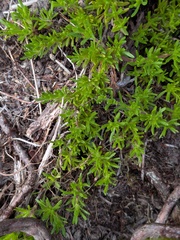 Thymus caespititius Azores thyme Photo: CC BY, Michael, Antoni and Nihat Hinczewski
 Thymus calcareus Lamiaceae Photo: CC BY, Aleksei Baushev
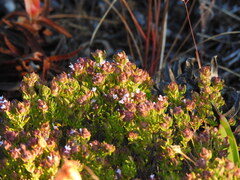 Thymus camphoratus Camphor Thyme Photo: CC BY, Duarte Frade
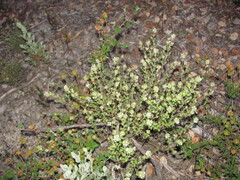 Thymus capitellatus Lamiaceae Photo: CC BY, zebedeugalinha
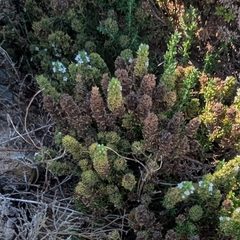 Thymus carnosus Portuguese Thyme Photo: CC BY, Dmitry Trutsko
 Thymus × citriodorus Lemon thyme Photo: CC BY, Julien Lepage
 Thymus comosus Lamiaceae Photo: CC BY-SA, Ghislain118 (AD)… Thymus daghestanicus Lamiaceae all 44 ›
Names & registers
The record
Every figure here is derived from public data by a stated rule and names its source; nothing about this species is written for its page by a person or by AI, apart from the marked, credited quotations. How →
Where this page came from built 2026-10-22
gbif.species answeredasked 2026-10-22gbif.synonyms answeredasked 2026-10-22gbif.vernacular answeredasked 2026-10-22names fetched 2026-10-22wcvp.distribution answeredas of 2026-06-04gbif.occurrences answeredas of 2026-10-21GBIF occurrence download https://doi.org/10.15468/dl.hbdw64, of 2026-10-21climate nothing to reportasked 2026-10-22only 2 distinct land cells of the climate grid hold an in-range record placed to within 10 km; three are needed for an envelopewikidata answeredasked 2026-10-22wikipedia nothing to reportasked 2026-10-22inat.photos.wild nothing to reportasked 2026-10-22from iNaturalist's open data of 2026-09-27: research-grade observations with an open-licence photograph, the 24 whose photographs iNaturalist received last (the open data holds no votes); filled 2026-10-22inat.photos.cultivated not askedgbif.media nothing to reportasked 2026-10-22commons nothing to reportasked 2026-10-22openalex not askednot yet asked for this reference; a later fill takes the papers from OpenAlex's snapshotEvery source is recorded as having answered, reported nothing, refused, failed, not been asked, or answered twice where one answer is taken (“not taken: two items answered”), and, for a source asked when this page was built, when: the figures are as the source held them that day; a source read from a file (Kew's World Checklist, a GBIF download) says "as of" the file's day instead; a row carried from an earlier build of the page names that build instead. Only “nothing to report” is ever shown as an absence. Records came from 2 datasets via GBIF.org; each carries its own licence.