


 4 photographs ›
Summary
Tilia chinensis (Chinese linden, Chinese: 椴树) is a species of lime or linden tree that is endemic to China. It flowers in July or August when honey bees collect honey from its flowers. Especially famous is honey taken from the Chinese linden flowers in Changbai Mountain.
Quoted from Wikipedia, "Tilia chinensis", CC BY-SA 4.0.
About the genus · Tilia
Tilia is a genus of about 30 species of trees or bushes, native throughout most of the temperate Northern Hemisphere. The species are known as linden or lime for the European and Asian species, and linden or basswood for North American species and more generally in American literature. The greatest species diversity is found in Asia, but the genus also occurs widely in Europe and eastern North America. More on Wikipedia ›
Quoted from Wikipedia, "Tilia", CC BY-SA 4.0.
Cultivation
Climate across the habitat
Natural habitat
How this section is made
Photographs


Photographs: APictche, CC BY-SA 4.0, via Wikimedia Commons (2); Organisme public, publication avec licence Creative Commons, sens large., Public domain, via Wikimedia Commons.
Related
Other Tilia 20 in the reference
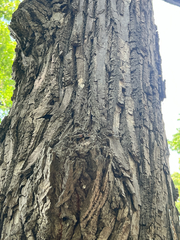 Tilia americana American basswood Photo: CC BY, Steven Lavoie
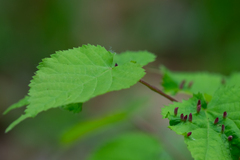 Tilia amurensis Amur linden Photo: CC BY, Поляков Александр
 Tilia chingiana Ching's Lime Photo: Public domain, Ptelea at en.wikipedia
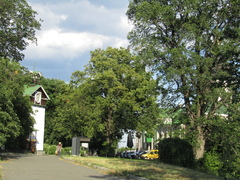 Tilia cordata Small-leaved lime Photo: CC BY, Oleksandr Shynder
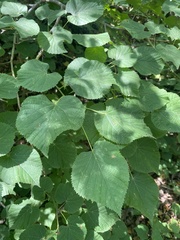 Tilia dasystyla Crimean Lime Photo: CC BY, Наталья Пикалова Tilia endochrysea Malvaceae
 Tilia × euchlora Caucasian lime Photo: CC BY-SA, Michael Pavlíček
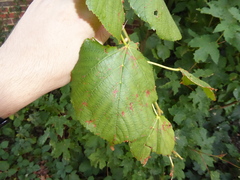 Tilia × europaea European linden Photo: CC BY, jamie-aa Tilia henryana Henry's Lime
 Tilia japonica Japanese linden Photo: CC BY-SA, harum.koh
 Tilia kiusiana Kyushu lime Photo: CC BY-SA, Krzysztof Ziarnek, Kenraiz
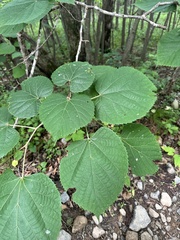 Tilia mandshurica Manchurian lime Photo: CC BY, Tatyana Petrenko all 21 ›
Names & registers
Also known as Tilia baroniana; Tilia laetevirens; Tilia yunnanensis. (GBIF Backbone)
The record
Every figure here is derived from public data by a stated rule and names its source; nothing about this species is written for its page by a person or by AI, apart from the marked, credited quotations. How →
Where this page came from built 2026-10-22
gbif.species answeredasked 2026-10-22gbif.synonyms answeredasked 2026-10-22gbif.vernacular answeredasked 2026-10-22names fetched 2026-10-22wcvp.distribution answeredas of 2026-06-04gbif.occurrences answeredas of 2026-10-21GBIF occurrence download https://doi.org/10.15468/dl.hbdw64, of 2026-10-21climate nothing to reportasked 2026-10-22only 1 distinct land cell of the climate grid holds an in-range record placed to within 10 km; three are needed for an envelopewikidata answeredasked 2026-10-22wikipedia answeredasked 2026-10-22inat.photos.wild nothing to reportasked 2026-10-22from iNaturalist's open data of 2026-09-27: research-grade observations with an open-licence photograph, the 24 whose photographs iNaturalist received last (the open data holds no votes); filled 2026-10-22inat.photos.cultivated not askedgbif.media nothing to reportasked 2026-10-22commons answeredasked 2026-10-22openalex not askednot yet asked for this reference; a later fill takes the papers from OpenAlex's snapshotEvery source is recorded as having answered, reported nothing, refused, failed, not been asked, or answered twice where one answer is taken (“not taken: two items answered”), and, for a source asked when this page was built, when: the figures are as the source held them that day; a source read from a file (Kew's World Checklist, a GBIF download) says "as of" the file's day instead; a row carried from an earlier build of the page names that build instead. Only “nothing to report” is ever shown as an absence. Records came from 19 datasets via GBIF.org; each carries its own licence.