Trillium georgianum S.B.Farmer
Georgia Dwarf Trillium
Photographs not checked
iNaturalist was skipped (not asked) when this page was built. Not asked, or not answered, is not "none": nothing here claims there is none. Why the site says it this way.Summary
Trillium georgianum, the Georgia dwarf trillium, is a species of flowering plant in the family Melanthiaceae. It is one of the rarest, and perhaps most threatened species in the Trillium pusillum species complex. It is the sole representative of the complex in the U.S. state of Georgia.
Quoted from Wikipedia, "Trillium georgianum", CC BY-SA 4.0.
About the genus · Trillium
Trillium is a genus of about fifty flowering plant species in the family Melanthiaceae. Trillium species are native to temperate regions of North America and Asia, with the greatest diversity of species found in the southern Appalachian Mountains in the southeastern United States.
Quoted from Wikipedia, "Trillium", CC BY-SA 4.0.
Cultivation
Climate across the habitat
Natural habitat
How this section is made
Photographs
Related
Other Trillium 39 in the reference
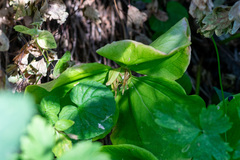 Trillium albidum Giant white wakerobin Photo: CC0, author not stated
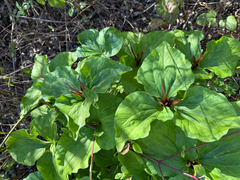 Trillium angustipetalum Narrowpetal wakerobin Photo: CC BY, Barry Langdon-Lassagne
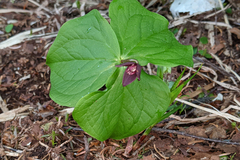 Trillium apetalon Melanthiaceae Photo: CC BY, Kristof Zyskowski
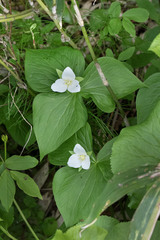 Trillium camschatcense Kamchatka trillium Photo: CC BY, Kristof Zyskowski
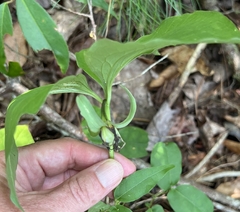 Trillium catesbaei Bashful wakerobin Photo: CC BY, willingarden
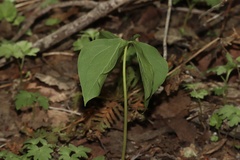 Trillium cernuum Whip-poor-will flower Photo: CC BY, Dustin Snider
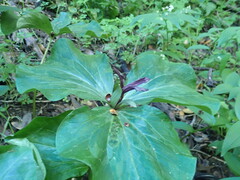 Trillium chloropetalum Giant trillium Photo: CC0, author not stated
 Trillium cuneatum Little sweet Betsy Photo: CC BY, Joseph Felts
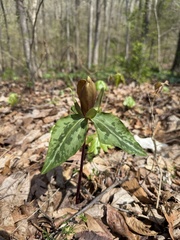 Trillium decipiens Chattahoochee River wakerobin Photo: CC BY, Brandon Corder
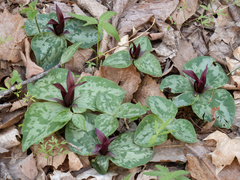 Trillium decumbens Decumbent Trillium Photo: CC BY-SA, Turner Brockman
 Trillium discolor Mottled wakerobin Photo: CC BY, Rachel Stepek
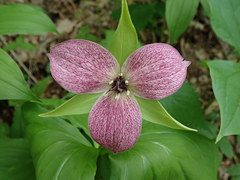 Trillium erectum Red trillium Photo: CC BY, Evan M. Raskin all 40 ›
Names & registers
Also known as Trillium pusillum var. georgianum. (GBIF Backbone)
The record
Every figure here is derived from public data by a stated rule and names its source; nothing about this species is written for its page by a person or by AI, apart from the marked, credited quotations. How →
Where this page came from built 2026-10-22
gbif.species answeredasked 2026-10-22gbif.synonyms answeredasked 2026-10-22gbif.vernacular answeredasked 2026-10-22names fetched 2026-10-22wcvp.distribution answeredas of 2026-06-04gbif.occurrences answeredas of 2026-10-21GBIF occurrence download https://doi.org/10.15468/dl.hbdw64, of 2026-10-21climate nothing to reportasked 2026-10-22only 1 distinct land cell of the climate grid holds an in-range record placed to within 10 km; three are needed for an envelopewikidata answeredasked 2026-10-22wikipedia answeredasked 2026-10-22inat.photos.wild nothing to reportasked 2026-10-22from iNaturalist's open data of 2026-09-27: research-grade observations with an open-licence photograph, the 24 whose photographs iNaturalist received last (the open data holds no votes); filled 2026-10-22inat.photos.cultivated not askedgbif.media nothing to reportasked 2026-10-22commons nothing to reportasked 2026-10-22openalex not askednot yet asked for this reference; a later fill takes the papers from OpenAlex's snapshotEvery source is recorded as having answered, reported nothing, refused, failed, not been asked, or answered twice where one answer is taken (“not taken: two items answered”), and, for a source asked when this page was built, when: the figures are as the source held them that day; a source read from a file (Kew's World Checklist, a GBIF download) says "as of" the file's day instead; a row carried from an earlier build of the page names that build instead. Only “nothing to report” is ever shown as an absence. Records came from 3 datasets via GBIF.org; each carries its own licence.