
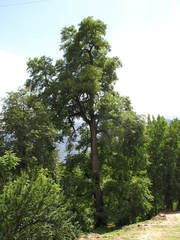


 6 photographs ›
Summary
Ulmus wallichiana Planch., the Himalayan elm, also known as the Kashmir elm and Bhutan elm, is a mountain tree ranging from central Nuristan in Afghanistan, through northern Pakistan and northern India to western Nepal at elevations of 800–3000 m. Its common name is occasionally used in error for the cherry bark elm Ulmus villosa, which is also endemic to the Kashmir, but inhabits the valleys, not the mountain slopes, and is dissimilar in appearance. The species is closely related to the wych elm U. glabra.
Quoted from Wikipedia, "Ulmus wallichiana", CC BY-SA 4.0.
Cultivation
Climate across the habitat
Natural habitat
How this section is made
Photographs


Photographs: (c) Yoav Daniel Bar-Ness, some rights reserved (CC BY); Ulmusenthu at en.wikipedia, Public domain, via Wikimedia Commons; Izigabo, CC BY-SA 4.0, via Wikimedia Commons (3).
Related
Other Ulmus 27 in the reference
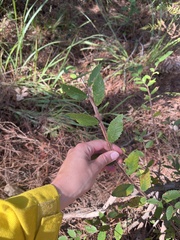 Ulmus alata Winged elm Photo: CC BY, C Fishtahler
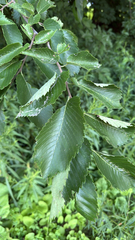 Ulmus americana American elm Photo: CC BY, The Wrong Industry
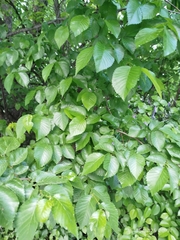 Ulmus × androssowii Narwan Photo: CC0, Pedro
 Ulmus bergmanniana Ulmaceae Photo: CC BY-SA, Ptelea
 Ulmus castaneifolia Ulmaceae Photo: CC BY-SA, Krzysztof Ziarnek, Kenraiz
 Ulmus chenmoui Harbin Elm Photo: Public domain, Ptelea
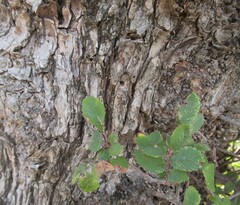 Ulmus crassifolia Cedar elm Photo: CC BY, Linda Jo Conn
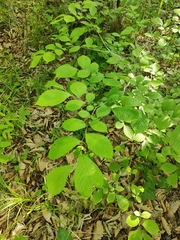 Ulmus davidiana Japanese elm Photo: CC BY, Станислав Чуванов
 Ulmus elliptica Ulmaceae Photo: CC BY-SA, Larker1
 Ulmus elongata Ulmaceae Photo: CC BY-SA, Gaojianguo
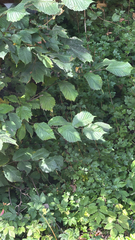 Ulmus glabra Wych elm Photo: CC BY, Cyndy Sims (Parr)
 Ulmus × hollandica Dutch elm Photo: CC BY-SA, anna_485 all 28 ›
Names & registers
Also known as Ulmus erosa; Ulmus pedunculata; Ulmus wallichiana subsp. xanthoderma; Ulmus wallichiana var. tomentosa; Ulmus wallichii. (GBIF Backbone)
The record
Every figure here is derived from public data by a stated rule and names its source; nothing about this species is written for its page by a person or by AI, apart from the marked, credited quotations. How →
Where this page came from built 2026-10-22
gbif.species answeredasked 2026-10-22gbif.synonyms answeredasked 2026-10-22gbif.vernacular answeredasked 2026-10-22names fetched 2026-10-22wcvp.distribution answeredas of 2026-06-04gbif.occurrences answeredas of 2026-10-21GBIF occurrence download https://doi.org/10.15468/dl.hbdw64, of 2026-10-21; 1 record within 1 km of a botanic garden, herbarium or zoo left out (1 at a zoo; Wikidata's list)climate nothing to reportasked 2026-10-22only 1 distinct land cell of the climate grid holds an in-range record placed to within 10 km; three are needed for an envelopewikidata answeredasked 2026-10-22IPNI and POWO linked by Kew's number for Ulmus wallichiana Planch. (the item's: IPNI 837183-1, POWO 856961-1)wikipedia answeredasked 2026-10-22inat.photos.wild answeredasked 2026-10-22from iNaturalist's open data of 2026-09-27: research-grade observations with an open-licence photograph, the 24 whose photographs iNaturalist received last (the open data holds no votes); filled 2026-10-22inat.photos.cultivated not askedgbif.media answeredasked 2026-10-22none of the photographs on this page is credited to GBIF: those shown are other sources', and GBIF's were the same photographs or were set aside by the photograph rulescommons answeredasked 2026-10-22openalex not askednot yet asked for this reference; a later fill takes the papers from OpenAlex's snapshotEvery source is recorded as having answered, reported nothing, refused, failed, not been asked, or answered twice where one answer is taken (“not taken: two items answered”), and, for a source asked when this page was built, when: the figures are as the source held them that day; a source read from a file (Kew's World Checklist, a GBIF download) says "as of" the file's day instead; a row carried from an earlier build of the page names that build instead. Only “nothing to report” is ever shown as an absence. Records came from 6 datasets via GBIF.org; each carries its own licence.