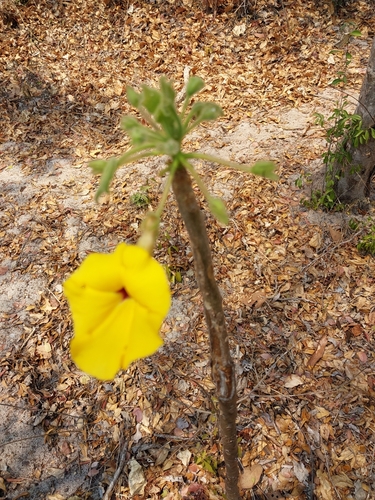
Uncarina turicana Lavranos
Pedaliaceae
Every figure on this page is derived from public data by a stated rule and says its source; nothing here is written by a person or a model, except the Wikipedia passage, which is quoted and marked as such. How it is made.
About the genus · Uncarina
Uncarina, also called succulent sesame, mousetrap plant, or local names include farehitra or farehitsy, is a genus of semi-succulent flowering plants in the Pedaliaceae found in Madagascar. As most species within the genus are inhabitants of dry, semi-arid or seasonally-dry regions, many mature into water-storing pachycauls, or "caudiciformes"—a common colloquial term to describe plants that normally inhabit drier climates and develop a large, woody base, or "foot", known as a caudex. In these species, a plant's lower half gradually accumulates and stores water ; over time, the caudex changes shape, swelling to an often impressive size, as it adds to its own moisture "reservoir" for future periods of drought.
Text from Wikipedia, “Uncarina”, CC BY-SA 4.0, quoted as written.
Cultivation
Climate across the habitat
Natural habitat
Papers naming this species
Works whose title or abstract names Uncarina turicana, most cited first, from OpenAlex (CC0). A mention, not a cultivation source: nothing on this page is drawn from them.
Related
Other Uncarina 13 in the reference
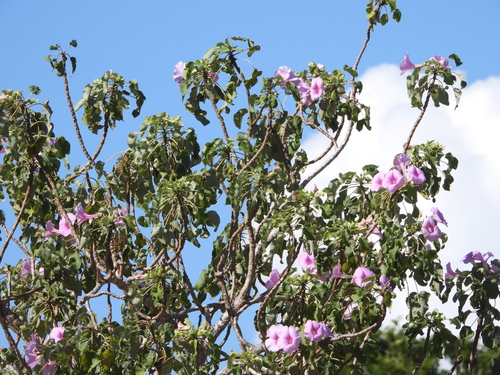 Uncarina abbreviata Pedaliaceae Uncarina ankaranensis Pedaliaceae
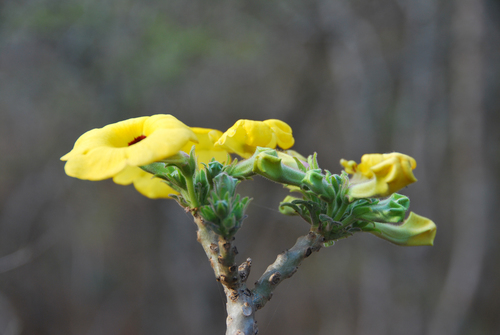 Uncarina decaryi Pedaliaceae
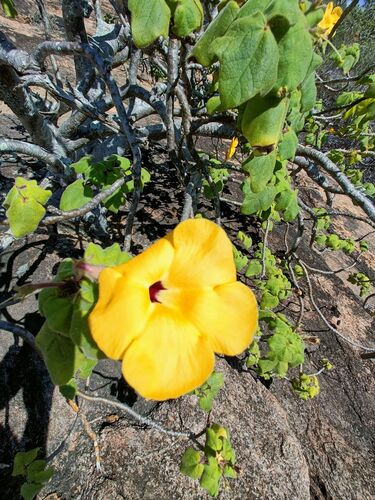 Uncarina grandidieri Mousetrap tree Uncarina ihlenfeldtiana Pedaliaceae
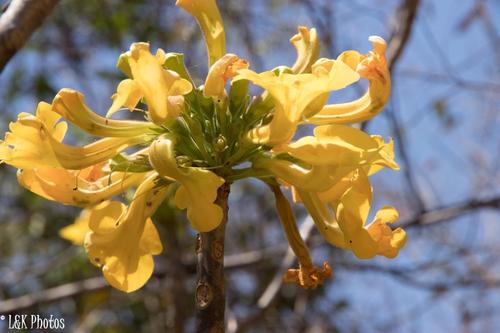 Uncarina leandrii Pedaliaceae Uncarina leptocarpa Pedaliaceae
 Uncarina peltata Pedaliaceae Uncarina perrieri Pedaliaceae Uncarina platycarpa Pedaliaceae Uncarina roeoesliana Pedaliaceae Uncarina sakalava Pedaliaceae all 14 ›
History & registers
Where this page came from built 2026-09-20 · dossier v2 · node
gbif.species answeredcarried from build of 2026-09-19 (offline re-derivation; the backbone was not asked)gbif.synonyms answeredcarried from build of 2026-09-19 (offline re-derivation; the backbone was not asked)gbif.vernacular answeredcarried from build of 2026-09-19 (offline re-derivation; the backbone was not asked)wcvp.distribution answeredgbif.occurrences answeredGBIF occurrence download https://doi.org/10.15468/dl.3h4zamclimate nothing to reportwikidata answeredcarried from build of 2026-09-19 (rederive); that build: carried from build of 2026-09-19 (rederive)wikipedia nothing to reportcarried from build of 2026-09-19; this build: skippedinat.taxon not askedinat.photos.wild nothing to reportcarried from build of 2026-09-19 (rederive); that build: carried from build of 2026-09-19 (rederive)inat.photos.cultivated nothing to reportcarried from build of 2026-09-19 (rederive); that build: carried from build of 2026-09-19 (rederive)commons nothing to reportcarried from build of 2026-09-19 (rederive); that build: carried from build of 2026-09-19 (rederive)gbif.media did not answerapi.gbif.org not asked: offline re-derivationopenalex answeredcarried from build of 2026-09-19; this build: skippedEvery upstream is recorded as having answered, reported nothing, or refused. Only “nothing to report” is ever shown as an absence. Records came from 1 datasets via GBIF.org; each carries its own licence.