
Vigna subterranea (L.) Verdc.
Bambarra groundnut; Bambara groundnut; Bambara-bean; Congo goober


 13 photographs ›
Summary
Vigna subterranea (common names: Bambara groundnut, Bambara nut, Bambara bean, manicongo, Congo goober, earth pea, ground-bean, or hog-peanut) is a member of the family Fabaceae. Its name is derived from the Bambara ethnic group. It reproduces via geocarpy, ripening its pods underground, much like the peanut (also called a groundnut).
Quoted from Wikipedia, "Vigna subterranea", CC BY-SA 4.0.
About the genus · Vigna
Vigna is a genus of plants in the legume family, Fabaceae, with a pantropical distribution. It includes some well-known cultivated species, including many types of beans. Some members of the genus were previously classified in Phaseolus. More on Wikipedia ›
Quoted from Wikipedia, "Vigna", CC BY-SA 4.0.
Cultivation
Climate across the habitat
Natural habitat
How this section is made
Photographs


Photographs: own, CC BY-SA 3.0, via Wikimedia Commons; Kembangraps, CC BY-SA 3.0, via Wikimedia Commons; Kkibumba, Public domain, via Wikimedia Commons (2); Lemurbaby at English Wikipedia, CC BY 3.0, via Wikimedia Commons; Flixtey, CC BY-SA 4.0, via Wikimedia Commons.
Related
Other Vigna 9 in the reference
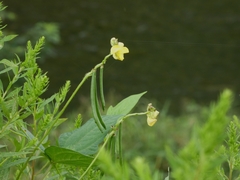 Vigna angularis Adzuki bean Photo: CC BY, mami_t_t
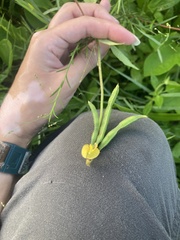 Vigna luteola Hairypod cowpea Photo: CC0, author not stated
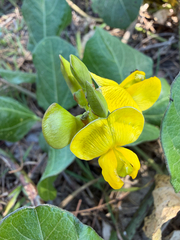 Vigna marina Notched cowpea Photo: CC BY, smathichong
 Vigna mungo Black gram Photo: CC0, author not stated
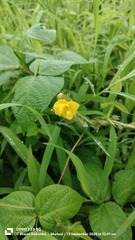 Vigna radiata Mung bean Photo: CC BY, Bharat Godambe
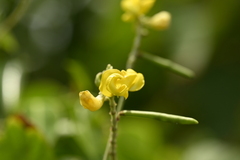 Vigna reflexopilosa Creole-bean Photo: CC BY, 曾昱承 Yu-Cheng Zeng
 Vigna umbellata Rice bean Photo: CC0, author not stated
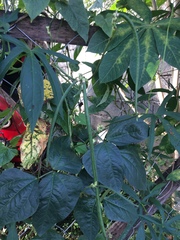 Vigna unguiculata Cowpea Photo: CC BY, Greg III Espera
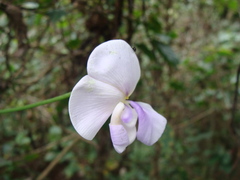 Vigna vexillata Zombi pea Photo: CC BY, Alexis López Hernández
Names & registers
Also known as Arachidna trifolia; Arachis africana; Cryptolobus africanus; Cryptolobus subterraneus; Geolobus flavus and 7 more. (GBIF Backbone)
The record
Every figure here is derived from public data by a stated rule and names its source; nothing about this species is written for its page by a person or by AI, apart from the marked, credited quotations. How →
Where this page came from built 2026-10-22
gbif.species answeredasked 2026-10-22gbif.synonyms answeredasked 2026-10-22gbif.vernacular answeredasked 2026-10-22names fetched 2026-10-22wcvp.distribution answeredas of 2026-06-04gbif.occurrences answeredas of 2026-10-21GBIF occurrence download https://doi.org/10.15468/dl.hbdw64, of 2026-10-21; 4 records within 1 km of a botanic garden, herbarium or zoo left out (2 at a botanic garden or arboretum, 2 at a zoo; Wikidata's list)climate nothing to reportasked 2026-10-22only 2 distinct land cells of the climate grid hold an in-range record placed to within 10 km; three are needed for an envelopewikidata answeredasked 2026-10-22wikipedia answeredasked 2026-10-22inat.photos.wild nothing to reportasked 2026-10-22from iNaturalist's open data of 2026-09-27: research-grade observations with an open-licence photograph, the 24 whose photographs iNaturalist received last (the open data holds no votes); filled 2026-10-22inat.photos.cultivated not askedgbif.media answeredasked 2026-10-22commons answeredasked 2026-10-22openalex not askednot yet asked for this reference; a later fill takes the papers from OpenAlex's snapshotEvery source is recorded as having answered, reported nothing, refused, failed, not been asked, or answered twice where one answer is taken (“not taken: two items answered”), and, for a source asked when this page was built, when: the figures are as the source held them that day; a source read from a file (Kew's World Checklist, a GBIF download) says "as of" the file's day instead; a row carried from an earlier build of the page names that build instead. Only “nothing to report” is ever shown as an absence. Records came from 30 datasets via GBIF.org; each carries its own licence.