Zanthoxylum myriacanthum Wall. ex Hook.f.
Cited as Kew's World Checklist cites it, Zanthoxylum myriacanthum Wall. ex Hook.f.: GBIF's backbone key for this page carries the name with another author, Wall. ex Hook.fil.
Photographs not checked
iNaturalist was skipped (not asked) when this page was built. Not asked, or not answered, is not "none": nothing here claims there is none. Why the site says it this way.Summary
Zanthoxylum myriacanthum (Chinese: 大叶臭花椒) is a woody plant from the family Rutaceae.
Quoted from Wikipedia, "Zanthoxylum myriacanthum", CC BY-SA 4.0.
About the genus · Zanthoxylum
Zanthoxylum is a genus of about 250 species of deciduous and evergreen trees, shrubs and climbers in the family Rutaceae that are native to warm temperate and subtropical areas worldwide. It is the type genus of the tribe Zanthoxyleae in the subfamily Rutoideae. Several of the species have yellow heartwood, to which their generic name alludes. More on Wikipedia ›
Quoted from Wikipedia, "Zanthoxylum", CC BY-SA 4.0.
Cultivation
Climate across the habitat
Natural habitat
How this section is made
Photographs
Related
Other Zanthoxylum 31 in the reference
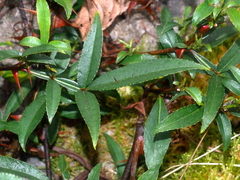 Zanthoxylum acanthopodium Rutaceae Photo: CC BY, Jacy Chen
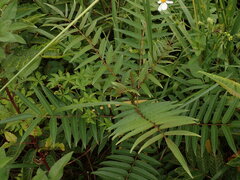 Zanthoxylum ailanthoides Alianthus-like prickly-ash Photo: CC BY, chiuluan
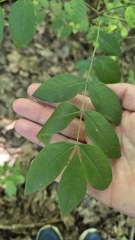 Zanthoxylum americanum Toothache tree Photo: CC BY, Carter Ertel
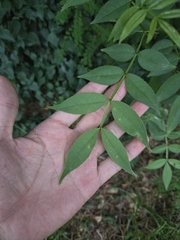 Zanthoxylum armatum Winged prickly-ash Photo: CC BY, jimmy
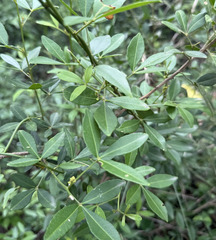 Zanthoxylum asiaticum Climbing Orange Photo: CC BY, Aparna
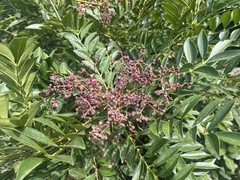 Zanthoxylum avicennae Chinese Wingleaf Prickly Ash Photo: CC BY, Toby Y
 Zanthoxylum beecheyanum Rutaceae Photo: CC BY, M108t
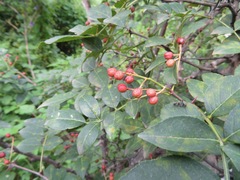 Zanthoxylum bungeanum Sichuan-pepper Photo: CC BY, Marco Mussita
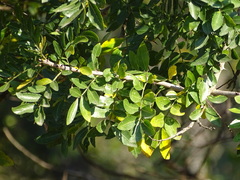 Zanthoxylum capense Rutaceae Photo: CC BY, Shaun Swanepoel
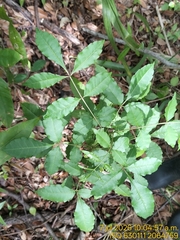 Zanthoxylum caribaeum Prickly yellow Photo: CC BY-SA, Janitzio Pech Zúñiga
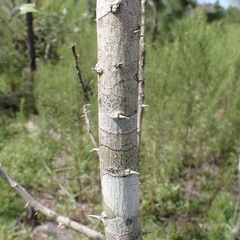 Zanthoxylum clava-herculis Hercules' club Photo: CC BY, Laura Gaudette
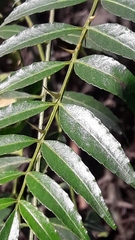 Zanthoxylum coco Rutaceae Photo: CC0, author not stated all 32 ›
Names & registers
Also known as Euodia odorata; Evodia odorata; Fagara diabolica; Fagara gigantea; Fagara myriacantha and 7 more. (GBIF Backbone)
The record
Every figure here is derived from public data by a stated rule and names its source; nothing about this species is written for its page by a person or by AI, apart from the marked, credited quotations. How →
Where this page came from built 2026-10-22
gbif.species answeredasked 2026-10-22GBIF's key 7859167 is Zanthoxylum myriacanthum Wall. ex Hook.fil.; the page links Kew's Zanthoxylum myriacanthum Wall. ex Hook.f., and the name is cited as Kew cites itgbif.synonyms answeredasked 2026-10-22gbif.vernacular answeredasked 2026-10-22names fetched 2026-10-22wcvp.distribution answeredas of 2026-06-04gbif.occurrences answeredas of 2026-10-21GBIF occurrence download https://doi.org/10.15468/dl.hbdw64, of 2026-10-21climate nothing to reportasked 2026-10-22only 1 distinct land cell of the climate grid holds an in-range record placed to within 10 km; three are needed for an envelopewikidata answeredasked 2026-10-22found by its label; its IPNI identifier 775875-1 is Kew's for Zanthoxylum myriacanthum Wall. ex Hook.f.wikipedia answeredasked 2026-10-22inat.photos.wild nothing to reportasked 2026-10-22from iNaturalist's open data of 2026-09-27: research-grade observations with an open-licence photograph, the 24 whose photographs iNaturalist received last (the open data holds no votes); filled 2026-10-22inat.photos.cultivated not askedgbif.media nothing to reportasked 2026-10-22commons nothing to reportasked 2026-10-22openalex not askednot yet asked for this reference; a later fill takes the papers from OpenAlex's snapshotEvery source is recorded as having answered, reported nothing, refused, failed, not been asked, or answered twice where one answer is taken (“not taken: two items answered”), and, for a source asked when this page was built, when: the figures are as the source held them that day; a source read from a file (Kew's World Checklist, a GBIF download) says "as of" the file's day instead; a row carried from an earlier build of the page names that build instead. Only “nothing to report” is ever shown as an absence. Records came from 15 datasets via GBIF.org; each carries its own licence.