Loranthaceae
48 species in 27 genera · 48 with a habitat climate · 48 grown, per iNaturalist
Most native to: Queensland 21New South Wales 18Western Australia 10Northern Territory 9Victoria 9South Australia 7Bangladesh 6Borneo 6Cambodia 6China South-Central 6China Southeast 6East Himalaya 6
A species counts in every region it is native to. Native ranges: Kew's World Checklist of Vascular Plants (Govaerts et al., CC BY 4.0), file of 4 June 2026.
48 species
Loranthaceae
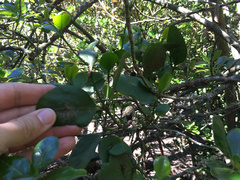 Ileostylus micranthus Green mistletoe Photo: CC BY, Jon Sullivan
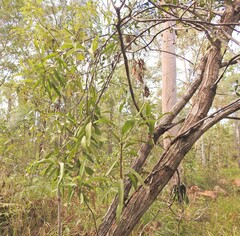 Dendrophthoe vitellina Long-flower Mistletoe Photo: CC BY, Scott W. Gavins
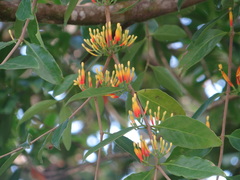 Amylotheca dictyophleba Brush mistletoe Photo: CC BY, 呂一起(Lyu yi-chi)
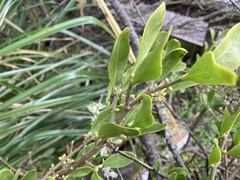 Tupeia antarctica Photo: CC BY, Andy McKay
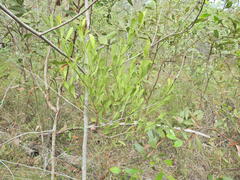 Amyema conspicua Alphitonia mistletoe Photo: CC BY, Scott W. Gavins
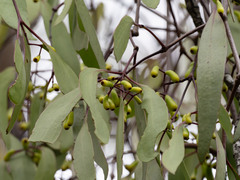 Muellerina eucalyptoides Creeping mistletoe Photo: CC BY, Kerri-Lee Harris
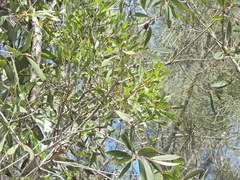 Diplatia furcata Bottlebrush Mistletoe Photo: CC BY, Scott W. Gavins
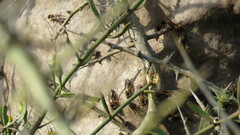 Ligaria cuneifolia Photo: CC0, demianlescano
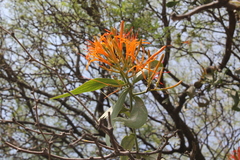 Psittacanthus calyculatus Photo: CC BY, Viacheslav Shalisko
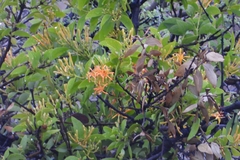 Psittacanthus schiedeanus Photo: CC BY, Ricardo Betancourt Sánchez
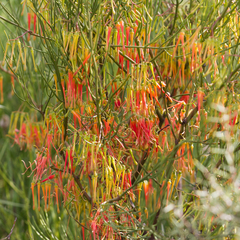 Amyema preissii Wireleaf mistletoe Photo: CC BY, Kym Nicolson
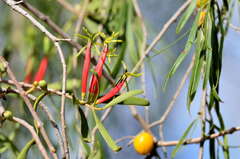 Lysiana exocarpi Harlequin Mistletoe Photo: CC BY, Chris Lindorff
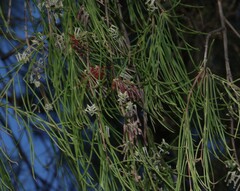 Amyema cambagei Needle-leaf mistletoe Photo: CC BY-SA, Greg Tasney
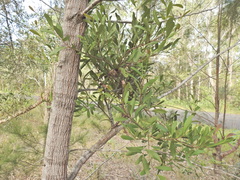 Amyema congener Variable mistletoe Photo: CC BY, Scott W. Gavins
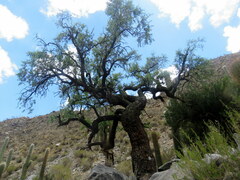 Tripodanthus acutifolius Photo: CC0, Diego Carús
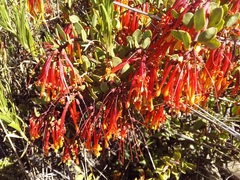 Tristerix penduliflorus Photo: CC BY, Humber Alberto
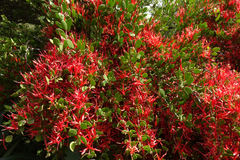 Peraxilla tetrapetala Red mistletoe Photo: CC BY, John Barkla
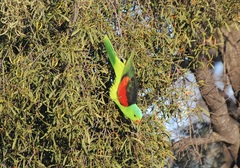 Lysiana subfalcata Northern mistletoe Photo: CC BY, Alan Bell
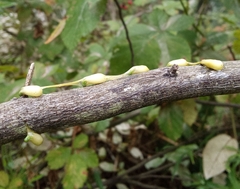 Tristerix corymbosus Photo: CC BY, Hector Montero
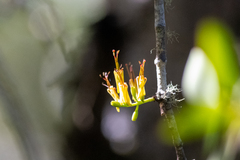 Alepis flavida Yellow Mistletoe Photo: CC BY, Richard Littauer
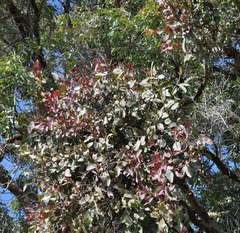 Muellerina celastroides Banksia mistletoe Photo: CC BY, Kevin Sparrow
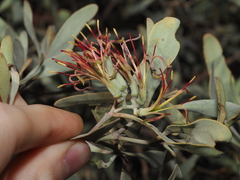 Amyema quandang Grey mistletoe Photo: CC BY, Thomas Mesaglio
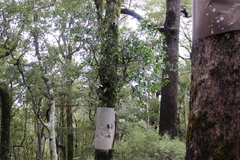 Peraxilla colensoi Scarlet mistletoe Photo: CC BY, Joe Dillon
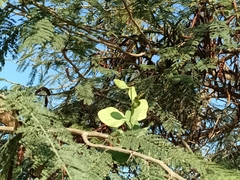 Struthanthus interruptus Photo: CC BY, nasua
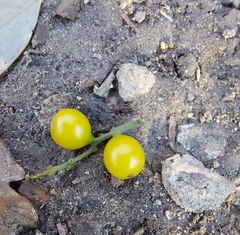 Loranthus europaeus Yellow-berried Mistletoe Photo: CC BY, Ross Krisztina
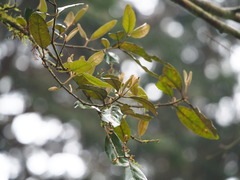 Taxillus liquidambaricola Photo: CC0, 葉子
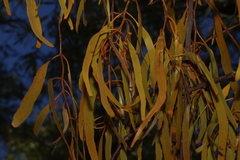 Amyema bifurcata Twin-fork mistletoe Photo: CC BY-SA, Greg Tasney
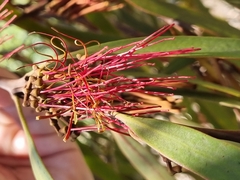 Amyema pendula Drooping mistletoe Photo: CC BY, Elaine Fieth
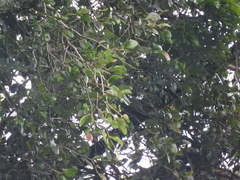 Benthamina alyxifolia Shiny-leaved Mistletoe Photo: CC BY, Samuel Frankel
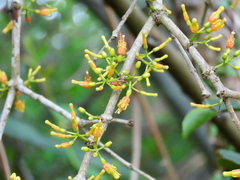 Macrosolen cochinchinensis Photo: CC BY, Toby Y
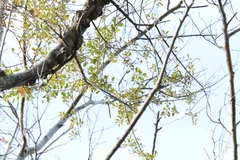 Taxillus chinensis Mulberry Mistletoe Photo: CC0, Agnes Trekker
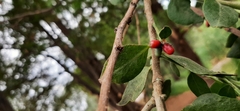 Cladocolea loniceroides Photo: CC BY-SA, Claudia Ramírez
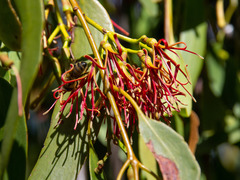 Amyema miquelii Box Mistletoe Photo: CC BY, Terra Occ
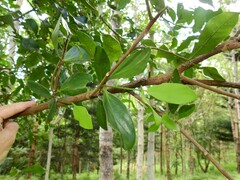 Amyema plicatula Rosewood Mistletoe Photo: CC BY, Samuel Frankel
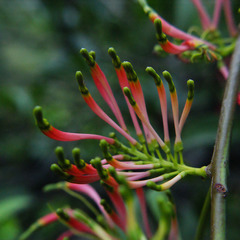 Dendrophthoe falcata Photo: CC BY, Paulmathi Vinod
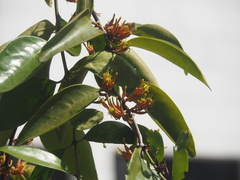 Dendrophthoe pentandra Photo: CC BY, Michael Berardozzi
 Gaiadendron punctatum Photo: CC BY, Andrés Ramírez-Barrera
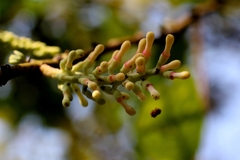 Helixanthera parasitica Photo: CC0, Agnes Trekker
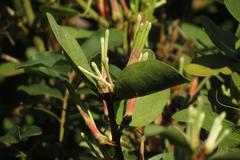 Erianthemum dregei Silky matchflower Photo: CC BY-SA, Brian du Preez
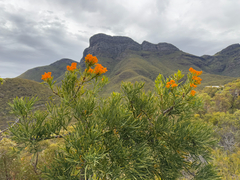 Nuytsia floribunda Western Australian Christmastree Photo: CC BY, Caleb Catto
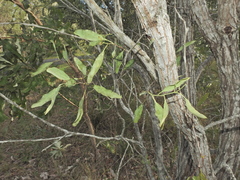 Dendrophthoe glabrescens Smooth mistletoe Photo: CC BY, Scott W. Gavins
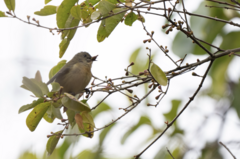 Scurrula parasitica Cinnamon Mistletoe Photo: CC BY, Andrew Lai
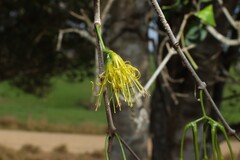 Amyema lucasii Leopardwood Mistletoe Photo: CC BY-SA, Greg Tasney
- no open photograph on file Diplatia tomentosa
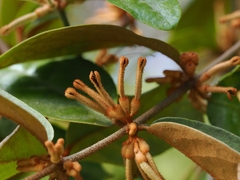 Scurrula ferruginea Photo: CC BY, Samuel Lee
 Tapinanthus oleifolius Bird-Lime Photo: CC BY-SA, Tony Rebelo
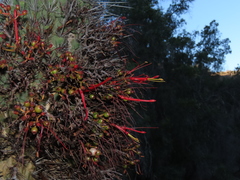 Tristerix aphyllus Photo: CC BY, Nicolás Lavandero
Phragmanthera usuiensis Photo: CC BY-SA, Acham Mortum
Grown: iNaturalist's observations of the species marked captive or cultivated; "not counted" where the species list does not count it. Native ranges: Kew's World Checklist of Vascular Plants (Govaerts et al., CC BY 4.0), file of 4 June 2026. Grown: iNaturalist's observations marked captive or cultivated, counted 17 October 2026 (the species list's count). Habitat climate known: the species page has a habitat climate, read from CHELSA's monthly climate and NASA POWER's daily extremes at its well-placed wild records inside Kew's native range; each page says its own sources and days. Record low: the lowest night in NASA POWER's daily series at the habitat's typical spot, as the species page gives it, held in °C to a tenth and shown in your units; each page says its own years and day read. Counts as the reference built on 19 November 2026 holds them. The CSV holds every result, not only this page's.