Myricaceae
19 species in 3 genera · 17 with a habitat climate · 18 grown, per iNaturalist, 1 not counted
Most native to: North Carolina 6Cape Provinces 5New Jersey 5Virginia 5Alabama 4Georgia 4Maryland 4New York 4Pennsylvania 4South Carolina 4China Southeast 3Connecticut 3
A species counts in every region it is native to. Native ranges: Kew's World Checklist of Vascular Plants (Govaerts et al., CC BY 4.0), file of 4 June 2026.
19 species
Myricaceae
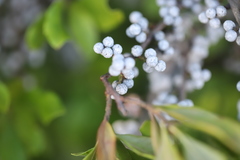 Myrica pensylvanica Northern bayberry Photo: CC BY, Steven Bodzin
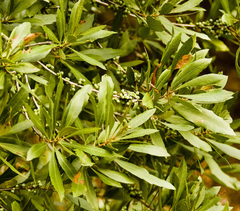 Myrica cerifera Wax myrtle Photo: CC BY, Seig
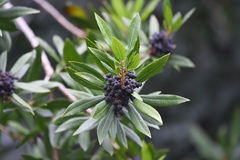 Myrica californica California wax-myrtle Photo: CC BY, John Leszczynski
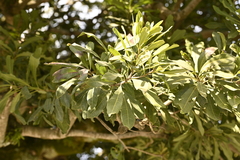 Myrica rubra Red bayberry Photo: CC BY, 曾昱承 Yu-Cheng Zeng
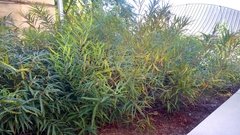 Comptonia peregrina Sweet-fern Photo: CC0, Susan Butts
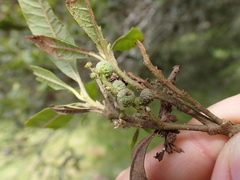 Myrica pubescens Photo: CC BY, Skjold Søndergaard
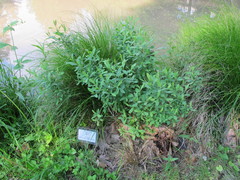 Myrica gale Bog-myrtle Photo: CC BY-SA, Grzegorz Grzejszczak
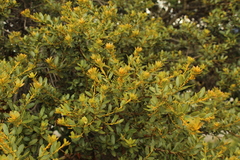 Myrica parvifolia Photo: CC BY, Andrés Ramírez-Barrera
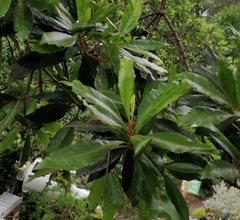 Myrica faya Faya Photo: CC BY, Vítor Jorge
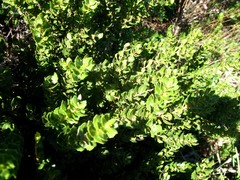 Myrica cordifolia Photo: CC BY, YvettevWijk
- no open photograph on file Myrica pusilla
 Myrica adenophora Photo: CC BY, Licheng Shih
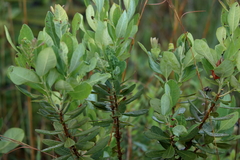 Myrica caroliniensis Photo: CC BY, Lauren McLaurin
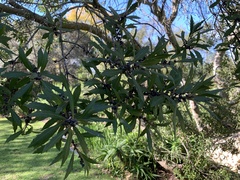 Myrica serrata Lance-Leaved Wax-Berry Photo: CC BY, Dave Richardson
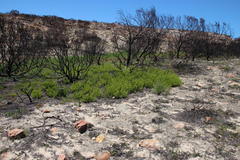 Myrica quercifolia Photo: CC BY-SA, Tony Rebelo
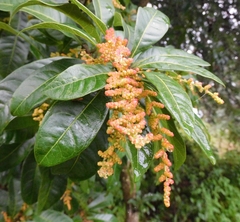 Myrica esculenta Photo: CC BY, Jagdish Singh Negi
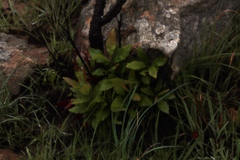 Myrica pilulifera Photo: CC BY-SA, Tony Rebelo
- no open photograph on file Myrica humilis
- no open photograph on file Canacomyrica monticola
Grown: iNaturalist's observations of the species marked captive or cultivated; "not counted" where the species list does not count it. Native ranges: Kew's World Checklist of Vascular Plants (Govaerts et al., CC BY 4.0), file of 4 June 2026. Grown: iNaturalist's observations marked captive or cultivated, counted 17 October 2026 (the species list's count). Habitat climate known: the species page has a habitat climate, read from CHELSA's monthly climate and NASA POWER's daily extremes at its well-placed wild records inside Kew's native range; each page says its own sources and days. Record low: the lowest night in NASA POWER's daily series at the habitat's typical spot, as the species page gives it, held in °C to a tenth and shown in your units; each page says its own years and day read. Counts as the reference built on 19 November 2026 holds them. The CSV holds every result, not only this page's.