Santalaceae
49 species in 18 genera · 46 with a habitat climate · 49 grown, per iNaturalist
Most native to: Mexico Northeast 10Mexico Northwest 9Queensland 9New South Wales 8Cape Provinces 7Mexico Central 7Mexico Southwest 7Western Australia 7Texas 6Victoria 6Arizona 5California 5
A species counts in every region it is native to. Native ranges: Kew's World Checklist of Vascular Plants (Govaerts et al., CC BY 4.0), file of 4 June 2026.
49 species
Santalaceae
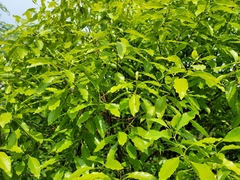 Santalum album Indian sandalwood Photo: CC BY, Yu-Huang Wang
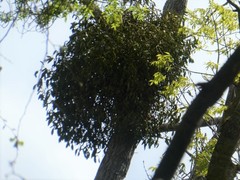 Viscum album European mistletoe Photo: CC0, pete_gateley
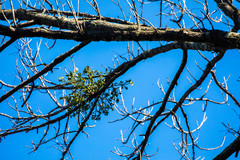 Phoradendron leucarpum Oak mistletoe Photo: CC BY, Melissa McMasters
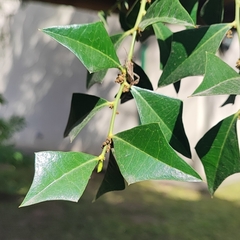 Jodina rhombifolia Photo: CC BY, Thomaz Ricardo Favreto Sinani
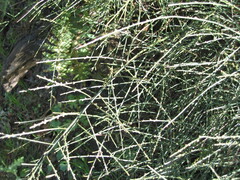 Osyris alba Poet's Cassia Photo: CC BY, zebedeugalinha
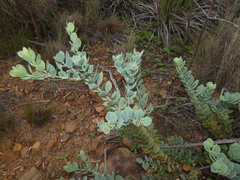 Osyris compressa Photo: CC BY, Sean Hartnett
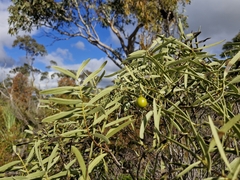 Santalum acuminatum Sweet quandong Photo: CC BY, ronavery
 Exocarpos cupressiformis Cherry ballart Photo: CC0, John Cull
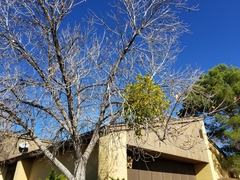 Phoradendron macrophyllum Colorado Desert mistletoe Photo: CC0, Ben Sims
 Santalum ellipticum Coastal sandalwood Photo: CC0, Sonny Gamponia
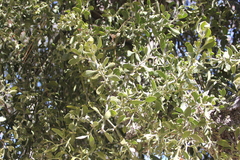 Phoradendron villosum Pacific mistletoe Photo: CC BY, Millie Basden
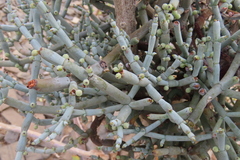 Viscum capense Photo: CC0, dune_ninja
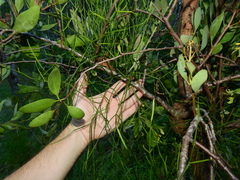 Viscum articulatum Photo: CC BY, Samuel Frankel
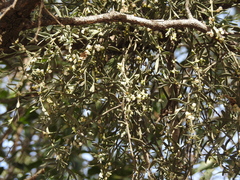 Phoradendron quadrangulare Quacimmila de canario Photo: CC BY, Eduardo Luis Beltrocco
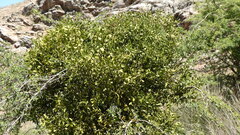 Viscum cruciatum Red-berried Mistletoe Photo: CC BY, frangp
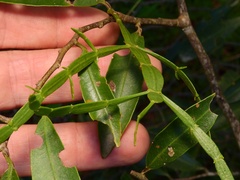 Korthalsella rubra Photo: CC BY, Samuel Frankel
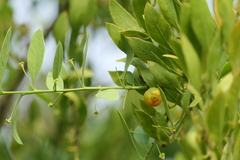 Osyris lanceolata Photo: CC BY-SA, Dinesh Valke
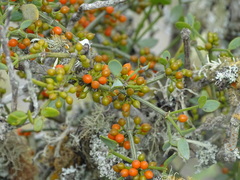 Viscum rotundifolium Photo: CC BY, Shaun Swanepoel
 Acanthosyris spinescens Photo: CC BY, Agustina Medina
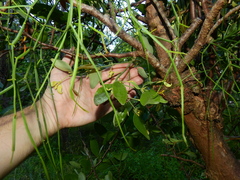 Notothixos subaureus Golden mistletoe Photo: CC BY, Samuel Frankel
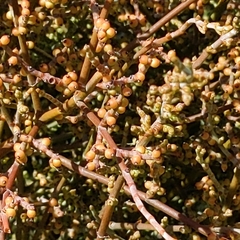 Phoradendron californicum Acacia mistletoe Photo: CC0, Vasily Reinkymov
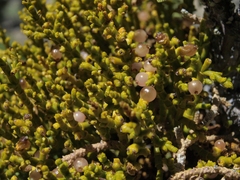 Phoradendron juniperinum Incense cedar mistletoe Photo: CC BY, Jim Morefield
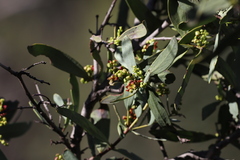 Santalum spicatum West Australian sandalwood Photo: CC BY, Hugo Innes
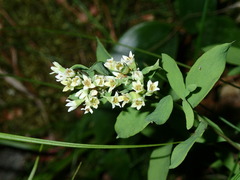 Comandra umbellata Bastard toadflax Photo: CC BY, Katherine Baird
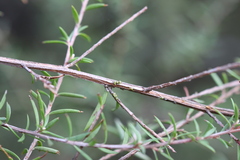 Korthalsella salicornioides Mistletoes Photo: CC BY, Andy McKay
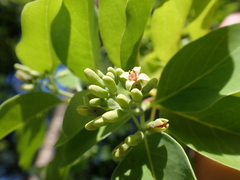 Santalum austrocaledonicum Coral Sea Sandalwood Photo: CC BY, Neal Kelso
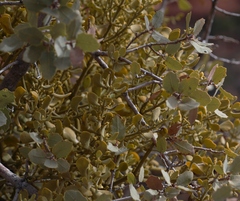 Phoradendron coryae Cory's mistletoe Photo: CC BY, Gail A Baker
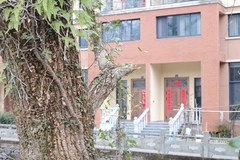 Viscum coloratum Korean mistletoe Photo: CC BY, 王天
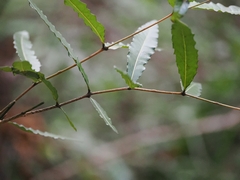 Mida salicifolia New Zealand Sandalwood Photo: CC BY, Angus Campbell
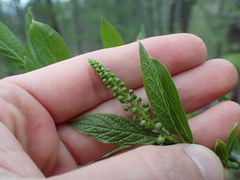 Pyrularia pubera Buffalo-nut Photo: CC BY, Evan M. Raskin
 Phoradendron brachystachyum Photo: CC BY, Jose Luis Leon de la Luz
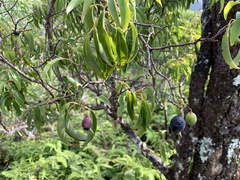 Santalum freycinetianum Lanai Sandalwood Photo: CC BY, Neal Kelso
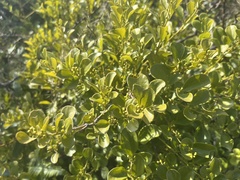 Dendrotrophe varians Photo: CC BY, Toby Y
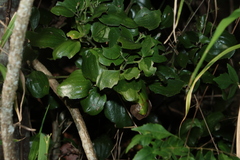 Exocarpos latifolius Broad Leaved Native Cherry Photo: CC BY-SA, Greg Tasney
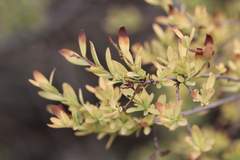 Myoschilos oblongus Photo: CC BY, Cesar Ormazabal
 Viscum minimum Mini Mistletoe Photo: CC BY-SA, Frank Vincentz
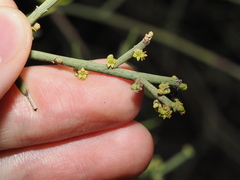 Exocarpos aphyllus Leafless Ballart Photo: CC BY, Thomas Mesaglio
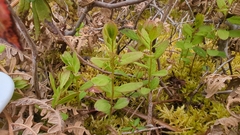 Geocaulon lividum False toadflax Photo: CC BY, Pete Lypkie
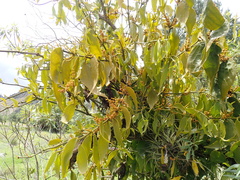 Phoradendron nervosum Photo: CC BY, Skjold Søndergaard
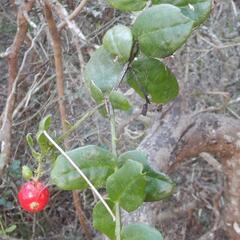 Rhoiacarpos capensis Albany Sumach Photo: CC BY, Henry de Lange
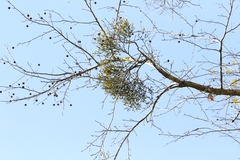 Viscum liquidambaricola Photo: CC0, Agnes Trekker
 Buckleya distichophylla Piratebush Photo: CC BY, Evan M. Raskin
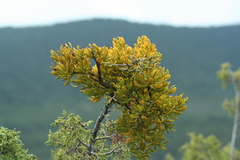 Phoradendron bolleanum Bollean mistletoe Photo: CC BY, Luis F. Ramírez
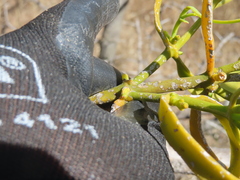 Phoradendron carneum Photo: CC BY, Ulises Pinedo
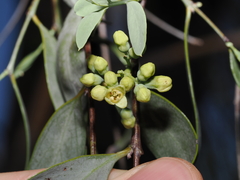 Santalum lanceolatum Plumbush Photo: CC BY, Thomas Mesaglio
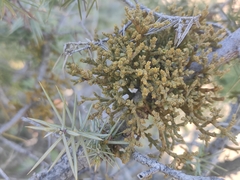 Arceuthobium oxycedri Juniper Dwarf Mistletoe Photo: CC BY, Augustin Soulard
 Viscum crassulae Stonecrop Mistletoe Photo: CC BY-SA, SAplants
 Buckleya lanceolata Photo: CC BY-SA, Qwert1234
Grown: iNaturalist's observations of the species marked captive or cultivated; "not counted" where the species list does not count it. Native ranges: Kew's World Checklist of Vascular Plants (Govaerts et al., CC BY 4.0), file of 4 June 2026. Grown: iNaturalist's observations marked captive or cultivated, counted 17 October 2026 (the species list's count). Habitat climate known: the species page has a habitat climate, read from CHELSA's monthly climate and NASA POWER's daily extremes at its well-placed wild records inside Kew's native range; each page says its own sources and days. Record low: the lowest night in NASA POWER's daily series at the habitat's typical spot, as the species page gives it, held in °C to a tenth and shown in your units; each page says its own years and day read. Counts as the reference built on 19 November 2026 holds them. The CSV holds every result, not only this page's.