Amsonia
10 species in the reference · family Apocynaceae · 10 with a habitat climate · 10 grown, per iNaturalist
About the genus
Amsonia is a genus of flowering plants in the dogbane family, Apocynaceae, first described as a genus in 1788. It is native primarily to North America with one species in East Asia and another in the eastern Mediterranean. It was named in honor of the American physician John Amson. Members of the genus are commonly known as bluestars.
Quoted from Wikipedia, "Amsonia", its opening paragraph, revision 1352660882, read 2026-11-08, CC BY-SA 4.0.
Where Amsonia is native
| Texas | 5 |
|---|---|
| Alabama | 3 |
| Arizona | 3 |
| Arkansas | 3 |
| Georgia | 3 |
| Missouri | 3 |
| New Mexico | 3 |
| Oklahoma | 3 |
| Florida | 2 |
| Louisiana | 2 |
| Mexico Northeast | 2 |
| Mississippi | 2 |
Species native to each region. A species counts in every region it is native to. Native ranges: Kew's World Checklist of Vascular Plants (Govaerts et al., CC BY 4.0), file of 4 June 2026.
10 species
Amsonia
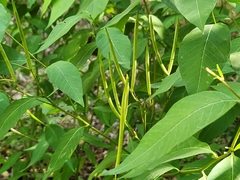 Amsonia tabernaemontana Texas-star Photo: CC0, Angelique Todd
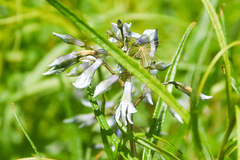 Amsonia hubrichtii Hubricht's bluestar Photo: CC BY, Jay Pruett
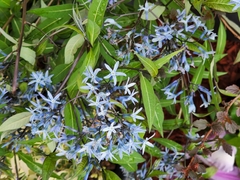 Amsonia ciliata Texas slimpod Photo: CC BY, Mark Richman
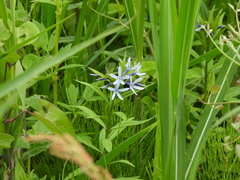 Amsonia elliptica Asian bluestar Photo: CC0, renshuchu
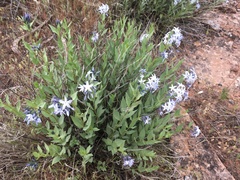 Amsonia jonesii Jones' bluestar Photo: CC BY, Shalana Gray
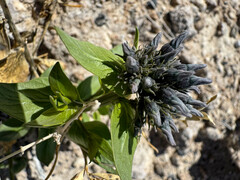 Amsonia tomentosa Woolly amosonia Photo: CC BY, Madeleine Claire
 Amsonia orientalis Blue Star Photo: CC BY, Linda from Chicago, USA
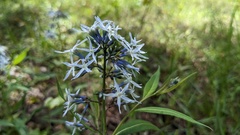 Amsonia rigida Pond bluestar Photo: CC BY, Joseph Aubert
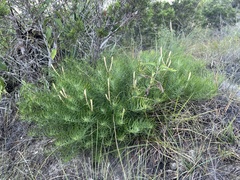 Amsonia longiflora Tubular bluestar Photo: CC BY, Reid Hardin
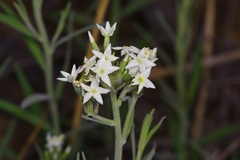 Amsonia palmeri Palmer's bluestar Photo: CC BY, Michelle W. (鍾偉瑋)
Grown: iNaturalist's observations of the species marked captive or cultivated; "not counted" where the species list does not count it. Native ranges: Kew's World Checklist of Vascular Plants (Govaerts et al., CC BY 4.0), file of 4 June 2026. Grown: iNaturalist's observations marked captive or cultivated, counted 17 October 2026 (the species list's count). Habitat climate known: the species page has a habitat climate, read from CHELSA's monthly climate and NASA POWER's daily extremes at its well-placed wild records inside Kew's native range; each page says its own sources and days. Record low: the lowest night in NASA POWER's daily series at the habitat's typical spot, as the species page gives it, held in °C to a tenth and shown in your units; each page says its own years and day read. Counts as the reference built on 19 November 2026 holds them. The CSV holds every result, not only this page's.