Anacamptis
8 species in the reference · family Orchidaceae · 8 with a habitat climate · 7 grown, per iNaturalist, 1 not counted
About the genus
Anacamptis is a genus of flowering plants in the orchid family (Orchidaceae); it is often abbreviated as Ant in horticulture. This genus was established by Louis Claude Richard in 1817; the type species is the pyramidal orchid (A. pyramidalis) and it nowadays contains about one-third of the species placed in the "wastebin genus" Orchis before this was split up at the end of the 20th century, among them many that are of hybrid origin. The genus' scientific name is derived from the Greek word anakamptein, meaning "to bend backwards".
Quoted from Wikipedia, "Anacamptis", its opening paragraph, revision 1370402587, read 2026-11-08, CC BY-SA 4.0.
Where Anacamptis is native
| Greece | 8 |
|---|---|
| Turkey | 8 |
| Cyprus | 7 |
| East Aegean Is. | 7 |
| Italy | 7 |
| Kriti | 7 |
| Lebanon-Syria | 7 |
| Transcaucasus | 7 |
| Algeria | 6 |
| France | 6 |
| Iran | 6 |
| Iraq | 6 |
Species native to each region. A species counts in every region it is native to. Native ranges: Kew's World Checklist of Vascular Plants (Govaerts et al., CC BY 4.0), file of 4 June 2026.
8 species
Anacamptis
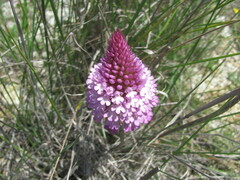 Anacamptis pyramidalis Pyramidal orchid Photo: CC BY, zebedeugalinha
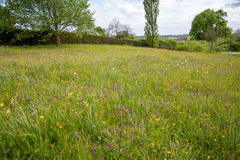 Anacamptis morio Green-winged Orchid Photo: CC BY, Drepanostoma
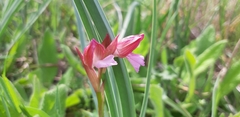 Anacamptis papilionacea Pink-butterfly Orchid Photo: CC BY, Leonardo Ancillotto
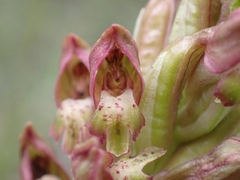 Anacamptis coriophora Bug Orchid Photo: CC BY, Elias
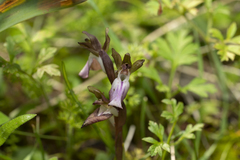 Anacamptis collina Fan-lipped Orchid Photo: CC BY, Eleftherios Katsillis
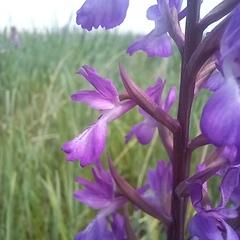 Anacamptis laxiflora Loose-flowered Orchid Photo: CC BY, Alexander Dubynin
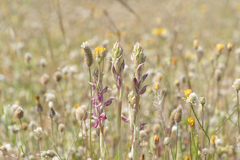 Anacamptis sancta Holy Orchid Photo: CC BY, Eleftherios Katsillis
- no open photograph on file Anacamptis × nicodemi
Grown: iNaturalist's observations of the species marked captive or cultivated; "not counted" where the species list does not count it. Native ranges: Kew's World Checklist of Vascular Plants (Govaerts et al., CC BY 4.0), file of 4 June 2026. Grown: iNaturalist's observations marked captive or cultivated, counted 17 October 2026 (the species list's count). Habitat climate known: the species page has a habitat climate, read from CHELSA's monthly climate and NASA POWER's daily extremes at its well-placed wild records inside Kew's native range; each page says its own sources and days. Record low: the lowest night in NASA POWER's daily series at the habitat's typical spot, as the species page gives it, held in °C to a tenth and shown in your units; each page says its own years and day read. Counts as the reference built on 19 November 2026 holds them. The CSV holds every result, not only this page's.