Angophora
8 species in the reference · family Myrtaceae · 8 with a habitat climate · 8 grown, per iNaturalist
About the genus
Angophora is a genus of nine species of trees and shrubs in the myrtle family, Myrtaceae. Endemic to eastern Australia, they differ from other eucalypts in having juvenile and adult leaves arranged in opposite pairs, sepals reduced to projections on the edge of the floral cup, four or five overlapping, more or less round petals, and a papery or thin, woody, often strongly ribbed capsule. Species are found between the Atherton Tableland in Queensland and south through New South Wales to eastern Victoria, Australia.
Quoted from Wikipedia, "Angophora", its opening paragraph, revision 1291453073, read 2026-11-08, CC BY-SA 4.0.
Where Angophora is native
| New South Wales | 8 |
|---|---|
| Queensland | 5 |
| Victoria | 1 |
Species native to each region. A species counts in every region it is native to. Native ranges: Kew's World Checklist of Vascular Plants (Govaerts et al., CC BY 4.0), file of 4 June 2026.
8 species
Angophora
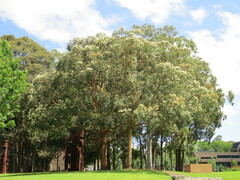 Angophora costata Rusty-gum Photo: CC BY, ian_mcallan
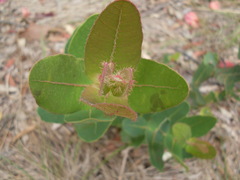 Angophora hispida Dwarf-apple Photo: CC BY, John Tann
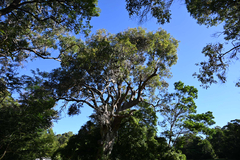 Angophora floribunda Rough-barked Angophora Photo: CC BY, Bryce Watts-Parker
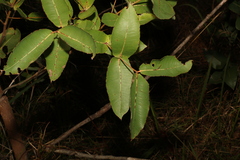 Angophora subvelutina Broad-leaved Apple Photo: CC BY-SA, Greg Tasney
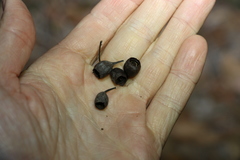 Angophora leiocarpa Smooth-barked Apple Photo: CC BY-SA, Greg Tasney
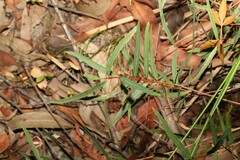 Angophora bakeri Small-leaved Angophora Photo: CC BY-SA, Greg Tasney
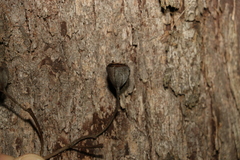 Angophora woodsiana Smudgy Apple Photo: CC BY-SA, Greg Tasney
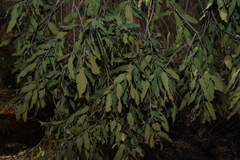 Angophora melanoxylon Coolabah Apple Photo: CC BY-SA, Greg Tasney
Grown: iNaturalist's observations of the species marked captive or cultivated; "not counted" where the species list does not count it. Native ranges: Kew's World Checklist of Vascular Plants (Govaerts et al., CC BY 4.0), file of 4 June 2026. Grown: iNaturalist's observations marked captive or cultivated, counted 17 October 2026 (the species list's count). Habitat climate known: the species page has a habitat climate, read from CHELSA's monthly climate and NASA POWER's daily extremes at its well-placed wild records inside Kew's native range; each page says its own sources and days. Record low: the lowest night in NASA POWER's daily series at the habitat's typical spot, as the species page gives it, held in °C to a tenth and shown in your units; each page says its own years and day read. Counts as the reference built on 19 November 2026 holds them. The CSV holds every result, not only this page's.