Anisacanthus
4 species in the reference · family Acanthaceae · 4 with a habitat climate · 4 grown, per iNaturalist
About the genus
Anisacanthus is a genus of flowering plants in the bear's breeches family, Acanthaceae. The generic name is derived from the Greek words ἄνισος (ánisos), meaning "unequal," and ἄκανθος (ákanthos), meaning "spine, thorn." Members of the genus are native to tropical and subtropical regions of the Americas. They are commonly known as desert honeysuckles, though this term is shared with the genus Ancistranthus, and is something of a misnomer as true honeysuckles (genus Lonicera) belong to the family Caprifoliaceae. More on Wikipedia
Quoted from Wikipedia, "Anisacanthus", its opening paragraph, revision 1312652482, read 2026-11-08, CC BY-SA 4.0.
Where Anisacanthus is native
| Mexico Northeast | 4 |
|---|---|
| Texas | 3 |
| Mexico Central | 2 |
| Mexico Gulf | 2 |
| Mexico Northwest | 2 |
| Mexico Southwest | 2 |
| Arizona | 1 |
| Mexico Southeast | 1 |
| Nevada | 1 |
| New Mexico | 1 |
Species native to each region. A species counts in every region it is native to. Native ranges: Kew's World Checklist of Vascular Plants (Govaerts et al., CC BY 4.0), file of 4 June 2026.
4 species
Anisacanthus
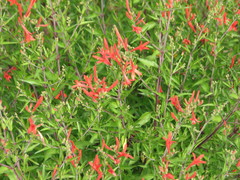 Anisacanthus quadrifidus Wright's Desert Honeysuckle Photo: CC BY, johnyochum
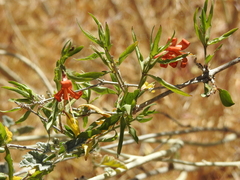 Anisacanthus thurberi Thurber's desert honeysuckle Photo: CC BY, Rachel Stringham
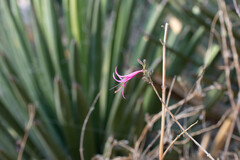 Anisacanthus puberulus Dwarf desert honeysuckle Photo: CC BY, Norma Piedra
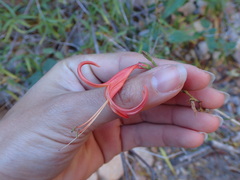 Anisacanthus linearis Narrowleaf desert honeysuckle Photo: CC BY, Jackie T
Grown: iNaturalist's observations of the species marked captive or cultivated; "not counted" where the species list does not count it. Native ranges: Kew's World Checklist of Vascular Plants (Govaerts et al., CC BY 4.0), file of 4 June 2026. Grown: iNaturalist's observations marked captive or cultivated, counted 17 October 2026 (the species list's count). Habitat climate known: the species page has a habitat climate, read from CHELSA's monthly climate and NASA POWER's daily extremes at its well-placed wild records inside Kew's native range; each page says its own sources and days. Record low: the lowest night in NASA POWER's daily series at the habitat's typical spot, as the species page gives it, held in °C to a tenth and shown in your units; each page says its own years and day read. Counts as the reference built on 19 November 2026 holds them. The CSV holds every result, not only this page's.