Argyroderma
11 species in the reference · family Aizoaceae · 3 with a habitat climate · 7 grown, per iNaturalist, 4 not counted
About the genus
Argyroderma is a genus consisting of a dozen species of succulents in the iceplant family from South Africa.
Quoted from Wikipedia, "Argyroderma", its opening paragraph, revision 1369363033, read 2026-11-08, CC BY-SA 4.0.
Where Argyroderma is native
| Cape Provinces | 11 |
|---|
Species native to each region. A species counts in every region it is native to. Native ranges: Kew's World Checklist of Vascular Plants (Govaerts et al., CC BY 4.0), file of 4 June 2026.
11 species
Argyroderma
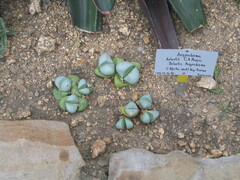 Argyroderma delaetii Baby-bottoms Photo: CC BY, zebedeugalinha
 Argyroderma fissum False Stoneflower Photo: CC BY-SA, Tony Rebelo
 Argyroderma testiculare Ball Silverstone Photo: CC BY-SA, Ji-Elle
 Argyroderma crateriforme Nest Silverstone Photo: CC BY, Charleen Brunke
 Argyroderma congregatum Cluster Silverstone Photo: CC BY-SA, Abu Shawka
 Argyroderma patens Photo: CC BY-SA, David J. Stang
 Argyroderma pearsonii Button Silverstone Photo: CC0, Abu Shawka
 Argyroderma framesii Hood Silverstone Photo: CC0, Peter Warren
 Argyroderma ringens Photo: CC0, Abu Shawka
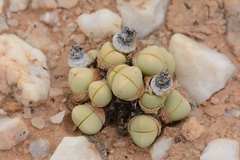 Argyroderma subalbum Photo: CC BY, Rosario Douglas
- no open photograph on file Argyroderma theartii Baby Toes
Grown: iNaturalist's observations of the species marked captive or cultivated; "not counted" where the species list does not count it. Native ranges: Kew's World Checklist of Vascular Plants (Govaerts et al., CC BY 4.0), file of 4 June 2026. Grown: iNaturalist's observations marked captive or cultivated, counted 17 October 2026 (the species list's count). Habitat climate known: the species page has a habitat climate, read from CHELSA's monthly climate and NASA POWER's daily extremes at its well-placed wild records inside Kew's native range; each page says its own sources and days. Record low: the lowest night in NASA POWER's daily series at the habitat's typical spot, as the species page gives it, held in °C to a tenth and shown in your units; each page says its own years and day read. Counts as the reference built on 19 November 2026 holds them. The CSV holds every result, not only this page's.