Aristea
7 species in the reference · family Iridaceae · 7 with a habitat climate · 7 grown, per iNaturalist
About the genus
Aristea is a genus of evergreen, perennial and rhizomatous species of flowering plants in the family Iridaceae, first described in 1789. The plants can differ in height between about 15 cm (5.9 in) to up to 1½ m and grow from, often woody, rhizomes, short rootstocks, or corm-like bases. The iris-like leaves grow in clumps, tufts or with few together and from the heart of these upright and often flattened stems arise that carry clusters of briefly flowering six-merous, star-symmetrical, mostly blue but rarely purplish to whitish, saucer-shaped blooms, subtended by green to brown or papery sheaths. The genus is distributed in tropical and southern Africa, as well as Madagascar. More on Wikipedia
Quoted from Wikipedia, "Aristea", its opening paragraph, revision 1382414201, read 2026-11-08, CC BY-SA 4.0.
Where Aristea is native
| Cape Provinces | 7 |
|---|---|
| Burundi | 2 |
| Cameroon | 2 |
| KwaZulu-Natal | 2 |
| Northern Provinces | 2 |
| Rwanda | 2 |
| Swaziland | 2 |
| Tanzania | 2 |
| Uganda | 2 |
| Zaïre | 2 |
| Zimbabwe | 2 |
| Ethiopia | 1 |
Species native to each region. A species counts in every region it is native to. Native ranges: Kew's World Checklist of Vascular Plants (Govaerts et al., CC BY 4.0), file of 4 June 2026.
7 species
Aristea
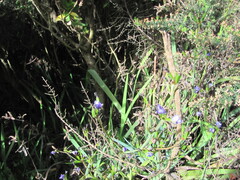 Aristea ecklonii Blue corn-lily Photo: CC BY, zebedeugalinha
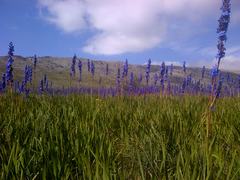 Aristea capitata Blue Sceptre Photo: CC BY, linkie
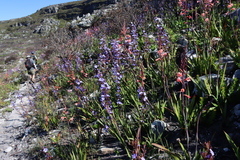 Aristea bakeri Tall Capeblue Photo: CC BY-SA, Tony Rebelo
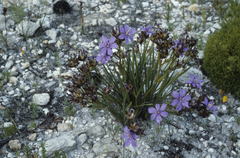 Aristea africana African Capeblue Photo: CC BY-SA, Tom Lloyd Evans
 Aristea abyssinica Blue-Eyed Grass Photo: CC BY-SA, Tony Rebelo
 Aristea ensifolia Forest Capeblue Photo: CC0, Di Turner
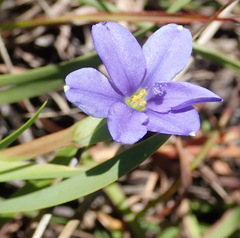 Aristea pusilla Photo: CC BY-SA, Nicola van Berkel
Grown: iNaturalist's observations of the species marked captive or cultivated; "not counted" where the species list does not count it. Native ranges: Kew's World Checklist of Vascular Plants (Govaerts et al., CC BY 4.0), file of 4 June 2026. Grown: iNaturalist's observations marked captive or cultivated, counted 17 October 2026 (the species list's count). Habitat climate known: the species page has a habitat climate, read from CHELSA's monthly climate and NASA POWER's daily extremes at its well-placed wild records inside Kew's native range; each page says its own sources and days. Record low: the lowest night in NASA POWER's daily series at the habitat's typical spot, as the species page gives it, held in °C to a tenth and shown in your units; each page says its own years and day read. Counts as the reference built on 19 November 2026 holds them. The CSV holds every result, not only this page's.