Aristida
6 species in the reference · family Poaceae · 6 with a habitat climate · 6 grown, per iNaturalist
About the genus
Aristida is a very nearly cosmopolitan genus of plants in the grass family. Aristida is distinguished by having three awns (bristles) on each lemma of each floret. The genus includes about 300 species found worldwide, often in arid warm regions. This genus is among those colloquially called three-awns wiregrasses, speargrasses and needlegrasses. More on Wikipedia
Quoted from Wikipedia, "Aristida", its opening paragraph, revision 1306194357, read 2026-11-08, CC BY-SA 4.0.
Where Aristida is native
| Cuba | 3 |
|---|---|
| Florida | 3 |
| Kansas | 3 |
| Oklahoma | 3 |
| South Carolina | 3 |
| Texas | 3 |
| Alabama | 2 |
| Angola | 2 |
| Arizona | 2 |
| Arkansas | 2 |
| Botswana | 2 |
| California | 2 |
Species native to each region. A species counts in every region it is native to. Native ranges: Kew's World Checklist of Vascular Plants (Govaerts et al., CC BY 4.0), file of 4 June 2026.
6 species
Aristida
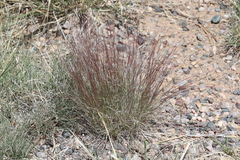 Aristida purpurea Purple threeawn Photo: CC0, Craig Martin
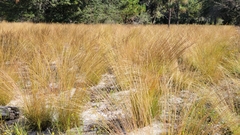 Aristida beyrichiana Beyrich Threeawn Photo: CC0, Anthony A Simmons
 Aristida junciformis Common Bristle Grass Photo: CC BY, Shaun Swanepoel
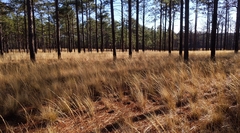 Aristida stricta Pineland three-awn Photo: CC0, Mark Connolly
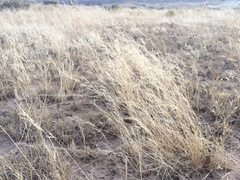 Aristida adscensionis Sixweeks threeawn Photo: CC0, Cecelia Alexander
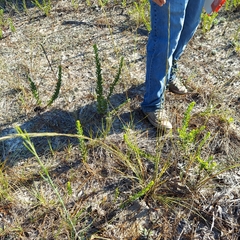 Aristida purpurascens Arrowfeather threeawn grass Photo: CC BY, Athena Philips
Grown: iNaturalist's observations of the species marked captive or cultivated; "not counted" where the species list does not count it. Native ranges: Kew's World Checklist of Vascular Plants (Govaerts et al., CC BY 4.0), file of 4 June 2026. Grown: iNaturalist's observations marked captive or cultivated, counted 17 October 2026 (the species list's count). Habitat climate known: the species page has a habitat climate, read from CHELSA's monthly climate and NASA POWER's daily extremes at its well-placed wild records inside Kew's native range; each page says its own sources and days. Record low: the lowest night in NASA POWER's daily series at the habitat's typical spot, as the species page gives it, held in °C to a tenth and shown in your units; each page says its own years and day read. Counts as the reference built on 19 November 2026 holds them. The CSV holds every result, not only this page's.