Asphodelus
8 species in the reference · family Asphodelaceae · 8 with a habitat climate · 8 grown, per iNaturalist
About the genus
Asphodelus is a genus of mainly perennial flowering plants in the asphodel family Asphodelaceae that was first described by Carl Linnaeus in 1753. The genus was formerly included in the lily family (Liliaceae). The genus is native to temperate Europe (mostly the south of Europe), the Mediterranean, Africa, the Middle East, and the Indian subcontinent, and some species have been introduced to, and are now naturalized in, other places such as New Zealand, Australia, Mexico and southwestern United States. Many asphodels are popular garden plants, which grow in well-drained soils with abundant natural light.
Quoted from Wikipedia, "Asphodelus", its opening paragraph, revision 1368253951, read 2026-11-08, CC BY-SA 4.0.
Where Asphodelus is native
| Spain | 7 |
|---|---|
| Morocco | 6 |
| Algeria | 5 |
| France | 5 |
| Italy | 5 |
| Corse | 4 |
| Portugal | 4 |
| Sardegna | 4 |
| Tunisia | 4 |
| Albania | 3 |
| Baleares | 3 |
| Canary Is. | 3 |
Species native to each region. A species counts in every region it is native to. Native ranges: Kew's World Checklist of Vascular Plants (Govaerts et al., CC BY 4.0), file of 4 June 2026.
8 species
Asphodelus
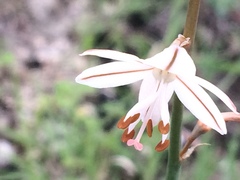 Asphodelus fistulosus Onionweed Photo: CC BY, Carlos Martorell
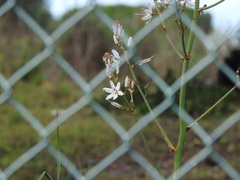 Asphodelus ramosus Branched Asphodel Photo: CC BY, Duarte Frade
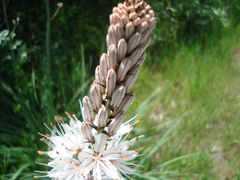 Asphodelus albus White asphodel Photo: CC BY, Daniel Heras González
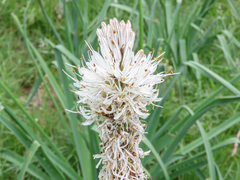 Asphodelus macrocarpus Photo: CC BY-SA, Emanuele Santarelli
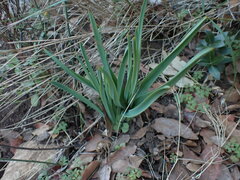 Asphodelus cerasiferus Photo: CC BY, Franck Cabot
 Asphodelus aestivus Summer Asphodel Photo: CC BY-SA, Hans Hillewaert
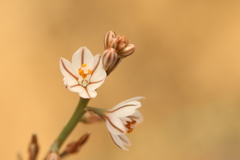 Asphodelus tenuifolius Annual Asphodel Photo: CC BY-SA, Chaym Turak
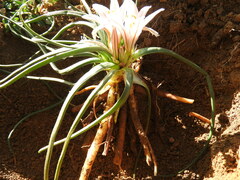 Asphodelus acaulis Photo: CC BY, Abdenour Kheloufi
Grown: iNaturalist's observations of the species marked captive or cultivated; "not counted" where the species list does not count it. Native ranges: Kew's World Checklist of Vascular Plants (Govaerts et al., CC BY 4.0), file of 4 June 2026. Grown: iNaturalist's observations marked captive or cultivated, counted 17 October 2026 (the species list's count). Habitat climate known: the species page has a habitat climate, read from CHELSA's monthly climate and NASA POWER's daily extremes at its well-placed wild records inside Kew's native range; each page says its own sources and days. Record low: the lowest night in NASA POWER's daily series at the habitat's typical spot, as the species page gives it, held in °C to a tenth and shown in your units; each page says its own years and day read. Counts as the reference built on 19 November 2026 holds them. The CSV holds every result, not only this page's.