Azolla
4 species in the reference · family Salviniaceae · 4 with a habitat climate · 4 grown, per iNaturalist
About the genus
Azolla (commonly called mosquito fern, water fern, and fairy moss) is a genus of seven species of aquatic ferns in the family Salviniaceae. They are extremely reduced in form and specialized, having a significantly different appearance to other ferns and more resembling some mosses or even duckweeds. Azolla filiculoides is one of first two fern species for which a reference genome has been published. It is believed that this genus grew so prolifically during the Eocene (and thus absorbed such a large amount of carbon) that it triggered a global cooling event that has lasted to the present.
Quoted from Wikipedia, "Azolla", its opening paragraph, revision 1383358152, read 2026-11-08, CC BY-SA 4.0.
Where Azolla is native
| Arkansas | 2 |
|---|---|
| Brazil North | 2 |
| Brazil Northeast | 2 |
| Brazil Southeast | 2 |
| Colombia | 2 |
| Dominican Republic | 2 |
| Ecuador | 2 |
| Guyana | 2 |
| Illinois | 2 |
| Kansas | 2 |
| Missouri | 2 |
| Nebraska | 2 |
Species native to each region. A species counts in every region it is native to. Native ranges: Kew's World Checklist of Vascular Plants (Govaerts et al., CC BY 4.0), file of 4 June 2026.
4 species
Azolla
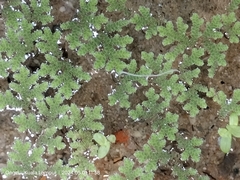 Azolla filiculoides Water fern Photo: CC BY-SA, Ong Jyh Seng
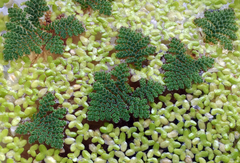 Azolla pinnata Mosquito fern Photo: CC0, Peter de Lange
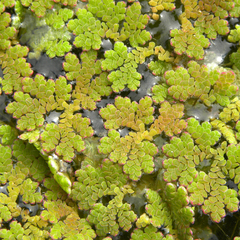 Azolla caroliniana Carolina mosquito-fern Photo: CC BY, M. Whitson
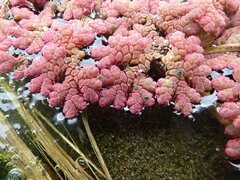 Azolla rubra Red Azolla Photo: CC BY, Arnim Littek
Grown: iNaturalist's observations of the species marked captive or cultivated; "not counted" where the species list does not count it. Native ranges: Kew's World Checklist of Vascular Plants (Govaerts et al., CC BY 4.0), file of 4 June 2026. Grown: iNaturalist's observations marked captive or cultivated, counted 17 October 2026 (the species list's count). Habitat climate known: the species page has a habitat climate, read from CHELSA's monthly climate and NASA POWER's daily extremes at its well-placed wild records inside Kew's native range; each page says its own sources and days. Record low: the lowest night in NASA POWER's daily series at the habitat's typical spot, as the species page gives it, held in °C to a tenth and shown in your units; each page says its own years and day read. Counts as the reference built on 19 November 2026 holds them. The CSV holds every result, not only this page's.