Bactris
10 species in the reference · family Arecaceae · 10 with a habitat climate · 8 grown, per iNaturalist, 2 not counted
About the genus
Bactris is a genus of spiny palms which are native to Mexico, South and Central America and the Caribbean. Most species are small trees about 2 m (6 ft 7 in) tall, but some are large trees while others are shrubs with subterranean stems. They have simple or pinnately compound leaves and yellow, orange, red or purple-black fruit. The genus is most closely related to several other spiny palms—Acrocomia, Aiphanes, Astrocaryum and Desmoncus. More on Wikipedia
Quoted from Wikipedia, "Bactris", its opening paragraph, revision 1383940994, read 2026-11-08, CC BY-SA 4.0.
Where Bactris is native
| Colombia | 8 |
|---|---|
| Venezuela | 7 |
| Peru | 6 |
| Bolivia | 5 |
| Brazil North | 5 |
| Brazil Northeast | 5 |
| French Guiana | 5 |
| Panama | 5 |
| Surinam | 5 |
| Brazil West-Central | 4 |
| Costa Rica | 4 |
| Ecuador | 4 |
Species native to each region. A species counts in every region it is native to. Native ranges: Kew's World Checklist of Vascular Plants (Govaerts et al., CC BY 4.0), file of 4 June 2026.
10 species
Bactris
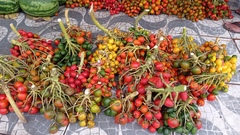 Bactris gasipaes Peach palm Photo: CC BY, Diogo Luiz
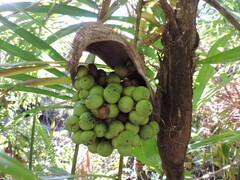 Bactris setosa Photo: CC BY, Fabrício Mil Homens Riella
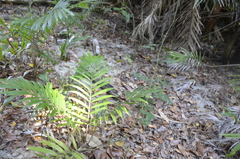 Bactris guineensis Guinea bactris Photo: CC BY, Liam Steele
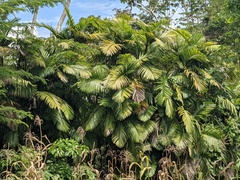 Bactris major Beach palm Photo: CC0, Zoltán Stekkelpak
 Bactris ferruginea Photo: CC BY, Alex Popovkin, Bahia, Brazil from Brazil
 Bactris maraja Photo: CC BY, Eduardo Chacón Madrigal
- no open photograph on file Bactris brongniartii
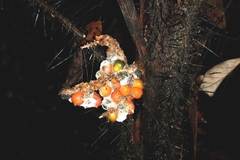 Bactris hirta Photo: CC BY, Carlos Otávio Gussoni
- no open photograph on file Bactris barronis
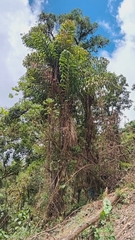 Bactris setulosa Photo: CC BY, Alfredo Gutierrez Dipaz
Grown: iNaturalist's observations of the species marked captive or cultivated; "not counted" where the species list does not count it. Native ranges: Kew's World Checklist of Vascular Plants (Govaerts et al., CC BY 4.0), file of 4 June 2026. Grown: iNaturalist's observations marked captive or cultivated, counted 17 October 2026 (the species list's count). Habitat climate known: the species page has a habitat climate, read from CHELSA's monthly climate and NASA POWER's daily extremes at its well-placed wild records inside Kew's native range; each page says its own sources and days. Record low: the lowest night in NASA POWER's daily series at the habitat's typical spot, as the species page gives it, held in °C to a tenth and shown in your units; each page says its own years and day read. Counts as the reference built on 19 November 2026 holds them. The CSV holds every result, not only this page's.