Bruguiera
3 species in the reference · family Rhizophoraceae · 3 with a habitat climate · 3 grown, per iNaturalist
About the genus
Bruguiera is a plant genus in the family Rhizophoraceae. It is a small genus of five mangrove species and three hybrids of the Indian and west Pacific Ocean region, its range extending from East Africa and Madagascar through coastal India, Sri Lanka and Southeast Asia to northern Australia, Melanesia and Polynesia. It is characterised by calyces with 8-16 lanceolate, pointed lobes, 16-32 stamens, explosive release of pollen, and viviparous propagules. It is named in honour of French explorer and biologist Jean Guillaume Bruguière (1750–1798). More on Wikipedia
Quoted from Wikipedia, "Bruguiera", its opening paragraph, revision 1381415513, read 2026-11-08, CC BY-SA 4.0.
Where Bruguiera is native
| Andaman Is. | 3 |
|---|---|
| Bangladesh | 3 |
| Borneo | 3 |
| Cambodia | 3 |
| Hainan | 3 |
| India | 3 |
| Jawa | 3 |
| Lesser Sunda Is. | 3 |
| Malaya | 3 |
| Maluku | 3 |
| Myanmar | 3 |
| New Guinea | 3 |
Species native to each region. A species counts in every region it is native to. Native ranges: Kew's World Checklist of Vascular Plants (Govaerts et al., CC BY 4.0), file of 4 June 2026.
3 species
Bruguiera
 Bruguiera gymnorhiza Oriental Mangrove Photo: CC0, 葉子
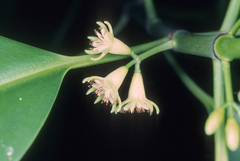 Bruguiera cylindrica Bakau Putih Photo: CC BY-SA, Douglas Goldman
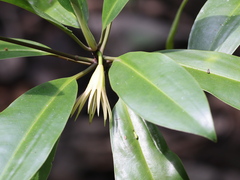 Bruguiera sexangula Oriental mangrove Photo: CC BY, Rainer Breitling
Grown: iNaturalist's observations of the species marked captive or cultivated; "not counted" where the species list does not count it. Native ranges: Kew's World Checklist of Vascular Plants (Govaerts et al., CC BY 4.0), file of 4 June 2026. Grown: iNaturalist's observations marked captive or cultivated, counted 17 October 2026 (the species list's count). Habitat climate known: the species page has a habitat climate, read from CHELSA's monthly climate and NASA POWER's daily extremes at its well-placed wild records inside Kew's native range; each page says its own sources and days. Record low: the lowest night in NASA POWER's daily series at the habitat's typical spot, as the species page gives it, held in °C to a tenth and shown in your units; each page says its own years and day read. Counts as the reference built on 19 November 2026 holds them. The CSV holds every result, not only this page's.