Canarium
10 species in the reference · family Burseraceae · 8 with a habitat climate · 10 grown, per iNaturalist
About the genus
Canarium is a genus of about 120 species of tropical and subtropical trees, in the family Burseraceae. They grow naturally across tropical Africa, south and southeast Asia, Indochina, Malesia, Australia and western Pacific Islands; including from southern Nigeria east to Madagascar, Mauritius, Sri Lanka and India; from Burma, Malaysia and Thailand through the Malay Peninsula and Vietnam to south China, Taiwan and the Philippines; through Borneo, Indonesia, Timor and New Guinea, through to the Solomon Islands, Vanuatu, New Caledonia, Fiji, Samoa, Tonga and Palau.
Quoted from Wikipedia, "Canarium", its opening paragraph, revision 1352383077, read 2026-11-08, CC BY-SA 4.0.
Where Canarium is native
| China South-Central | 4 |
|---|---|
| Cambodia | 3 |
| Laos | 3 |
| Maluku | 3 |
| Myanmar | 3 |
| New Guinea | 3 |
| Vietnam | 3 |
| Assam | 2 |
| Bismarck Archipelago | 2 |
| Borneo | 2 |
| China Southeast | 2 |
| East Himalaya | 2 |
Species native to each region. A species counts in every region it is native to. Native ranges: Kew's World Checklist of Vascular Plants (Govaerts et al., CC BY 4.0), file of 4 June 2026.
10 species
Canarium
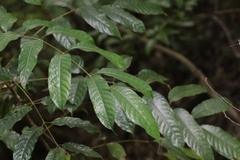 Canarium subulatum Photo: CC0, Agnes Trekker
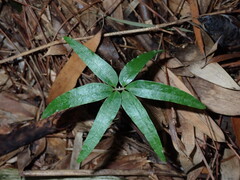 Canarium album Chinese white olive Photo: CC BY, chiuluan
 Canarium strictum Black Dammer Photo: CC BY, madhavan a.p
- no open photograph on file Canarium odontophyllum
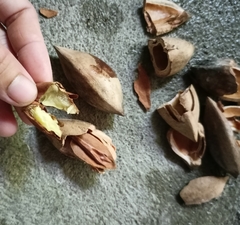 Canarium ovatum Pili nut Photo: CC BY, Beah Vega
- no open photograph on file Canarium indicum Java almond
 Canarium schweinfurthii African elemi Photo: CC BY-SA, Muhles
Canarium vulgare Java almond Photo: CC BY-SA, Ian Cowie
- no open photograph on file Canarium decumanum
 Canarium pimela Chinese black olive Photo: Public domain, Phó Nháy
Grown: iNaturalist's observations of the species marked captive or cultivated; "not counted" where the species list does not count it. Native ranges: Kew's World Checklist of Vascular Plants (Govaerts et al., CC BY 4.0), file of 4 June 2026. Grown: iNaturalist's observations marked captive or cultivated, counted 17 October 2026 (the species list's count). Habitat climate known: the species page has a habitat climate, read from CHELSA's monthly climate and NASA POWER's daily extremes at its well-placed wild records inside Kew's native range; each page says its own sources and days. Record low: the lowest night in NASA POWER's daily series at the habitat's typical spot, as the species page gives it, held in °C to a tenth and shown in your units; each page says its own years and day read. Counts as the reference built on 19 November 2026 holds them. The CSV holds every result, not only this page's.