Cerinthe
6 species in the reference · family Boraginaceae · 6 with a habitat climate · 6 grown, per iNaturalist
About the genus
Cerinthe is a genus of flowering plants in the family Boraginaceae, known as honeyworts. The genus is characterised by a calyx made up of separate, rather than fused, sepals, a tubular corolla, and the schizocarpic fruit that divides into two parts at maturity, unlike most members of the family, where the fruit splits into four nutlets. The genus has a circum-Mediterranean distribution, ranging from the Irano-Turanian Region in the east to Morocco in the west.
Quoted from Wikipedia, "Cerinthe", its opening paragraph, revision 1374487139, read 2026-11-08, CC BY-SA 4.0.
Where Cerinthe is native
| Italy | 4 |
|---|---|
| Turkey | 4 |
| Yugoslavia | 4 |
| Albania | 3 |
| France | 3 |
| Greece | 3 |
| Austria | 2 |
| Bulgaria | 2 |
| Corse | 2 |
| Czechoslovakia | 2 |
| Germany | 2 |
| Kriti | 2 |
Species native to each region. A species counts in every region it is native to. Native ranges: Kew's World Checklist of Vascular Plants (Govaerts et al., CC BY 4.0), file of 4 June 2026.
6 species
Cerinthe
 Cerinthe major Greater honeywort Photo: CC BY-SA, Joseph Morlan
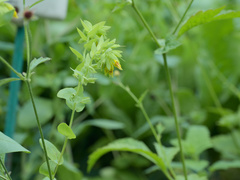 Cerinthe minor Lesser honeywort Photo: CC BY, Daniel Cahen
 Cerinthe palaestina Photo: CC BY, Dmitry Babin
 Cerinthe retorta Violet Honeywort Photo: CC BY, Bob Walker
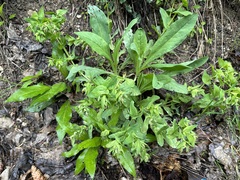 Cerinthe glabra Smooth honeywort Photo: CC BY, Jason Grant
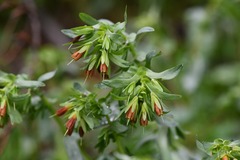 Cerinthe tenuiflora Photo: CC BY, Flavien Saboureau
Grown: iNaturalist's observations of the species marked captive or cultivated; "not counted" where the species list does not count it. Native ranges: Kew's World Checklist of Vascular Plants (Govaerts et al., CC BY 4.0), file of 4 June 2026. Grown: iNaturalist's observations marked captive or cultivated, counted 17 October 2026 (the species list's count). Habitat climate known: the species page has a habitat climate, read from CHELSA's monthly climate and NASA POWER's daily extremes at its well-placed wild records inside Kew's native range; each page says its own sources and days. Record low: the lowest night in NASA POWER's daily series at the habitat's typical spot, as the species page gives it, held in °C to a tenth and shown in your units; each page says its own years and day read. Counts as the reference built on 19 November 2026 holds them. The CSV holds every result, not only this page's.