Ceropegia
474 species in the reference · family Apocynaceae · 90 with a habitat climate · 17 grown, per iNaturalist, 457 not counted
About the genus
Ceropegia is a genus of plants within the family Apocynaceae, native to Africa, southern Asia, and Australia. It was named by Carl Linnaeus, who first described this genus in his Genera plantarum, which appeared in 1737. Linnaeus referred to the description and picture of a plant in the Hortus Malabaricus as the plant for which the genus was created. In 1753 he named this species as Ceropegia candelabrum. More on Wikipedia
Quoted from Wikipedia, "Ceropegia", its opening paragraph, revision 1376620507, read 2026-11-08, CC BY-SA 4.0.
Where Ceropegia is native
| India | 87 |
|---|---|
| Northern Provinces | 67 |
| Cape Provinces | 60 |
| KwaZulu-Natal | 59 |
| Tanzania | 52 |
| Mozambique | 43 |
| Zimbabwe | 41 |
| Kenya | 39 |
| Zambia | 37 |
| Ethiopia | 30 |
| Namibia | 29 |
| Zaïre | 28 |
Species native to each region. A species counts in every region it is native to. Native ranges: Kew's World Checklist of Vascular Plants (Govaerts et al., CC BY 4.0), file of 4 June 2026.
474 species
Ceropegia
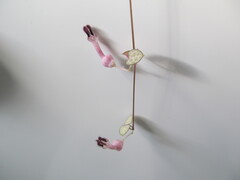 Ceropegia woodii Hearts entangled Photo: CC BY, zebedeugalinha
 Ceropegia linearis Heartleaf Lanternvine Photo: CC BY, Sunčana Bradley
 Ceropegia sandersonii Fountain-flower Photo: CC BY-SA, Pieter Prins
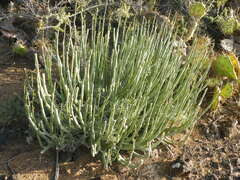 Ceropegia dichotoma Photo: CC BY, amantedarmanin
 Ceropegia ampliata Photo: CC BY, Christiaan Viljoen
 Ceropegia stapeliiformis Photo: CC BY-SA, Engeser
 Ceropegia fusca Photo: CC BY, Frank Sengpiel
 Ceropegia africana Photo: CC BY-SA, James Steakley
 Ceropegia haygarthii Photo: CC BY, Mahomed Desai
- no open photograph on file Ceropegia lugardiae
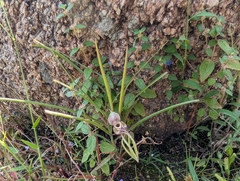 Ceropegia spiralis Photo: CC BY, Ravuri Krishna Chaitanya
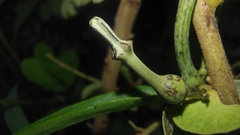 Ceropegia bulbosa Bulbous Ceropegia Photo: CC BY, Aadi Kulkarni
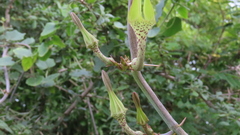 Ceropegia juncea Photo: CC BY, Mittal Gala
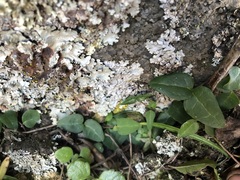 Ceropegia rendallii Photo: CC BY-SA, Tam
 Ceropegia simoneae Photo: CC BY-SA, Michael Wolf (Webseite)
 Ceropegia radicans Photo: CC BY-SA, Engeser
 Ceropegia cimiciodora Photo: CC BY-SA, James Steakley
- no open photograph on file Ceropegia abyssinica
- no open photograph on file Ceropegia achtenii
- no open photograph on file Ceropegia acicularis
- no open photograph on file Ceropegia adamsiana
- no open photograph on file Ceropegia affinis
 Ceropegia afra Photo: CC BY-SA, Winfried Bruenken (Amrum)
- no open photograph on file Ceropegia ahmarensis
- no open photograph on file Ceropegia albipilosa
- no open photograph on file Ceropegia albisepta
- no open photograph on file Ceropegia aloicola
- no open photograph on file Ceropegia alpina
- no open photograph on file Ceropegia ambovombensis
- no open photograph on file Ceropegia ananthagiriensis
- no open photograph on file Ceropegia ananthapuramense
 Ceropegia anantii Photo: CC BY-SA, Dinesh Valke
- no open photograph on file Ceropegia andamanica
- no open photograph on file Ceropegia angustata
- no open photograph on file Ceropegia angustifolia
 Ceropegia anjanerica Photo: CC0, S.MORE
- no open photograph on file Ceropegia annamacharyae
- no open photograph on file Ceropegia ansariana
- no open photograph on file Ceropegia antennifera Newcastle Bushpipe
- no open photograph on file Ceropegia antoanensis
- no open photograph on file Ceropegia aquamontana
- no open photograph on file Ceropegia arabica
- no open photograph on file Ceropegia arenaria
- no open photograph on file Ceropegia arenarioides
- no open photograph on file Ceropegia aridicola
Ceropegia aristolochioides Photo: CC BY-SA, Susan Brown
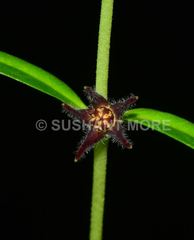 Ceropegia ariyittaparensis Photo: CC0, S.MORE
 Ceropegia armandii Photo: CC BY-SA, Michael Wolf (Webseite)
Grown: iNaturalist's observations of the species marked captive or cultivated; "not counted" where the species list does not count it. Native ranges: Kew's World Checklist of Vascular Plants (Govaerts et al., CC BY 4.0), file of 4 June 2026. Grown: iNaturalist's observations marked captive or cultivated, counted 17 October 2026 (the species list's count). Habitat climate known: the species page has a habitat climate, read from CHELSA's monthly climate and NASA POWER's daily extremes at its well-placed wild records inside Kew's native range; each page says its own sources and days. Record low: the lowest night in NASA POWER's daily series at the habitat's typical spot, as the species page gives it, held in °C to a tenth and shown in your units; each page says its own years and day read. Counts as the reference built on 19 November 2026 holds them. The CSV holds every result, not only this page's.