Chloris
7 species in the reference · family Poaceae · 7 with a habitat climate · 7 grown, per iNaturalist
About the genus
In Greek mythology, the name Chloris (Greek Χλῶρις Chlōris, from χλωρός chlōrós, meaning "greenish-yellow", "pale green", "pale", "pallid", or "fresh") appears in a variety of contexts. Some clearly refer to different characters; other stories may refer to the same Chloris, but disagree on details.
Quoted from Wikipedia, "Chloris", its opening paragraph, revision 1356911102, read 2026-11-08, CC BY-SA 4.0.
Where Chloris is native
| Arizona | 3 |
|---|---|
| Arkansas | 3 |
| Cameroon | 3 |
| Chad | 3 |
| Djibouti | 3 |
| Eritrea | 3 |
| Ethiopia | 3 |
| Ghana | 3 |
| Ivory Coast | 3 |
| Kansas | 3 |
| Kenya | 3 |
| Mexico Northeast | 3 |
Species native to each region. A species counts in every region it is native to. Native ranges: Kew's World Checklist of Vascular Plants (Govaerts et al., CC BY 4.0), file of 4 June 2026.
7 species
Chloris
 Chloris barbata Swollen windmill grass Photo: CC BY, Kevin Faccenda
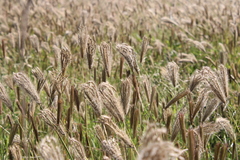 Chloris virgata Feathery Rhodes-grass Photo: CC BY, Candela Castro
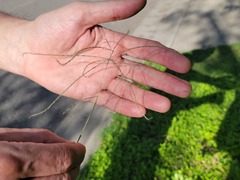 Chloris verticillata Tumble windmill grass Photo: CC BY, johnyochum
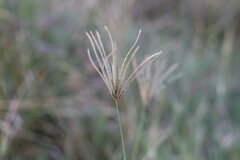 Chloris gayana Rhodes grass Photo: CC BY, Paul Hoekman
 Chloris truncata Windmill-grass Photo: CC BY, Terra Occ
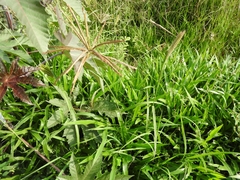 Chloris cucullata Hooded windmill grass Photo: CC BY-SA, Oscar Alejandro Morales Juárez
 Chloris pycnothrix Spiderweb chloris Photo: CC0, bat (Maria Vorontsova)
Grown: iNaturalist's observations of the species marked captive or cultivated; "not counted" where the species list does not count it. Native ranges: Kew's World Checklist of Vascular Plants (Govaerts et al., CC BY 4.0), file of 4 June 2026. Grown: iNaturalist's observations marked captive or cultivated, counted 17 October 2026 (the species list's count). Habitat climate known: the species page has a habitat climate, read from CHELSA's monthly climate and NASA POWER's daily extremes at its well-placed wild records inside Kew's native range; each page says its own sources and days. Record low: the lowest night in NASA POWER's daily series at the habitat's typical spot, as the species page gives it, held in °C to a tenth and shown in your units; each page says its own years and day read. Counts as the reference built on 19 November 2026 holds them. The CSV holds every result, not only this page's.