Cicuta
4 species in the reference · family Apiaceae · 4 with a habitat climate · 4 grown, per iNaturalist
About the genus
Cicuta, commonly known as water hemlock, is a genus of four species of highly poisonous plants in the family Apiaceae. They are perennial herbaceous plants which grow up to 2.5 meters (8 ft) tall, having distinctive small green or white flowers arranged in an umbrella shape (umbel). Plants in this genus may also be referred to as cowbane or poison parsnip. Cicuta is native to temperate regions of the Northern Hemisphere, mainly North America and Europe, typically growing in wet meadows, along streambanks and other wet and marshy areas. More on Wikipedia
Quoted from Wikipedia, "Cicuta", its opening paragraph, revision 1359284305, read 2026-11-08, CC BY-SA 4.0.
Where Cicuta is native
| Alberta | 4 |
|---|---|
| British Columbia | 4 |
| Northwest Territories | 4 |
| Yukon | 4 |
| Alaska | 3 |
| Idaho | 3 |
| Manitoba | 3 |
| Montana | 3 |
| Nunavut | 3 |
| Ontario | 3 |
| Oregon | 3 |
| Québec | 3 |
Species native to each region. A species counts in every region it is native to. Native ranges: Kew's World Checklist of Vascular Plants (Govaerts et al., CC BY 4.0), file of 4 June 2026.
4 species
Cicuta
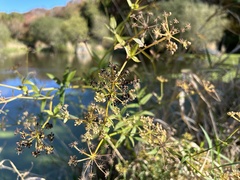 Cicuta maculata Spotted water-hemlock Photo: CC BY-SA, Branson Khounvichith
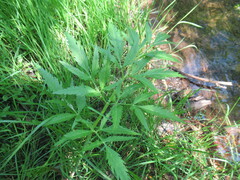 Cicuta virosa Cowbane Photo: CC0, Сергей
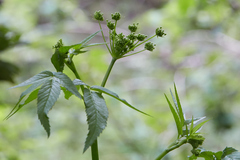 Cicuta douglasii Western water-hemlock Photo: CC BY, Ken-ichi Ueda
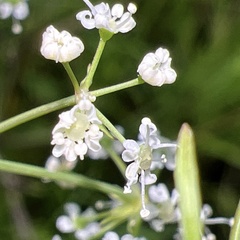 Cicuta bulbifera Bulblet-bearing water hemlock Photo: CC BY, Healthy Yards
Grown: iNaturalist's observations of the species marked captive or cultivated; "not counted" where the species list does not count it. Native ranges: Kew's World Checklist of Vascular Plants (Govaerts et al., CC BY 4.0), file of 4 June 2026. Grown: iNaturalist's observations marked captive or cultivated, counted 17 October 2026 (the species list's count). Habitat climate known: the species page has a habitat climate, read from CHELSA's monthly climate and NASA POWER's daily extremes at its well-placed wild records inside Kew's native range; each page says its own sources and days. Record low: the lowest night in NASA POWER's daily series at the habitat's typical spot, as the species page gives it, held in °C to a tenth and shown in your units; each page says its own years and day read. Counts as the reference built on 19 November 2026 holds them. The CSV holds every result, not only this page's.