Cleome
17 species in the reference · family Cleomaceae · 15 with a habitat climate · 14 grown, per iNaturalist, 3 not counted
About the genus
Cleome is a genus of flowering plants in the family Cleomaceae, commonly known as spider flowers, spider plants, spider weeds, or bee plants. Previously, it had been placed in the family Capparaceae, until DNA studies found the Cleomaceae genera to be more closely related to the Brassicaceae than the Capparaceae. Cleome and clammyweed (Polanisia dodecandra) can sometimes be confused.
Quoted from Wikipedia, "Cleome", its opening paragraph, revision 1354895907, read 2026-11-08, CC BY-SA 4.0.
Where Cleome is native
| Mexico Northeast | 6 |
|---|---|
| Mexico Southwest | 6 |
| Venezuela | 6 |
| Brazil Northeast | 5 |
| Colombia | 5 |
| Mexico Gulf | 5 |
| Mexico Northwest | 5 |
| Texas | 5 |
| Benin | 4 |
| Brazil Southeast | 4 |
| Brazil West-Central | 4 |
| Cameroon | 4 |
Species native to each region. A species counts in every region it is native to. Native ranges: Kew's World Checklist of Vascular Plants (Govaerts et al., CC BY 4.0), file of 4 June 2026.
17 species
Cleome
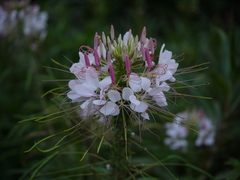 Cleome houtteana Pink queen Photo: CC BY-SA, Dinesh Valke
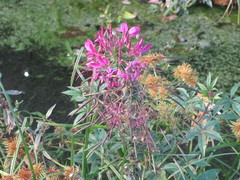 Cleome spinosa Spiny spiderflower Photo: CC BY, 雲一百香果
 Cleome dodecandra Photo: CC BY-SA, Douglas Goldman
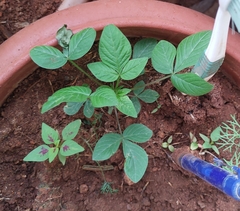 Cleome rutidosperma Fringed spiderflower Photo: CC BY, Mitul and Vijul Singh
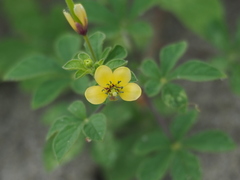 Cleome viscosa Asian spiderflower Photo: CC0, 葉子
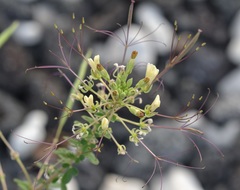 Cleome gynandra Spiderwisp Photo: CC0, kbkash
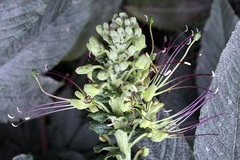 Cleome anomala Photo: CC BY, Dr. Alexey Yakovlev
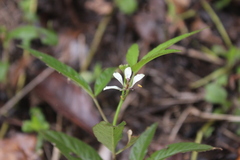 Cleome aculeata Prickly spiderflower Photo: CC BY, Ricard Busquets Reverte
 Cleome speciosa Volantines preciosos Photo: CC BY-SA, Kurt Stüber
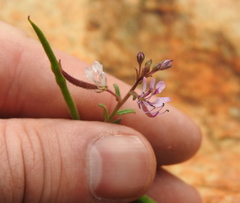 Cleome monophylla Single-leaved cleome Photo: CC BY, Matthew Fainman
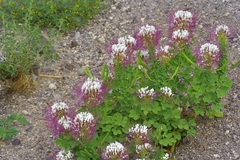 Cleome uniglandulosa Photo: CC BY, Michelle W. (鍾偉瑋)
- no open photograph on file Cleome densiflora
- no open photograph on file Cleome erosa
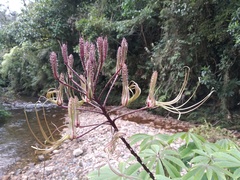 Cleome gigantea Photo: CC0, Alfredo F. Fuentes Claros
- no open photograph on file Cleome monandra
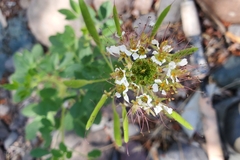 Cleome trachysperma Photo: CC0, Lore
 Cleome violacea Photo: CC BY, zebedeugalinha
Grown: iNaturalist's observations of the species marked captive or cultivated; "not counted" where the species list does not count it. Native ranges: Kew's World Checklist of Vascular Plants (Govaerts et al., CC BY 4.0), file of 4 June 2026. Grown: iNaturalist's observations marked captive or cultivated, counted 17 October 2026 (the species list's count). Habitat climate known: the species page has a habitat climate, read from CHELSA's monthly climate and NASA POWER's daily extremes at its well-placed wild records inside Kew's native range; each page says its own sources and days. Record low: the lowest night in NASA POWER's daily series at the habitat's typical spot, as the species page gives it, held in °C to a tenth and shown in your units; each page says its own years and day read. Counts as the reference built on 19 November 2026 holds them. The CSV holds every result, not only this page's.