Cussonia
8 species in the reference · family Araliaceae · 8 with a habitat climate · 8 grown, per iNaturalist
About the genus
Cussonia is a genus of plants of the family Araliaceae, which is native to the Afrotropics. It originated in Africa and has its center of distribution in South Africa and the Mascarene Islands. Due to their striking habit, they are a conspicuous and easily recognizable group of plants. Their genus name commemorates the botanist Pierre Cusson. More on Wikipedia
Quoted from Wikipedia, "Cussonia", its opening paragraph, revision 1237678556, read 2026-11-08, CC BY-SA 4.0.
Where Cussonia is native
| Cape Provinces | 6 |
|---|---|
| KwaZulu-Natal | 5 |
| Northern Provinces | 4 |
| Swaziland | 3 |
| Botswana | 2 |
| Free State | 2 |
| Zimbabwe | 2 |
| Comoros | 1 |
| Kenya | 1 |
| Lesotho | 1 |
| Malawi | 1 |
| Mozambique | 1 |
Species native to each region. A species counts in every region it is native to. Native ranges: Kew's World Checklist of Vascular Plants (Govaerts et al., CC BY 4.0), file of 4 June 2026.
8 species
Cussonia
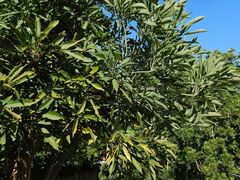 Cussonia spicata Spiky Cabbage Tree Photo: CC0, Klaus Wehrlin
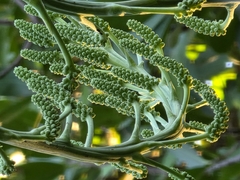 Cussonia paniculata Mountain Cabbage-tree Photo: CC BY, Elise Smith
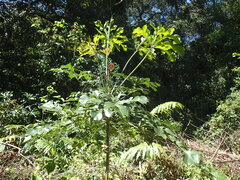 Cussonia sphaerocephala Forest Cabbage-tree Photo: CC BY, Mahomed Desai
 Cussonia natalensis Five-Finger Tree Photo: CC BY-SA, M Kriek
 Cussonia thyrsiflora Cabbagebush Photo: CC BY-SA, Nanna Joubert
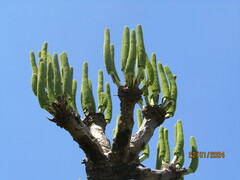 Cussonia transvaalensis Grey Cabbage-tree Photo: CC BY-SA, Antoinette Eyssell Knox
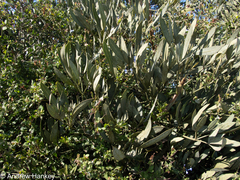 Cussonia gamtoosensis Gamtoos Cabbage Tree Photo: CC BY-SA, Andrew Hankey
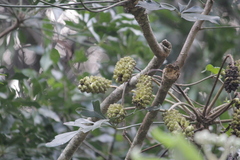 Cussonia nicholsonii South Coast Cabbage-tree Photo: CC BY, Mahomed Desai
Grown: iNaturalist's observations of the species marked captive or cultivated; "not counted" where the species list does not count it. Native ranges: Kew's World Checklist of Vascular Plants (Govaerts et al., CC BY 4.0), file of 4 June 2026. Grown: iNaturalist's observations marked captive or cultivated, counted 17 October 2026 (the species list's count). Habitat climate known: the species page has a habitat climate, read from CHELSA's monthly climate and NASA POWER's daily extremes at its well-placed wild records inside Kew's native range; each page says its own sources and days. Record low: the lowest night in NASA POWER's daily series at the habitat's typical spot, as the species page gives it, held in °C to a tenth and shown in your units; each page says its own years and day read. Counts as the reference built on 19 November 2026 holds them. The CSV holds every result, not only this page's.