Cynoglossum
13 species in the reference · family Boraginaceae · 13 with a habitat climate · 12 grown, per iNaturalist, 1 not counted
About the genus
Cynoglossum is a genus of small-flowered plants in the family Boraginaceae (borage family). It includes 81 species native to Eurasia, Africa, New Guinea, and Australia.
Quoted from Wikipedia, "Cynoglossum", its opening paragraph, revision 1375058948, read 2026-11-08, CC BY-SA 4.0.
Where Cynoglossum is native
| Spain | 6 |
|---|---|
| Turkey | 6 |
| Albania | 5 |
| France | 5 |
| Greece | 5 |
| Italy | 5 |
| Sicilia | 5 |
| Yugoslavia | 5 |
| East Himalaya | 4 |
| Krym | 4 |
| Nepal | 4 |
| North Caucasus | 4 |
Species native to each region. A species counts in every region it is native to. Native ranges: Kew's World Checklist of Vascular Plants (Govaerts et al., CC BY 4.0), file of 4 June 2026.
13 species
Cynoglossum
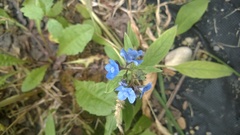 Cynoglossum amabile Chinese hound's tongue Photo: CC BY, earl woolsey
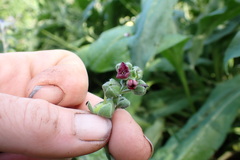 Cynoglossum officinale Hound's-tongue Photo: CC BY, nikibifrost
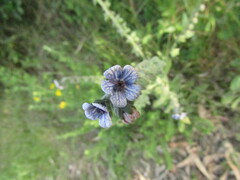 Cynoglossum creticum Blue Hound's tongue Photo: CC BY, Bruno Avilez
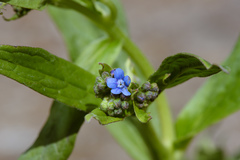 Cynoglossum zeylanicum Ceylon hound's tongue Photo: CC BY, Cheng-Tao Lin
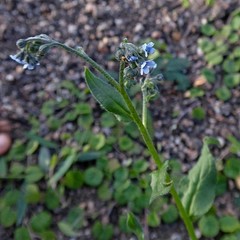 Cynoglossum australe Australian Hound's-tongue Photo: CC BY, Max Campbell
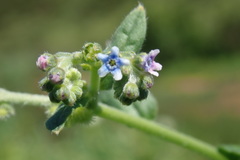 Cynoglossum lanceolatum Photo: CC0, Jimmy Whatmore
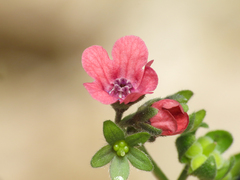 Cynoglossum montanum Photo: CC BY-SA, Emanuele Santarelli
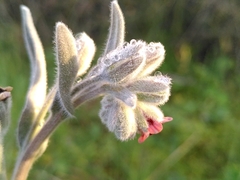 Cynoglossum cheirifolium Photo: CC BY, Yves Bas
- no open photograph on file Cynoglossum brandii
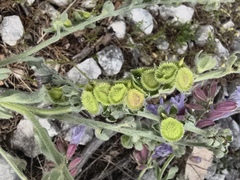 Cynoglossum columnae Photo: CC BY, fmunoz
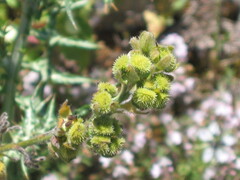 Cynoglossum clandestinum Photo: CC BY, zebedeugalinha
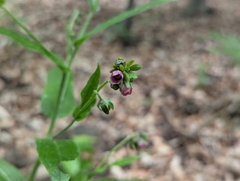 Cynoglossum germanicum Green hound's-tongue Photo: CC BY, Elias
 Cynoglossum microglochin Smallbristle hound's tongue Photo: CC BY-SA, Dinesh Valke from Thane, India
Grown: iNaturalist's observations of the species marked captive or cultivated; "not counted" where the species list does not count it. Native ranges: Kew's World Checklist of Vascular Plants (Govaerts et al., CC BY 4.0), file of 4 June 2026. Grown: iNaturalist's observations marked captive or cultivated, counted 17 October 2026 (the species list's count). Habitat climate known: the species page has a habitat climate, read from CHELSA's monthly climate and NASA POWER's daily extremes at its well-placed wild records inside Kew's native range; each page says its own sources and days. Record low: the lowest night in NASA POWER's daily series at the habitat's typical spot, as the species page gives it, held in °C to a tenth and shown in your units; each page says its own years and day read. Counts as the reference built on 19 November 2026 holds them. The CSV holds every result, not only this page's.