Cyrtopodium
10 species in the reference · family Orchidaceae · 10 with a habitat climate · 10 grown, per iNaturalist
About the genus
Cyrtopodium, often abbreviated Cyrt in horticulture, is a genus of more than 40 species of epiphytic and terrestrial orchids found from Florida and Mexico through Argentina. Cyrtopodium is the only genus in the monotypic subtribe Cyrtopodiinae.
Quoted from Wikipedia, "Cyrtopodium", its opening paragraph, revision 1335850585, read 2026-11-08, CC BY-SA 4.0.
Where Cyrtopodium is native
| Brazil Southeast | 7 |
|---|---|
| Brazil Northeast | 4 |
| Bolivia | 3 |
| Brazil North | 3 |
| Brazil West-Central | 3 |
| Colombia | 3 |
| Paraguay | 3 |
| Venezuela | 3 |
| Argentina Northeast | 2 |
| Argentina Northwest | 2 |
| Brazil South | 2 |
| Guyana | 2 |
Species native to each region. A species counts in every region it is native to. Native ranges: Kew's World Checklist of Vascular Plants (Govaerts et al., CC BY 4.0), file of 4 June 2026.
10 species
Cyrtopodium
 Cyrtopodium macrobulbon Grandeur Bulb Orchid Photo: CC BY, Daniel Pineda Vera
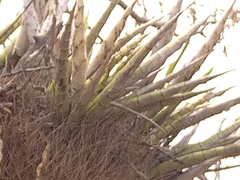 Cyrtopodium punctatum Cowhorn orchid Photo: CC BY-SA, K. Musálem
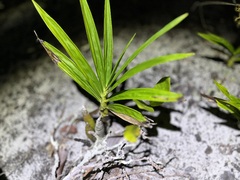 Cyrtopodium flavum Yellow Cowhorn Orchid Photo: CC BY, Henrique Nogueira
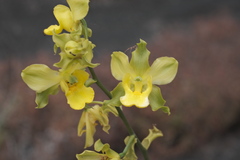 Cyrtopodium andersonii Anderson's Orchid Photo: CC BY, fmunoz
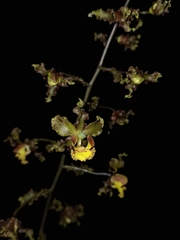 Cyrtopodium holstii Photo: CC BY, Fabricio Carvalho da Silva
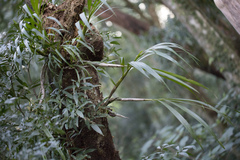 Cyrtopodium palmifrons Photo: CC0, Frank Thomas Sautter
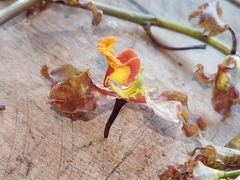 Cyrtopodium paniculatum Photo: CC0, Jhon Fernando Taborda .
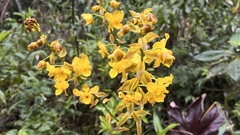 Cyrtopodium glutiniferum Photo: CC BY, Henrique Nogueira
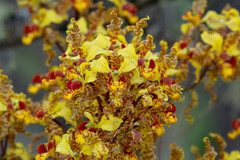 Cyrtopodium saintlegerianum Photo: CC BY-SA, Thibaud Aronson
 Cyrtopodium virescens Photo: Public domain, EmanoelGomes
Grown: iNaturalist's observations of the species marked captive or cultivated; "not counted" where the species list does not count it. Native ranges: Kew's World Checklist of Vascular Plants (Govaerts et al., CC BY 4.0), file of 4 June 2026. Grown: iNaturalist's observations marked captive or cultivated, counted 17 October 2026 (the species list's count). Habitat climate known: the species page has a habitat climate, read from CHELSA's monthly climate and NASA POWER's daily extremes at its well-placed wild records inside Kew's native range; each page says its own sources and days. Record low: the lowest night in NASA POWER's daily series at the habitat's typical spot, as the species page gives it, held in °C to a tenth and shown in your units; each page says its own years and day read. Counts as the reference built on 19 November 2026 holds them. The CSV holds every result, not only this page's.