Dichorisandra
5 species in the reference · family Commelinaceae · 4 with a habitat climate · 5 grown, per iNaturalist
About the genus
Dichorisandra is a genus of perennial monocotyledonous flowering plants in the dayflower family (Commelinaceae). It is found in the Neotropics. The genus is characterised by its slightly zygomorphic flowers with large anthers usually releasing pollen by means of pores at the apex, as well as by its seeds that are embedded in a red or sometimes white aril, and tubers that often form at the tips of the roots. Both morphology and an analysis of DNA sequences indicate it is very closely related to the genus Siderasis.
Quoted from Wikipedia, "Dichorisandra", its opening paragraph, revision 1300040406, read 2026-11-08, CC BY-SA 4.0.
Where Dichorisandra is native
| Brazil Northeast | 4 |
|---|---|
| Brazil Southeast | 3 |
| Brazil South | 2 |
| Colombia | 2 |
| Ecuador | 2 |
| Peru | 2 |
| Argentina Northeast | 1 |
| Argentina Northwest | 1 |
| Belize | 1 |
| Bolivia | 1 |
| Brazil North | 1 |
| Brazil West-Central | 1 |
Species native to each region. A species counts in every region it is native to. Native ranges: Kew's World Checklist of Vascular Plants (Govaerts et al., CC BY 4.0), file of 4 June 2026.
5 species
Dichorisandra
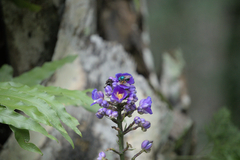 Dichorisandra thyrsiflora Blue-ginger Photo: CC0, filipeprates
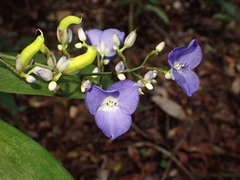 Dichorisandra penduliflora Photo: CC BY, agujaceratops
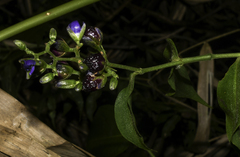 Dichorisandra hexandra Photo: CC0, Whaldener Endo
- no open photograph on file Dichorisandra musaica Queen's Spiderwort
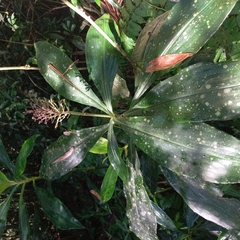 Dichorisandra paranaensis Photo: CC BY, Patrícia Mees
Grown: iNaturalist's observations of the species marked captive or cultivated; "not counted" where the species list does not count it. Native ranges: Kew's World Checklist of Vascular Plants (Govaerts et al., CC BY 4.0), file of 4 June 2026. Grown: iNaturalist's observations marked captive or cultivated, counted 17 October 2026 (the species list's count). Habitat climate known: the species page has a habitat climate, read from CHELSA's monthly climate and NASA POWER's daily extremes at its well-placed wild records inside Kew's native range; each page says its own sources and days. Record low: the lowest night in NASA POWER's daily series at the habitat's typical spot, as the species page gives it, held in °C to a tenth and shown in your units; each page says its own years and day read. Counts as the reference built on 19 November 2026 holds them. The CSV holds every result, not only this page's.