Dipcadi
43 species in the reference · family Asparagaceae · 18 with a habitat climate · 2 grown, per iNaturalist, 41 not counted
About the genus
Dipcadi is a genus of bulbous flowering plants in the family Asparagaceae, subfamily Scilloideae (also treated as the family Hyacinthaceae). It is widely distributed, occurring in southern Europe, most of Africa and the Middle East through to the Indian subcontinent.
Quoted from Wikipedia, "Dipcadi", its opening paragraph, revision 1354876243, read 2026-11-08, CC BY-SA 4.0.
Where Dipcadi is native
| Cape Provinces | 13 |
|---|---|
| India | 11 |
| Namibia | 11 |
| Northern Provinces | 10 |
| Botswana | 9 |
| Free State | 8 |
| Zambia | 8 |
| Zimbabwe | 8 |
| Angola | 5 |
| Central African Republic | 4 |
| KwaZulu-Natal | 4 |
| Oman | 4 |
Species native to each region. A species counts in every region it is native to. Native ranges: Kew's World Checklist of Vascular Plants (Govaerts et al., CC BY 4.0), file of 4 June 2026.
43 species
Dipcadi
 Dipcadi serotinum Brown Bells Photo: CC BY, Julia Moning
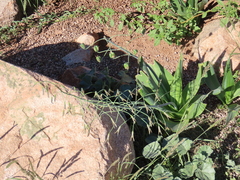 Dipcadi glaucum Wild onion Photo: CC0, dune_ninja
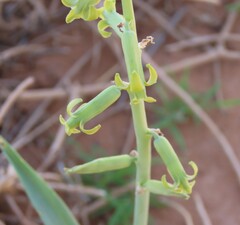 Dipcadi bakerianum Photo: CC0, dune_ninja
- no open photograph on file Dipcadi balfourii
- no open photograph on file Dipcadi biflorum
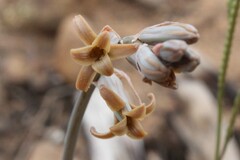 Dipcadi brevifolium Snake Daintybells Photo: CC0, Jean-Max Van Pul
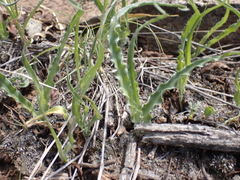 Dipcadi ciliare Curlicurly Daintybells Photo: CC BY-SA, Andrew Hankey
- no open photograph on file Dipcadi coimbatorensis
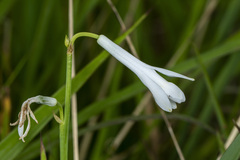 Dipcadi concanense Photo: CC BY, Ramesh Shenai
- no open photograph on file Dipcadi cowanii
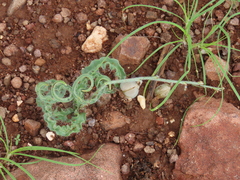 Dipcadi crispum Crinkly Daintybells Photo: CC0, dune_ninja
- no open photograph on file Dipcadi dekindtianum
 Dipcadi erythraeum Photo: CC BY, Gideon Pisanty (Gidip) גדעון פיזנטי
- no open photograph on file Dipcadi fesoghlense
- no open photograph on file Dipcadi garuense
 Dipcadi goaense Photo: CC BY-SA, Dinesh Valke
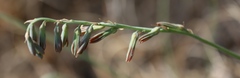 Dipcadi gracillimum Bigtoe Daintybells Photo: CC BY-SA, Tony Rebelo
- no open photograph on file Dipcadi guichardii
 Dipcadi heterocuspe Photo: CC0, Romer N. Rabarijaona
- no open photograph on file Dipcadi janae-shrirangii
- no open photograph on file Dipcadi kuriensis
- no open photograph on file Dipcadi ledermannii
 Dipcadi longifolium Firm Daintybells Photo: CC BY-SA, Ton Rulkens from Mozambique
- no open photograph on file Dipcadi longiracemosum
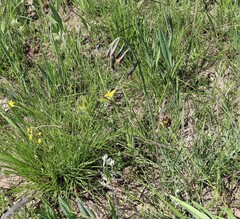 Dipcadi marlothii Drunk Daintybells Photo: CC BY-SA, Suvarna Parbhoo Mohan
- no open photograph on file Dipcadi mechowii
 Dipcadi montanum Photo: CC BY-SA, Yercaud-elango
- no open photograph on file Dipcadi mukaianum
- no open photograph on file Dipcadi ndelleense
- no open photograph on file Dipcadi oxylobum
- no open photograph on file Dipcadi panousei
- no open photograph on file Dipcadi papillatum
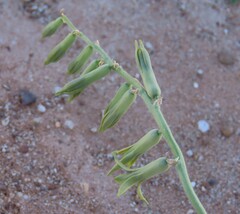 Dipcadi platyphyllum Crinkleleaf Daintybell Photo: CC0, dune_ninja
- no open photograph on file Dipcadi reidii
 Dipcadi rigidifolium Photo: CC0, Jimmy Whatmore
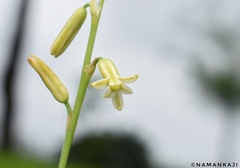 Dipcadi saxorum Photo: CC BY, Naman Kaji
Dipcadi susianum Photo: CC BY-SA, M. Hedayat
- no open photograph on file Dipcadi thollonianum
- no open photograph on file Dipcadi turkestanicum
 Dipcadi ursulae Ursula's Dipcadi Photo: CC0, S.MORE
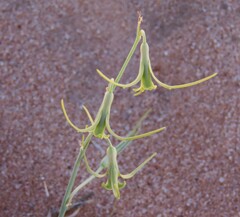 Dipcadi vaginatum Mopane Daintybells Photo: CC0, dune_ninja
 Dipcadi viride Dainty Green Bells Photo: CC BY, i_c_riddell
- no open photograph on file Dipcadi welwitschii
Grown: iNaturalist's observations of the species marked captive or cultivated; "not counted" where the species list does not count it. Native ranges: Kew's World Checklist of Vascular Plants (Govaerts et al., CC BY 4.0), file of 4 June 2026. Grown: iNaturalist's observations marked captive or cultivated, counted 17 October 2026 (the species list's count). Habitat climate known: the species page has a habitat climate, read from CHELSA's monthly climate and NASA POWER's daily extremes at its well-placed wild records inside Kew's native range; each page says its own sources and days. Record low: the lowest night in NASA POWER's daily series at the habitat's typical spot, as the species page gives it, held in °C to a tenth and shown in your units; each page says its own years and day read. Counts as the reference built on 19 November 2026 holds them. The CSV holds every result, not only this page's.