Dorstenia
123 species in the reference · family Moraceae · 36 with a habitat climate · 15 grown, per iNaturalist, 108 not counted
About the genus
Dorstenia is a genus within the mulberry family, Moraceae. Depending on the author, there are said to be 100 to 170 species within this genus, second only in number to the genus Ficus within Moraceae. Plants of the World Online currently accepts 122 species. Dorstenia species are mainly known for their unusual inflorescences and growth habits. More on Wikipedia
Quoted from Wikipedia, "Dorstenia", its opening paragraph, revision 1306379798, read 2026-11-08, CC BY-SA 4.0.
Where Dorstenia is native
| Brazil Southeast | 24 |
|---|---|
| Cameroon | 23 |
| Tanzania | 20 |
| Zaïre | 19 |
| Gabon | 17 |
| Kenya | 16 |
| Brazil Northeast | 15 |
| Congo | 13 |
| Cuba | 10 |
| Nigeria | 9 |
| Ethiopia | 7 |
| Mozambique | 7 |
Species native to each region. A species counts in every region it is native to. Native ranges: Kew's World Checklist of Vascular Plants (Govaerts et al., CC BY 4.0), file of 4 June 2026.
123 species
Dorstenia
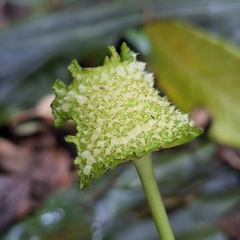 Dorstenia contrajerva Tusilla Photo: CC BY, Denis Zabin
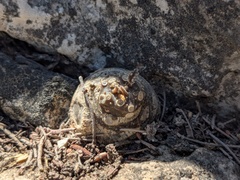 Dorstenia foetida Photo: CC BY, Julien Renoult
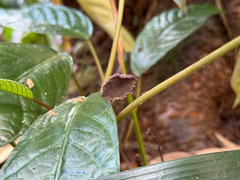 Dorstenia bahiensis Photo: CC BY, topeuna
 Dorstenia elata Photo: Public domain, Daderot
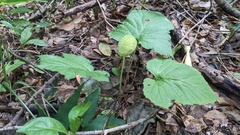 Dorstenia drakena Photo: CC BY, Shaan Aroeste
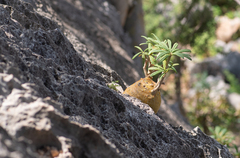 Dorstenia gigas Socotran Fig Photo: CC BY, Morten Ross
 Dorstenia hildebrandtii Photo: CC BY-SA, Frank Vincentz
 Dorstenia psilurus Photo: CC BY-SA, C T Johansson
- no open photograph on file Dorstenia lavrani
 Dorstenia yambuyaensis Photo: CC BY-SA, Annelis
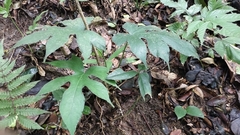 Dorstenia arifolia Photo: CC BY, fmunoz
- no open photograph on file Dorstenia barteri
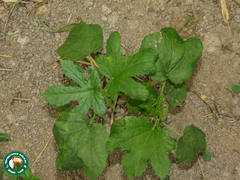 Dorstenia cayapia Photo: CC BY, Diogo Luiz
 Dorstenia turnerifolia Photo: CC BY-SA, Rl
 Dorstenia urceolata Photo: CC BY-SA, Kurt Stüber
- no open photograph on file Dorstenia acangatara
- no open photograph on file Dorstenia africana
- no open photograph on file Dorstenia afromontana
- no open photograph on file Dorstenia albertii
- no open photograph on file Dorstenia annua
- no open photograph on file Dorstenia appendiculata
- no open photograph on file Dorstenia arachniformis
- no open photograph on file Dorstenia aristeguietae
- no open photograph on file Dorstenia astyanactis
 Dorstenia barnimiana Photo: CC BY-SA, C T Johansson
- no open photograph on file Dorstenia belizensis
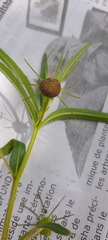 Dorstenia benguellensis Photo: CC BY, Mathew Rees
- no open photograph on file Dorstenia bergiana
- no open photograph on file Dorstenia bicaudata
- no open photograph on file Dorstenia bonijesu
- no open photograph on file Dorstenia bowmanniana
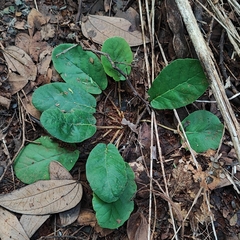 Dorstenia brasiliensis Photo: CC BY, Thomaz Ricardo Favreto Sinani
- no open photograph on file Dorstenia brevipetiolata
- no open photograph on file Dorstenia brownii
- no open photograph on file Dorstenia buchananii
- no open photograph on file Dorstenia caatingae
- no open photograph on file Dorstenia caimitensis
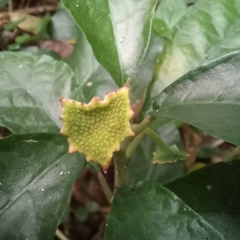 Dorstenia carautae Photo: CC BY, Patrícia Mees
 Dorstenia choconiana Photo: CC BY, John Abrams
- no open photograph on file Dorstenia christenhuszii
- no open photograph on file Dorstenia ciliata
- no open photograph on file Dorstenia colombiana
- no open photograph on file Dorstenia conceptionis
- no open photograph on file Dorstenia contensis
 Dorstenia convexa Photo: CC BY-SA, Krzysztof Ziarnek, Kenraiz
- no open photograph on file Dorstenia crenulata
 Dorstenia cuspidata Photo: CC BY-SA, Ton Rulkens from Mozambique
- no open photograph on file Dorstenia dinklagei
Grown: iNaturalist's observations of the species marked captive or cultivated; "not counted" where the species list does not count it. Native ranges: Kew's World Checklist of Vascular Plants (Govaerts et al., CC BY 4.0), file of 4 June 2026. Grown: iNaturalist's observations marked captive or cultivated, counted 17 October 2026 (the species list's count). Habitat climate known: the species page has a habitat climate, read from CHELSA's monthly climate and NASA POWER's daily extremes at its well-placed wild records inside Kew's native range; each page says its own sources and days. Record low: the lowest night in NASA POWER's daily series at the habitat's typical spot, as the species page gives it, held in °C to a tenth and shown in your units; each page says its own years and day read. Counts as the reference built on 19 November 2026 holds them. The CSV holds every result, not only this page's.