Echinops
16 species in the reference · family Asteraceae · 14 with a habitat climate · 12 grown, per iNaturalist, 4 not counted
About the genus
Echinops is a genus of about 130 species of flowering plants in the family Asteraceae, commonly known as globe thistles. They have spiny foliage and produce blue or white spherical flower heads. They are distributed from central Asia, Mongolia and north-eastern China to the Mediterranean basin, temperate regions of Eurasia, reaching to Indian subcontinent and tropical Africa. Globe thistles are a common host plant for weevils of the genus Larinus.
Quoted from Wikipedia, "Echinops", its opening paragraph, revision 1376824957, read 2026-11-08, CC BY-SA 4.0.
Where Echinops is native
| Turkey | 6 |
|---|---|
| Albania | 5 |
| Iran | 5 |
| Transcaucasus | 5 |
| Yugoslavia | 5 |
| Bulgaria | 4 |
| Greece | 4 |
| Italy | 4 |
| North Caucasus | 4 |
| Romania | 4 |
| Turkey-in-Europe | 4 |
| Altay | 3 |
Species native to each region. A species counts in every region it is native to. Native ranges: Kew's World Checklist of Vascular Plants (Govaerts et al., CC BY 4.0), file of 4 June 2026.
16 species
Echinops
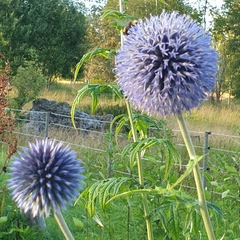 Echinops bannaticus Blue globe-thistle Photo: CC BY, Cilla Moerman
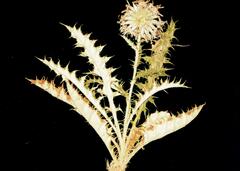 Echinops ritro Southern globethistle Photo: CC BY, zebedeugalinha
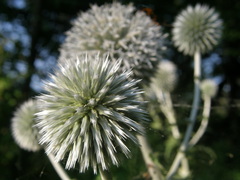 Echinops sphaerocephalus Glandular globe-thistle Photo: CC BY, Oleksandr Shynder
 Echinops exaltatus Globe-thistle Photo: CC BY-SA, Howard Williams
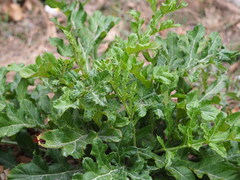 Echinops grijsii Photo: CC0, 葉子
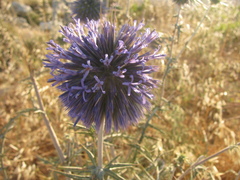 Echinops adenocaulos Globe thistle Photo: CC BY, Nachman bones
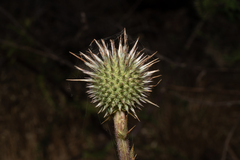 Echinops spinosissimus Photo: CC BY, Eleftherios Katsillis
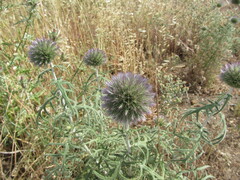 Echinops strigosus Rough-leaved Globe-thistle Photo: CC BY, zebedeugalinha
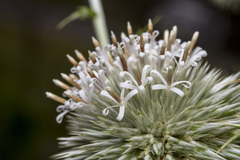 Echinops echinatus Indian globe thistle Photo: CC BY, Ramesh Shenai
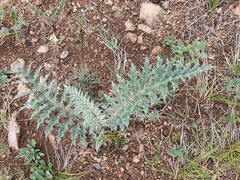 Echinops davuricus Photo: CC BY, Urgamal Magsar
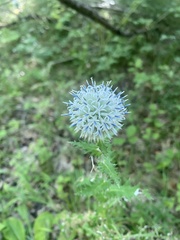 Echinops ossicus Photo: CC BY, Илья Руденко
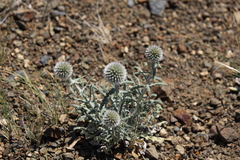 Echinops humilis Dwarf globe-thistle Photo: CC BY, Николай Гнездилов
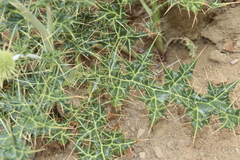 Echinops cornigerus Photo: CC BY, Edmundas Greimas
- no open photograph on file Echinops niveus
 Echinops orientalis Oriental Globe Thistle Photo: CC BY, Konstantin Grebennikov
 Echinops pungens Photo: CC BY, Edmundas Greimas
Grown: iNaturalist's observations of the species marked captive or cultivated; "not counted" where the species list does not count it. Native ranges: Kew's World Checklist of Vascular Plants (Govaerts et al., CC BY 4.0), file of 4 June 2026. Grown: iNaturalist's observations marked captive or cultivated, counted 17 October 2026 (the species list's count). Habitat climate known: the species page has a habitat climate, read from CHELSA's monthly climate and NASA POWER's daily extremes at its well-placed wild records inside Kew's native range; each page says its own sources and days. Record low: the lowest night in NASA POWER's daily series at the habitat's typical spot, as the species page gives it, held in °C to a tenth and shown in your units; each page says its own years and day read. Counts as the reference built on 19 November 2026 holds them. The CSV holds every result, not only this page's.