Elaeodendron
8 species in the reference · family Celastraceae · 6 with a habitat climate · 8 grown, per iNaturalist
About the genus
Elaeodendron is a genus of flowering plants in the staff vine family, Celastraceae. It includes 40 species native to the tropics of the Americas, sub-Saharan Africa, Asia, Australia, and the South Pacific.
Quoted from Wikipedia, "Elaeodendron", its opening paragraph, revision 1346657975, read 2026-11-08, CC BY-SA 4.0.
Where Elaeodendron is native
| Cape Provinces | 3 |
|---|---|
| Bermuda | 2 |
| KwaZulu-Natal | 2 |
| Northern Provinces | 2 |
| Bahamas | 1 |
| Belize | 1 |
| Costa Rica | 1 |
| Cuba | 1 |
| Dominican Republic | 1 |
| El Salvador | 1 |
| Guatemala | 1 |
| Haiti | 1 |
Species native to each region. A species counts in every region it is native to. Native ranges: Kew's World Checklist of Vascular Plants (Govaerts et al., CC BY 4.0), file of 4 June 2026.
8 species
Elaeodendron
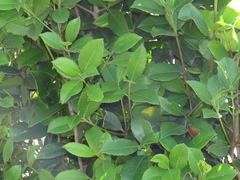 Elaeodendron croceum Common-saffron Photo: CC BY, Jeremy Gilmore
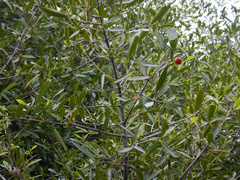 Elaeodendron australe Red-fruited Olive Plum Photo: CC BY, Jon Sullivan
 Elaeodendron orientale False olive Photo: CC BY, Augustin Soulard
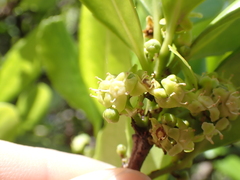 Elaeodendron laneanum Bermuda Olivewood Photo: CC0, Tim Kirsten
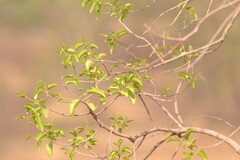 Elaeodendron glaucum Ceylon-tea Photo: CC BY, swanand kesari
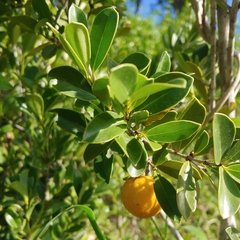 Elaeodendron xylocarpum Wild Calabash Photo: CC BY-SA, Kurt Miller
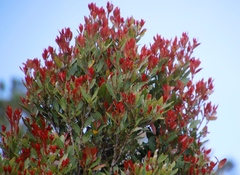 Elaeodendron schinoides Photo: CC BY-SA, Tony Rebelo
- no open photograph on file Elaeodendron zeyheri Red Saffron
Grown: iNaturalist's observations of the species marked captive or cultivated; "not counted" where the species list does not count it. Native ranges: Kew's World Checklist of Vascular Plants (Govaerts et al., CC BY 4.0), file of 4 June 2026. Grown: iNaturalist's observations marked captive or cultivated, counted 17 October 2026 (the species list's count). Habitat climate known: the species page has a habitat climate, read from CHELSA's monthly climate and NASA POWER's daily extremes at its well-placed wild records inside Kew's native range; each page says its own sources and days. Record low: the lowest night in NASA POWER's daily series at the habitat's typical spot, as the species page gives it, held in °C to a tenth and shown in your units; each page says its own years and day read. Counts as the reference built on 19 November 2026 holds them. The CSV holds every result, not only this page's.