Epimedium
35 species in the reference · family Berberidaceae · 9 with a habitat climate · 30 grown, per iNaturalist, 5 not counted
About the genus
Epimedium, also known as barrenwort, bishop's hat, fairy wings, horny goat weed, or yin yang huo (Chinese: 淫羊藿; pinyin: Yínyánghùo; Wade–Giles: Yin²-yang²-huo⁴), is a genus of flowering plants in the family Berberidaceae. The majority of the species are endemic to China, with smaller numbers elsewhere in Asia and a few in the Mediterranean region.
Quoted from Wikipedia, "Epimedium", its opening paragraph, revision 1369046563, read 2026-11-08, CC BY-SA 4.0.
Where Epimedium is native
| China South-Central | 24 |
|---|---|
| China Southeast | 10 |
| Japan | 6 |
| China North-Central | 5 |
| Transcaucasus | 2 |
| Turkey | 2 |
| Albania | 1 |
| Algeria | 1 |
| Austria | 1 |
| Bulgaria | 1 |
| Iran | 1 |
| Italy | 1 |
Species native to each region. A species counts in every region it is native to. Native ranges: Kew's World Checklist of Vascular Plants (Govaerts et al., CC BY 4.0), file of 4 June 2026.
35 species
Epimedium
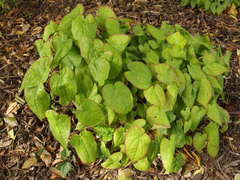 Epimedium pinnatum Caucasian barrenwort Photo: CC BY, Jerry Cooper
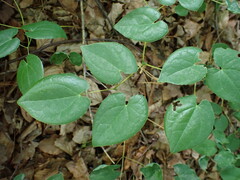 Epimedium alpinum Barrenwort Photo: CC BY, Milan Chytrý
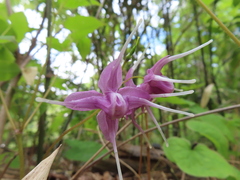 Epimedium grandiflorum Bishop's hat Photo: CC BY, Timur Kalininsky
 Epimedium sagittatum Photo: CC BY-SA, David J. Stang
 Epimedium perralderianum Algerian barrenwort Photo: CC0, Daderot
 Epimedium wushanense Photo: CC BY-SA, peganum from Small Dole, England
 Epimedium pubigerum Photo: CC BY-SA, Jerzy Opioła
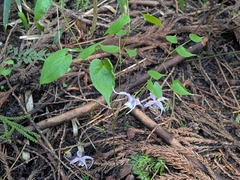 Epimedium sempervirens Photo: CC BY, plant 0302
- no open photograph on file Epimedium × youngianum Young's epimedium
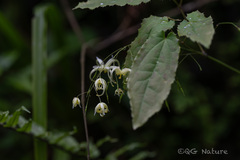 Epimedium acuminatum Photo: CC BY, Wang.QG
 Epimedium koreanum Korean barrenwort Photo: CC BY-SA, Qwert1234
 Epimedium davidii Photo: CC BY-SA, peganum from Small Dole, England
 Epimedium rhizomatosum Photo: CC BY-SA, 阿橋 HQ
- no open photograph on file Epimedium dewuense
 Epimedium ilicifolium Photo: CC BY-SA, 阿橋 HQ
 Epimedium brevicornu Photo: CC BY-SA, Rudolphous
 Epimedium ecalcaratum Photo: CC BY-SA, 阿橋 HQ
 Epimedium franchetii Photo: CC BY-SA, SB Johnny
 Epimedium leptorrhizum Photo: CC BY-SA, peganum
 Epimedium lishihchenii Photo: CC BY-SA, SB Johnny
 Epimedium pubescens Photo: CC BY-SA, Stan Shebs
 Epimedium epsteinii Epstein's epimedium Photo: CC BY-SA, peganum from Small Dole, England
 Epimedium × omeiense Photo: CC BY-SA, peganum from Small Dole, England
- no open photograph on file Epimedium pauciflorum
 Epimedium platypetalum Photo: CC BY-SA, peganum from Small Dole, England
 Epimedium zhushanense Photo: CC0, Daderot
 Epimedium diphyllum Photo: CC BY, Timur Kalininsky
- no open photograph on file Epimedium fargesii
- no open photograph on file Epimedium flavum
- no open photograph on file Epimedium stellulatum
- no open photograph on file Epimedium dolichostemon
- no open photograph on file Epimedium fangii
 Epimedium latisepalum Photo: CC BY-SA, peganum from Small Dole, England
- no open photograph on file Epimedium myrianthum
- no open photograph on file Epimedium × setosum
Grown: iNaturalist's observations of the species marked captive or cultivated; "not counted" where the species list does not count it. Native ranges: Kew's World Checklist of Vascular Plants (Govaerts et al., CC BY 4.0), file of 4 June 2026. Grown: iNaturalist's observations marked captive or cultivated, counted 17 October 2026 (the species list's count). Habitat climate known: the species page has a habitat climate, read from CHELSA's monthly climate and NASA POWER's daily extremes at its well-placed wild records inside Kew's native range; each page says its own sources and days. Record low: the lowest night in NASA POWER's daily series at the habitat's typical spot, as the species page gives it, held in °C to a tenth and shown in your units; each page says its own years and day read. Counts as the reference built on 19 November 2026 holds them. The CSV holds every result, not only this page's.