Frankenia
9 species in the reference · family Frankeniaceae · 8 with a habitat climate · 9 grown, per iNaturalist
About the genus
Frankenia (sea heath) is the only genus in the Frankeniaceae family of flowering plants. Other genera have been recognized within the family, such as Anthobryum, Hypericopsis and Niederleinia, but molecular phylogenetic studies have consistently shown that they all belong inside Frankenia. Frankenia comprises about 70–80 species of shrubs, subshrubs and herbaceous plants, adapted to saline and dry environments throughout temperate and subtropical regions. A few species are in cultivation as ornamental plants.
Quoted from Wikipedia, "Frankenia", its opening paragraph, revision 1356946444, read 2026-11-08, CC BY-SA 4.0.
Where Frankenia is native
| Algeria | 4 |
|---|---|
| Morocco | 4 |
| Tunisia | 4 |
| Baleares | 3 |
| Corse | 3 |
| France | 3 |
| Italy | 3 |
| Sardegna | 3 |
| Sicilia | 3 |
| South Australia | 3 |
| Spain | 3 |
| Western Australia | 3 |
Species native to each region. A species counts in every region it is native to. Native ranges: Kew's World Checklist of Vascular Plants (Govaerts et al., CC BY 4.0), file of 4 June 2026.
9 species
Frankenia
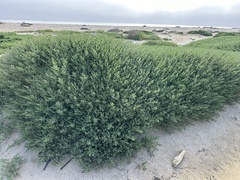 Frankenia salina Alkali-heath Photo: CC BY, william_hoyer
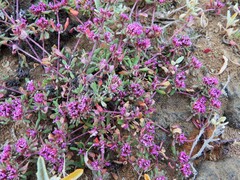 Frankenia pulverulenta European sea-heath Photo: CC BY, amantedarmanin
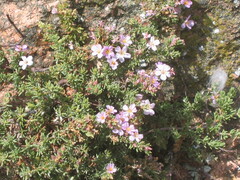 Frankenia laevis Sea-heath Photo: CC BY, zebedeugalinha
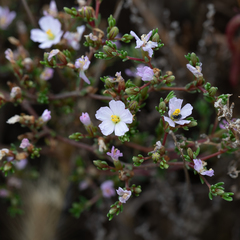 Frankenia pauciflora Sea Heath Photo: CC BY, Kym Nicolson
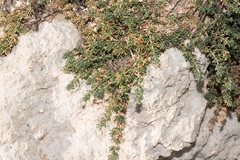 Frankenia hirsuta Hairy Sea-heath Photo: CC BY, Eleftherios Katsillis
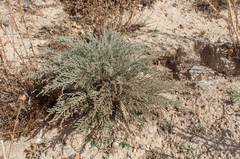 Frankenia thymifolia Photo: CC BY, Jorge Íñiguez
 Frankenia cordata Photo: CC BY-SA, Allthingsnative
 Frankenia portulacifolia St Helena Tea Plant Photo: CC0, davidroy
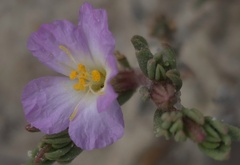 Frankenia serpyllifolia Bristly Sea-heath Photo: CC BY, Petra Holland
Grown: iNaturalist's observations of the species marked captive or cultivated; "not counted" where the species list does not count it. Native ranges: Kew's World Checklist of Vascular Plants (Govaerts et al., CC BY 4.0), file of 4 June 2026. Grown: iNaturalist's observations marked captive or cultivated, counted 17 October 2026 (the species list's count). Habitat climate known: the species page has a habitat climate, read from CHELSA's monthly climate and NASA POWER's daily extremes at its well-placed wild records inside Kew's native range; each page says its own sources and days. Record low: the lowest night in NASA POWER's daily series at the habitat's typical spot, as the species page gives it, held in °C to a tenth and shown in your units; each page says its own years and day read. Counts as the reference built on 19 November 2026 holds them. The CSV holds every result, not only this page's.